Small Indian Kitchen Interior Design on a Low Budget
Small Indian kitchens work hard multiple spice jars, daily tempering, heavy cookware, and frequent washing up. The good news is that you don’t need a full remodel to make a compact kitchen look bigger, feel more efficient, and stay easier to clean. With a few smart material choices, better storage, and some simple upgrades, you can get a kitchen that looks polished and functions like a much larger space without overspending.
1) Start With a Simple Layout That Fits Indian Cooking
Before you buy anything, make sure the basics work: stove, sink, and prep area should be close enough that you’re not constantly crossing the room with hot pans. In most small Indian homes, an L-shaped or straight (single-wall) layout is the most budget-friendly because it minimizes carpentry and keeps the work zone tight. If you’re working with a galley (two parallel counters), keep the walkway clear and avoid deep cabinets that bump into each other when opened. A well-planned layout saves money because you won’t feel forced to “fix” problems later with expensive add-ons.
2) Go Light With Colors to Visually Expand the Space
In a small kitchen, light colors reflect more light and reduce visual clutter especially helpful when you have many jars, utensils, and appliances. Stick to a simple palette: warm white, off-white, light grey, beige, or a soft pastel for cabinets and walls. If you love bold color, use it in one place only like a small backsplash strip, a couple of open shelves, or accessories so the kitchen stays airy rather than busy. A low-cost repaint in the right shade can make the biggest “before and after” difference.
3) Use Affordable Cabinet Finishes That Still Look Premium
You can save a lot by choosing cost-effective finishes while keeping the design clean. For a modern, easy-to-maintain look, consider: matte laminate in light shades, textured laminate that hides fingerprints, or a simple membrane finish on shutters if it fits your budget locally. Handle-less styles often cost more, so standard shutters with sleek, basic handles can give a similar modern feel for less. The design trick is consistency one main finish across most shutters looks more expensive than mixing too many materials.
4) Pick a Countertop That’s Durable for Indian Cooking
Countertops take the most daily abuse hot pans, turmeric stains, chopping, and frequent wiping. If you’re on a tight budget, choose a surface that’s practical first and decorative second. In many Indian kitchens, granite remains a solid value option: it handles heat well and is forgiving for daily use. If granite prices are high where you live, look at locally available stones in darker speckled patterns (they hide stains better) and keep the edge profile simple to reduce fabrication cost.
5) Upgrade the Backsplash Without Doing a Full Tile Job
A full-height tiled backsplash can be expensive when you include labor and finishing. A budget-friendly approach is to tile only the key “splash zones” behind the stove and sink and keep the rest painted with a washable, moisture-resistant paint. Another affordable option is to use smaller-format tiles in a simple grid pattern less cutting, less waste, and it still looks intentional. Choose lighter tiles to brighten the counter area and make cooking feel less cramped.
6) Add a Compact Chimney and Better Ventilation (If Possible)
In Indian kitchens, ventilation isn’t just comfort it prevents grease buildup on cabinets and walls. If a chimney is too expensive right now, even upgrading to a stronger exhaust fan and keeping a simple oil-splash guard behind the stove can reduce long-term cleaning and repainting costs. If you can fit a chimney, choose a size appropriate to your stove and prioritize suction over fancy features. Better ventilation makes even a budget kitchen feel cleaner and more “new.”
7) Use Vertical Storage to Free Up the Counter
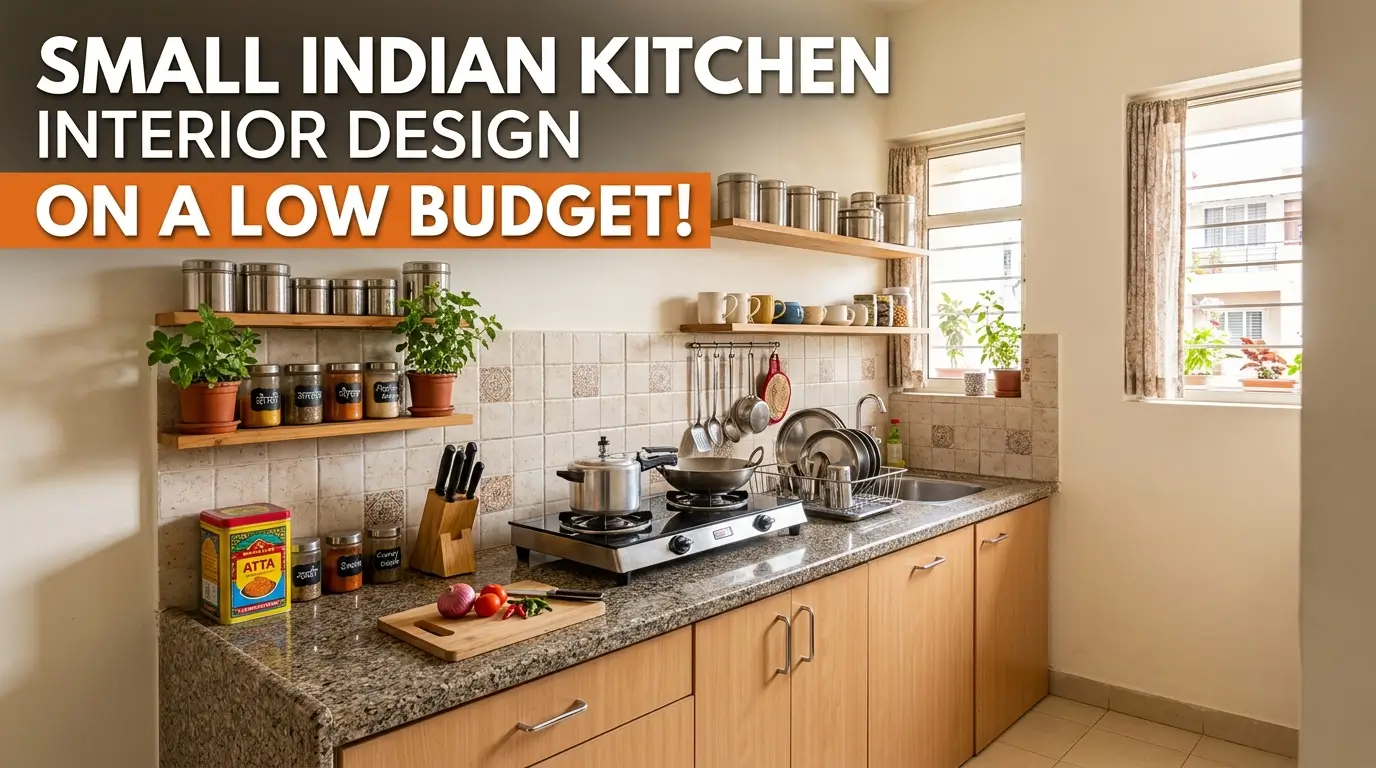
The fastest way to make a small kitchen look bigger is to clear the countertop. Instead of adding more counter appliances and containers, move storage upward: wall-mounted shelves above the counter, a simple rail for ladles and spatulas, hooks for frequently used mugs, and a tall pantry unit if you can spare one corner. Vertical storage is usually cheaper than adding base cabinets, and it helps keep your prep area open for rolling rotis, chopping, or assembling meals.
8) Improve the Inside of Cabinets With Low-Cost Organizers
You don’t need new cabinets to get more storage you need better cabinet interiors. Add simple pull-out baskets for vegetables, stackable racks for plates, under-sink organizers for cleaning supplies, and a dedicated section for oils and masalas. If you cook daily, create “zones”: a masala zone near the stove, a tea/coffee zone, and a cleaning zone under the sink. This reduces daily mess because everything has a home.
9) Choose Lighting That Makes the Kitchen Look Cleaner and Larger
Most small kitchens suffer from harsh shadows, especially over the counter. Add bright, neutral-white lighting so the space feels crisp and hygienic. Under-cabinet LED strip lights are a budget upgrade that instantly makes the countertop look more premium and helps during chopping and cooking. If you can only do one lighting change, improve task lighting over the main prep area it’s where you spend the most time.
10) Keep the Design Minimal and Let One Feature Stand Out
A low budget doesn’t look low budget if the design is simple. Avoid too many colors, too many open shelves filled with mixed containers, and too many decorative items that collect grease. Instead, pick one “hero” detail: a patterned backsplash strip, two glass-front shutters, a wood-tone open shelf, or a pop-color accent wall. Minimalism is practical in Indian kitchens because it also reduces cleaning time.
11) Make Space-Saving Choices for Small Appliances
If your counter is crowded, consider swapping bulky appliances for compact versions or storing rarely used items in overhead cabinets. A slim dish rack, a wall-mounted foldable table for extra prep, and a compact microwave shelf can free up valuable workspace. The goal is to keep one clean, uninterrupted prep area this single change can make a small kitchen feel significantly more usable.
12) Budget-Friendly Styling That Still Feels “Designed”
Finishing touches can elevate the kitchen without major spending: matching storage containers for pulses and snacks, labeled spice jars, a simple washable runner near the sink, and coordinated hardware (handles and knobs) that suits your cabinet finish. Choose a small set of colors for accessories like white, steel, and one accent color so the kitchen looks cohesive even if the materials are basic.
A Quick Low-Budget Plan You Can Follow
If you want a simple sequence that avoids overspending: fix layout flow first, repaint walls and/or cabinet fronts in a light shade, improve ventilation, add vertical storage and cabinet organizers, upgrade lighting, then do a small backsplash improvement. This approach gives the maximum “visible upgrade” per rupee while also improving daily cooking comfort.
If you tell me your kitchen layout (straight/L-shape/galley), approximate size, whether it’s rented or owned, and your budget range, I can suggest a specific low-cost design plan with materials and a shopping checklist.