Indian-Style Wall Decor Ideas Without Drilling
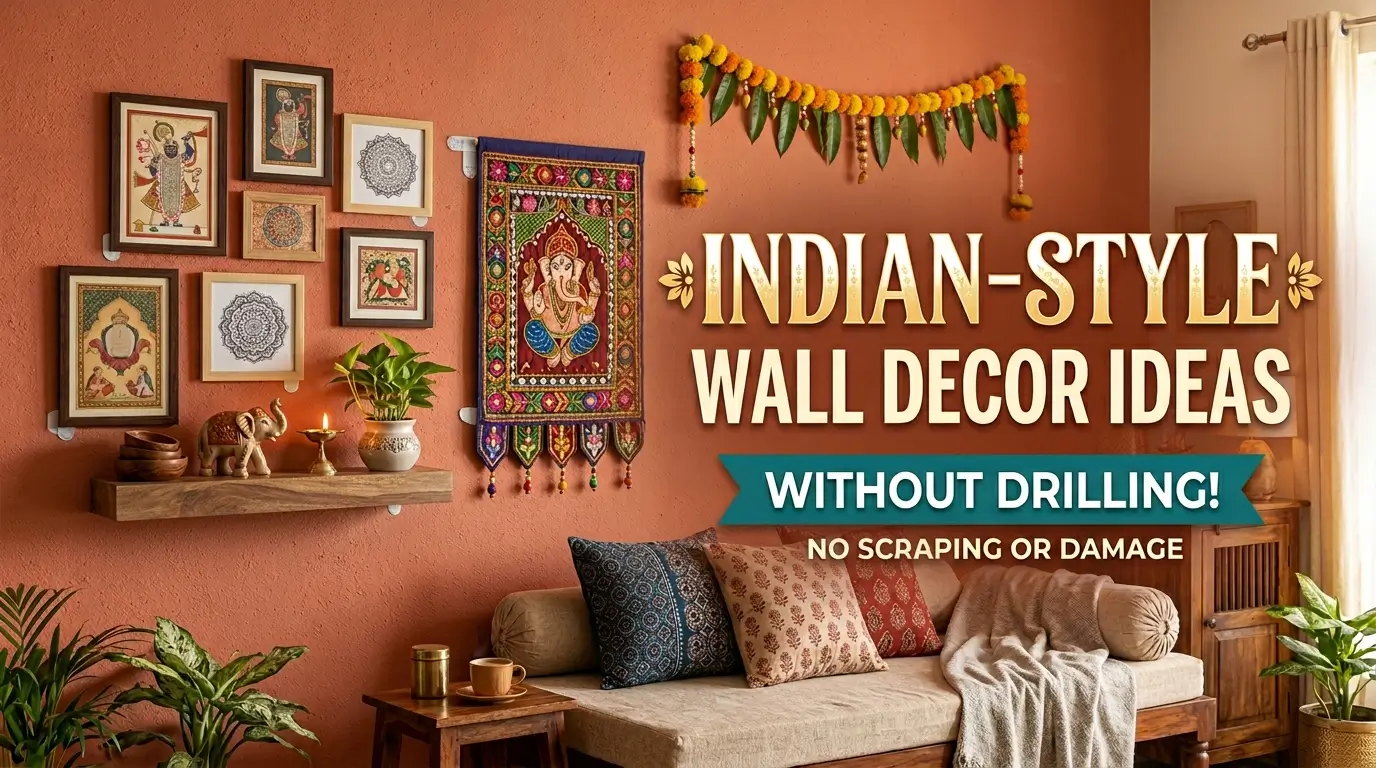
Indian interiors are known for rich color, layered textures, ornate pattern, and pieces that feel collected over time. The good news is you don’t need nails or holes to get that look. Whether you’re decorating a rental, a dorm, or you simply don’t want to commit to permanent hardware, the following no-drill ideas can help you add Indian-style warmth and character while keeping your walls intact.
1) Peel-and-Stick Block Print Wallpaper
Traditional Indian block prints (think florals, vines, paisleys, and repeating borders) translate beautifully into peel-and-stick wallpaper. Use it as a full accent wall behind a sofa or bed, or apply it in a “panel” shape to mimic framed wallpaper. Choose indigo, marigold, madder red, or a soft neutral base to match your room’s palette.
2) Removable Wall Decals in Mandala or Jaali Patterns
Mandala decals add instant drama with minimal effort especially above a headboard, console, or reading chair. For a more architectural look, go with jaali-inspired lattice decals (geometric, airy, and symmetrical). They’re especially effective in entryways where you want a strong first impression without heavy décor.
3) Tapestries as a Statement Backdrop
A large tapestry is one of the easiest ways to bring in Indian style: mughal garden motifs, elephant prints, kalamkari-inspired designs, or sari-style borders all work. Instead of nails, hang it with removable strips, or use a slim tension rod (between two walls or inside a wide doorway) for a clean, tailored look.
4) Sari Fabric Wall Hanging (No Frame Needed)
If you love the look of silk, brocade, or zari shimmer, drape a sari length as wall art. Fold it into a long vertical banner, or create a “textile panel” by neatly pleating it and securing the top edge with strong removable hooks or strips. This gives you the luxe, layered feeling of Indian décor without drilling.
5) Command-Strip Gallery of Mini Frames
Indian-inspired art doesn’t have to be oversized. Build a grid of small frames Rajasthani miniature-style prints, botanical motifs, vintage Bollywood posters, or temple architecture photos and mount each frame with removable picture strips. Keeping frames consistent (all black, all brass-look, or all wood) makes the wall feel curated rather than busy.
6) Brass-Style Wall Plates Using Removable Hooks
Decorative “brass” thalis and engraved plates are a classic Indian décor element. For renters, go lightweight (aluminum or thin metal) and hang them with removable hooks rated for the correct weight. Arrange in a cluster 3, 5, or 7 pieces looks intentional and mix sizes for that collected, heirloom feel.
7) Jaali-Inspired Screens Leaned Against the Wall
Instead of mounting anything, use a carved or cutwork panel as a leaning accent. Place it behind a console, next to a floor plant, or as a headboard alternative. You get the texture of traditional jaali without making a single hole. If you want extra stability, use museum putty at the base (on the floor side) rather than attaching to the wall.
8) Rangoli-Inspired Corner “Moment” With Peel-and-Stick Tiles
Rangoli patterns are all about welcoming energy, color, and symmetry. You can echo that vibe on the wall using peel-and-stick tiles (mosaic or geometric) in a small area like behind a puja table, tea station, or entry console. Keep it to a contained rectangle or arch shape so it reads as décor, not construction.
9) Floating Look Shelves Without Screws
If you want a shelf for small diyas, incense holders, or tiny framed prints, try renter-friendly ledge shelves designed to mount with high-strength adhesive strips (always check weight limits). Style with a few key pieces: a brass bell, a small framed deity print, a mini vase of marigold-colored faux stems, and a candle for glow.
10) Mirror Magic With Removable Mounting
Ornate mirrors are a staple in Indian décor especially in arched, scalloped, or carved frames. Choose a lighter mirror and use heavy-duty removable strips rated above the mirror’s weight. Place it above a console with a runner underneath for that “old haveli” layered look without permanent hardware.
11) Wall Baskets and Woven Trays With Temporary Hooks
Natural textures pair beautifully with Indian textiles. Try seagrass or cane trays mixed with colorful textile accents nearby (like a kantha throw or ikat cushions). Hang baskets with removable hooks and keep spacing asymmetrical so it feels organic like a collected display rather than a store setup.
12) A No-Drill “Puja Nook” Backdrop
If you’re creating a small spiritual corner, build the atmosphere through a backdrop rather than a mounted cabinet. Use a tapestry or peel-and-stick wallpaper in a niche shape, then place your mandir or table in front. Add string lights or LED diyas (battery-powered) for warmth everything can be removable, yet it still feels intentional and sacred.
13) Fabric or Bead Torans Over Doorways (Tension Rod Trick)
Torans decorative doorway hangings instantly signal Indian style. If you don’t want to use hooks, mount a slim tension rod inside the top of the doorway and drape the toran across it. This works well for pom-pom, bead, mirror-work, or embroidered styles and is especially effective in an entryway or between living and dining areas.
14) Quick Color With Peel-and-Stick Border Strips
If you want the impact of Indian pattern without covering a whole wall, use peel-and-stick border strips. Think of them like the border of a sari: apply near the ceiling line, around a mirror, or as a “frame” around a group of prints. It’s a small move that makes the space feel designed.
Indian-style wall décor is all about layering pattern, shimmer, texture, and meaningful pieces. Start with one anchor (a tapestry, a mandala decal, or a mirror), then add supporting elements like plates, framed prints, and textiles. Keep your mounting renter-safe by sticking to removable strips, hooks, peel-and-stick products, and leaning panels so you get the richness of Indian décor without drilling a single hole.