Simple Mandir Design Ideas for Small Indian Flats
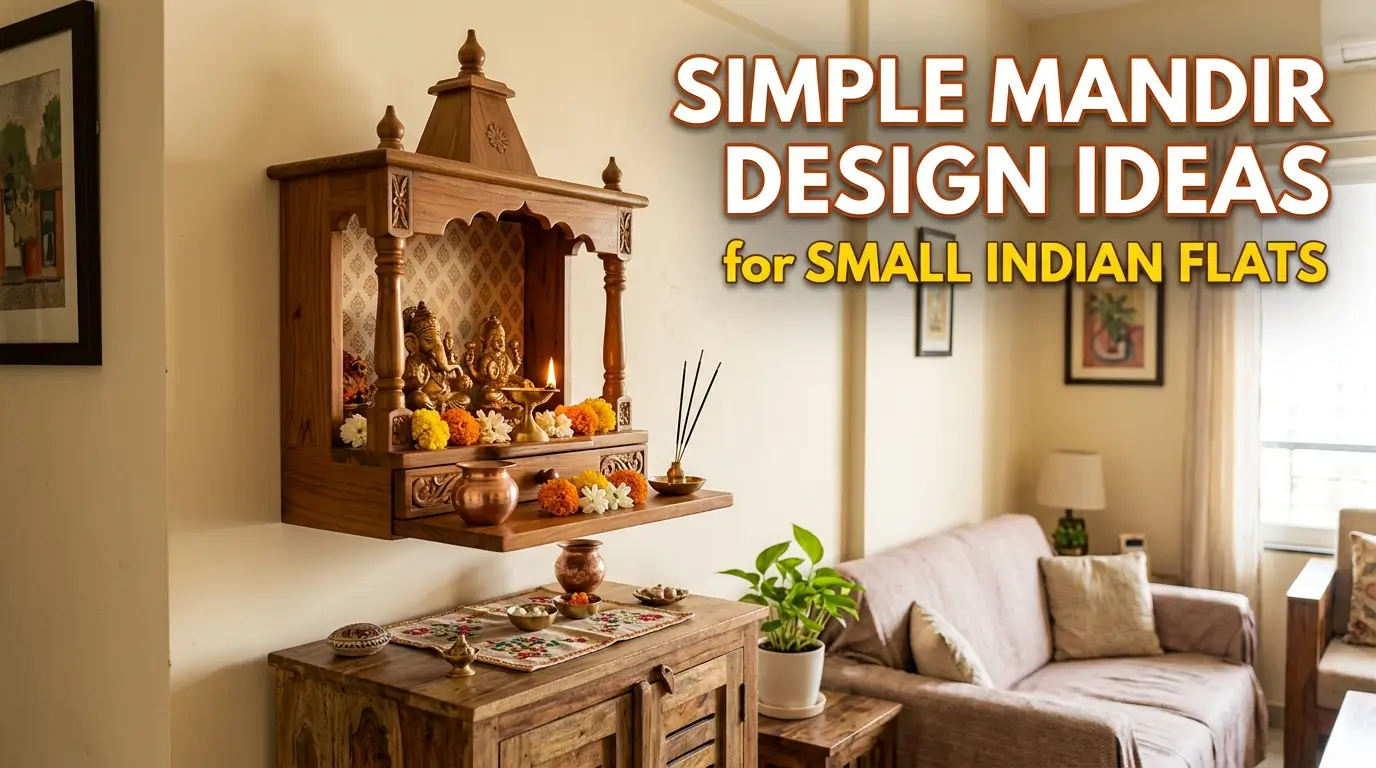
Small Indian flats are often short on dedicated space, but that doesn’t mean you can’t create a peaceful, purposeful mandir. The key is to choose a design that feels intentional, stays clutter-free, and fits naturally into your home’s layout whether that’s a corner of the living room, a niche in the passage, or even a compact wall in the dining area. With the right placement, proportions, and a few thoughtful details, even the simplest mandir can feel special and serene.
1. Wall-Mounted Mandir (The Easiest Space Saver)
A wall-mounted mandir is one of the most practical options for compact flats because it keeps the floor clear and looks neat. You can install a shallow cabinet or a floating shelf with a small top canopy to define the prayer zone. Add two small drawers to store agarbatti, matches, camphor, and a small diya stand so everything stays contained. Keep the depth minimal so it doesn’t intrude into walkways.
2. Corner Mandir with Floating Shelves
Corners are often unused, which makes them ideal for a simple mandir setup. Use two-tier floating shelves: the upper level for idols and the lower level for a diya plate and small accessories. A subtle back panel like white laminate, light wood, or a simple marble-look sheet can make the corner feel like a dedicated space without heavy construction.
3. Mandir Unit Built into a Wall Niche
If your flat has an existing niche (common near passages or living areas), convert it into a clean mandir with minimal carpentry. Line the niche with a bright, easy-to-clean surface and add one internal shelf to create levels. Finish it with either a simple framed door or leave it open and add a slim curtain if you want a softer look.
4. Compact Pooja Cabinet with Doors (For a Tidy Look)
If you prefer to keep the mandir discreet especially in a studio or a living/dining combined space a small cabinet mandir with doors is a great choice. Choose a design with ventilation cut-outs or jali panels so it doesn’t feel boxed in. Inside, keep the layout simple: one main platform for idols and one small shelf for essentials.
5. Simple Wooden Mandir with Jali Back Panel
A jali back panel instantly gives a traditional touch without needing a large footprint. Use it as a backdrop behind a small shelf or inside a compact wall unit. Add warm lighting behind the jali to create depth this makes the mandir feel more “complete” even if it’s just a small wall section.
6. Mandir on a Slim Console Table
If you already have a narrow console in the living room, you can convert the top into a prayer area. Use a raised platform (a small chowki) to visually separate it from everyday items, and add a framed background panel or wall art behind it. Keep the table surface dedicated avoid mixing it with keys, mail, or decor, so the space stays respectful and calm.
7. Minimal White Mandir for a Clean, Bright Corner
A simple all-white mandir design works especially well in small flats because it reflects light and feels airy. Pair a white shelf or cabinet with warm LED lighting and a light-colored backdrop. If you want a subtle accent, add brass accessories (diya, bell, kalash) rather than busy patterns.
8. Foldable or Pull-Out Mandir (Best for Very Tight Homes)
For extremely compact homes, consider a pull-out tray mandir or a foldable wall unit that opens during prayer and closes afterward. This approach keeps everything protected from dust and avoids using permanent visual space. Make sure the inside has enough height for your idols and a safe spot for a diya plate.
9. Sliding Door Mandir (Great for Shared Walls)
If your mandir is placed along a main wall like in the living room sliding doors are a clean solution because they don’t need door swing space. You can choose frosted glass, MDF jali, or simple laminate doors. Inside, keep the shelves minimal and easy to wipe down.
10. Under-Staircase Micro Mandir (If You Have Duplex-Style Layouts)
If your flat has stairs, the under-stair space can become a compact mandir zone with a simple partition and a small platform. Keep the design uncluttered so it doesn’t feel cramped. Use good lighting and a closed storage drawer for prayer supplies so the space doesn’t become a general storage corner.
11. Mandir with Simple Marble or Stone-Look Backdrop
You don’t need full marble construction to get the look. A marble/stone-look backsplash panel (or tile) behind the shelf can give a timeless finish and is easy to maintain. Pair it with warm light and a clean shelf design so the backdrop becomes the focal point.
12. Lighting-First Mandir Design (Small Unit, Big Impact)
In small spaces, lighting does a lot of the “design work.” Use a warm LED strip under the top panel or behind the backdrop to create a soft glow. Add a small overhead spotlight if the area is dim. Keep wiring concealed to maintain a calm, finished appearance.
Simple Tips to Keep a Small Mandir Looking Beautiful
Keep the depth shallow
A depth of around 8–12 inches is often enough for a compact setup, depending on idol size, and prevents the unit from feeling bulky.
Use closed storage (even one drawer helps)
Clutter builds fast in small homes. A single drawer for essentials makes the mandir look calmer every day.
Choose one clear focal point
A jali panel, a marble-look back, a single framed diya motif, or a soft light glow pick one main feature and keep the rest simple.
Prioritize easy cleaning
Avoid designs with too many tiny ledges that catch ash and dust. Smooth, wipeable finishes make daily maintenance effortless.
Want Ideas Matched to Your Flat Layout?
Tell me: (1) which room you want it in (living room/passage/bedroom), (2) whether you prefer open or closed doors, and (3) approximate available width (in inches or feet). I’ll suggest 3–5 simple mandir layouts that fit your exact space.