How to Mix Wood and Plants in Small Bedroom Decor
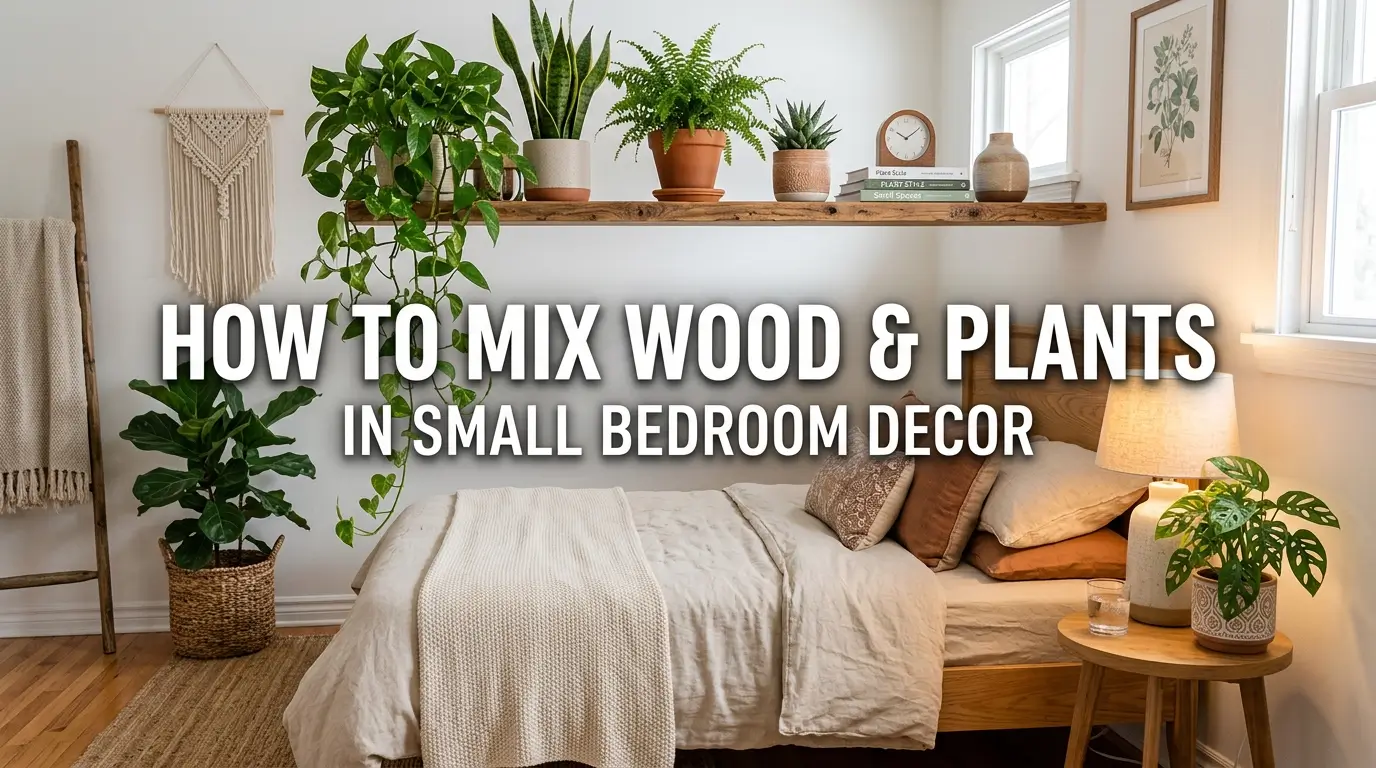
Small bedrooms work best when every piece earns its spot. Wood helps with that because it adds warmth without visual clutter, and plants help because they bring color and texture that doesn’t feel “decorated.” The trick is pairing them in a way that keeps the room light, cohesive, and easy to live in especially when you don’t have much floor space to spare. Below are practical, design-forward ways to mix wood and greenery so your bedroom feels calm, intentional, and more spacious than it is.
1. Start With One Wood “Anchor” and Build Around It
In a small room, too many different wood tones can read as busy. Pick one main wood element and let it set the direction for everything else. This could be a bed frame, a dresser, or even floating shelves. Once you choose the anchor, keep any other wood within the same temperature family (warm, neutral, or cool). A warm oak bed pairs easily with terracotta pots and deep green leaves, while a cooler walnut looks great with matte black planters and crisp, structured foliage.
2. Use Plants to Soften Straight Lines
Most bedroom furniture is made of rectangles platform beds, nightstands, dressers. Plants are an easy counterbalance because their shapes are irregular. Use rounded or draping greenery to break up boxy furniture edges. A trailing pothos on a shelf, a fern with airy fronds on a dresser, or a spider plant on a nightstand can make the whole setup feel less rigid without adding more furniture.
3. Keep Wood Light When You’re Short on Natural Light
If your small bedroom doesn’t get a lot of sun, very dark wood can make it feel heavier. Lighter woods (birch, ash, light oak, bamboo) reflect more light and keep the room feeling open. In those spaces, choose plants with brighter greens or lighter variegation to match that “lift,” like pothos varieties, philodendron hederaceum ‘Brasil,’ or a snake plant with yellow edging.
4. Add a Floating Shelf “Plant Ledge” Instead of More Tables
Floor space is valuable. A slim floating shelf above the headboard, over a dresser, or along an empty wall can act as a plant ledge and a styling zone without crowding the room. Choose a wood shelf that matches your anchor piece, then add a small cluster of plants in coordinating planters. The shelf creates a layered look wood, greenery, negative space without adding a bulky unit.
5. Mix Planter Materials, Not Furniture Materials
A common small-room mistake is mixing too many furniture finishes in an attempt to make the room “interesting.” A cleaner approach: keep furniture woods consistent, and vary interest through planter materials. Pair wood with ceramic, terracotta, stone, glass, or matte metal. You get contrast and depth, but your room still reads as one cohesive set.
6. Use One “Statement Plant” as Decor, Not a Collection Everywhere
Lots of tiny plants scattered around can make a small bedroom feel cluttered, even if each one is cute. Instead, choose one plant that reads like decor and give it a clear home. A medium snake plant near a dresser, a rubber plant by the window, or a tall dracaena in a corner can make the room feel styled with less visual noise. Then, if you want more greenery, add one or two smaller plants in supporting roles.
7. Repeat Wood in Small Touches to Tie the Room Together
If your main wood anchor is a bed, echo it subtly with a picture frame, a small tray, or a wall hook in a similar finish. These tiny repeats make the room feel designed, and they create a natural bridge to your plant styling (like using a wood tray to corral a plant, a candle, and a book on a dresser). Repetition is what makes “mixed” look intentional.
8. Go Vertical With Hanging or Wall-Mounted Planters
When floor space is limited, height becomes your best asset. Hanging planters near a window bring greenery into the room without taking up surfaces you need for daily use. Wall-mounted planters can work too, but keep them minimal and deliberate one strong moment beats five scattered pieces. If you rent, look for lightweight hanging solutions and avoid overloading drywall anchors.
9. Use Plants as a Soft “Screen” in Awkward Spots
Small bedrooms often have tight corners, visible storage, or a cramped workspace. A plant placed strategically can visually soften those areas. Try a leafy plant on a small stool or stand (wood is perfect here) to create a gentle transition between zones like between a bed and a desk, or beside an open clothing rack. This makes the room feel calmer and more layered without adding partitions.
10. Choose Plant Shapes That Match Your Wood Style
This is a subtle trick that makes pairings look naturally “right.” If your wood pieces are modern and clean-lined, choose plants with structured silhouettes snake plants, ZZ plants, rubber plants. If your wood is rustic, vintage, or has visible grain and texture, choose plants that feel looser and more organic pothos, ferns, philodendrons, ivy. Matching the “vibe” of the plant to the wood keeps the mix cohesive.
11. Add Warm Lighting to Bring Out Both Grain and Green
Wood and plants look best when lit warmly. In small bedrooms, one good lamp can make a bigger impact than more decor. Choose a bedside lamp or wall sconce with warm bulbs and aim it so it grazes wood surfaces and catches plant texture. The grain becomes richer, leaves look healthier, and the room feels more inviting at night when you actually spend most of your bedroom time.
12. Create a Simple Wood-and-Plant Nightstand Setup
Nightstands are high-visibility zones, which makes them perfect for a controlled wood + plant moment. Keep it simple: one small plant, one light source, and one functional item (book, tray, or clock). If the nightstand itself is wood, use a planter that contrasts (ceramic or terracotta). If the nightstand is painted, use a wood tray under the plant to reintroduce warmth.
13. Use Natural Textiles to Bridge the Two Elements
If you want wood and plants to feel seamless, add a third layer that connects them: natural textiles. Linen bedding, cotton throws, jute or wool rugs, and woven baskets make the transition between hard wood surfaces and living greenery feel effortless. In a small room, these textures add depth without requiring more furniture or bold color changes.
Mixing wood and plants in a small bedroom is less about “adding decor” and more about building a calm environment. Start with one consistent wood tone, keep plants purposeful instead of scattered, and use vertical space and simple repetition to avoid clutter. If you want, tell me your room size, how much natural light you get, and your main wood tone (oak, walnut, etc.), and I’ll suggest a specific plant-and-wood layout that fits.