Smart LED Strip Lighting Ideas for Bedroom in India
LED strip lights have been through an interesting journey in the Indian domestic interior. They arrived in the mainstream consciousness as the defining feature of a particular era of Indian home design — the mid-2010s phase of false ceilings with blue or purple RGB strips running along every cove, creating a quality of illumination that looked more like a nightclub than a bedroom and that dated almost immediately because it was chosen for novelty rather than for any genuine understanding of what good bedroom lighting should do. That association with garish color-changing effects and the slightly desperate energy of a newly furnished apartment showing off its modernity set LED strip lighting back considerably in the perception of anyone who cared about design quality.
What has changed since then is significant. The technology has matured, the control systems have become genuinely sophisticated, and the understanding of how LED strip lighting can be used in ways that are warm, subtle, and genuinely beneficial to the bedroom environment has developed considerably. Smart LED strip lights in 2026 are not the blinking, color-saturated strips of a decade ago. They are precision lighting tools that can be tuned to exact color temperatures, dimmed to fractions of their maximum output, programmed to change gradually with the time of day, and integrated with voice assistants and smart home systems that make their control effortless and their behavior intelligent. Used well, they are one of the most powerful bedroom lighting tools available at any price point.
The bedroom has specific lighting requirements that are more demanding than any other room in the home. It needs to support focused activity — reading, working, getting dressed — and it also needs to support the biological transition toward sleep, which is one of the most light-sensitive processes in human physiology. The blue-enriched light of screens, overhead fixtures, and cool-toned LEDs suppresses melatonin production and pushes the brain’s sleep systems into wakefulness at precisely the time they need to be preparing for rest. Warm, dim, red-shifted light in the evening does the opposite — it signals to the circadian system that the day is ending and sleep is approaching. Smart LED strip lighting, with its ability to shift color temperature and intensity precisely and automatically, is one of the most effective tools available for managing this transition in a bedroom environment.
Smart LED Strip Lighting Ideas for Bedroom in India
1. Under Bed Ambient Glow
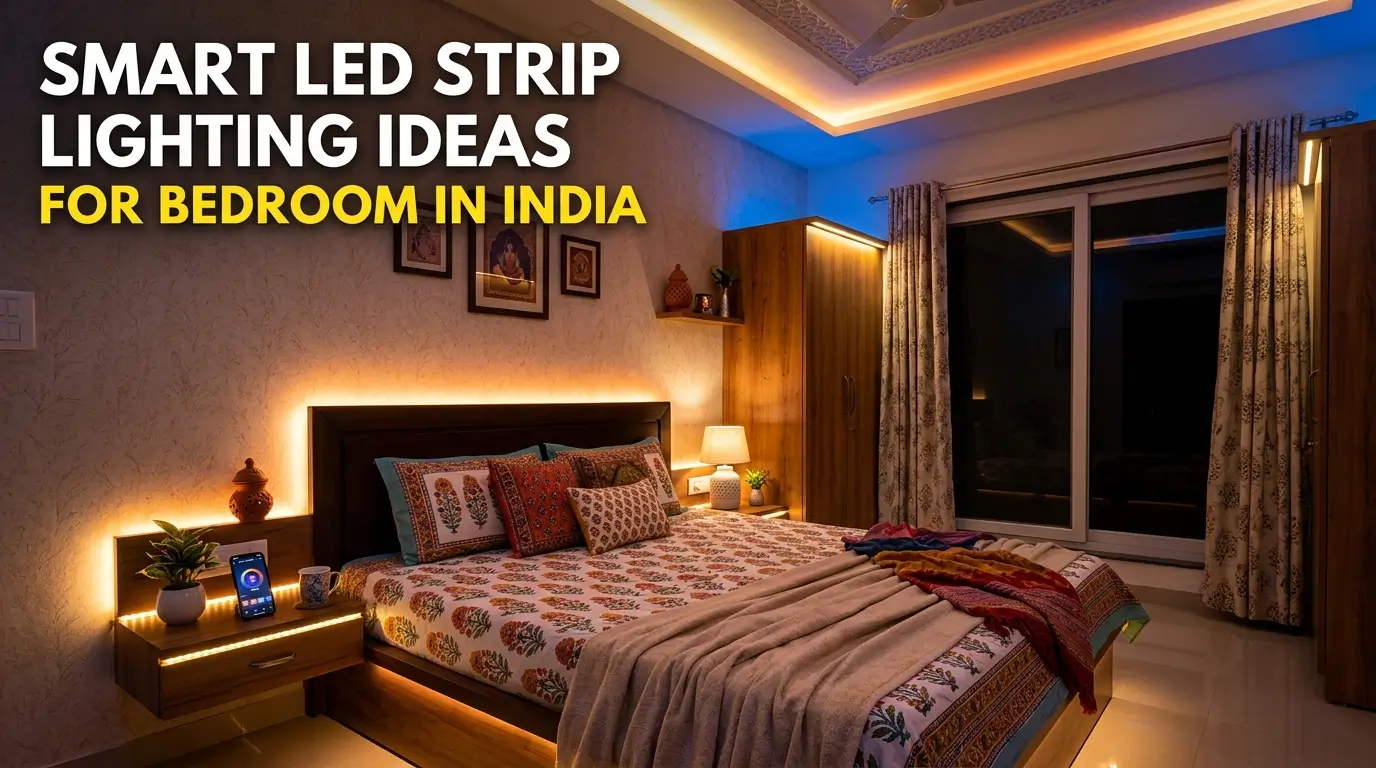
The area beneath the bed is one of the most consistently effective positions for LED strip lighting in a bedroom, and it is effective for reasons that go well beyond pure aesthetics. A continuous strip of warm white LED lights running along the underside of the bed frame, facing downward toward the floor, creates a soft halo of light around the base of the bed that does two practical things simultaneously — it provides enough illumination to navigate the bedroom safely at night without turning on a bright overhead light, and it creates a quality of ambient warmth that makes the bedroom feel more enveloping and more restful in the evenings.
The under-bed LED glow works at its best when the strip is set to a very warm color temperature — 2200 to 2700 Kelvin — and dimmed to a low output level that provides orientation and atmosphere rather than task illumination. At this setting it does not disrupt melatonin production, it does not create harsh shadows, and it does not produce the kind of bright, direct light that signals wakefulness to the brain’s circadian systems. It creates instead the quality of soft, warm illumination that the body interprets as firelight or candlelight — the oldest human sleep signal there is.
Smart control of under-bed lighting allows the strip to be programmed to activate automatically at a low level when motion is detected after a set hour — a practical solution for late-night bathroom trips that avoids the disruptive brightness of any switch-operated light. Several smart LED strip brands available in India including Philips Hue, Syska Smart, and Wipro Smart support motion-triggered activation through their companion apps, making this automation straightforward to set up without any specialist technical knowledge.
2. Headboard Backlight Installation
A LED strip installed behind the headboard — running along the top edge of the headboard panel and directed upward to wash the wall above with warm, diffuse light — creates one of the most universally flattering and most atmospherically effective lighting treatments available in any bedroom. The light it produces does not come from a visible source. It comes from the wall itself, radiating outward and downward in a soft bloom that frames the headboard and creates a warm visual focal point at the most important feature surface in the room.
The headboard backlight is one of those lighting effects that photographs beautifully but is even better experienced in person because the quality of the light it creates — soft, warm, sourceless, and completely free of glare — is something that photographs tend to slightly over-represent by making it look brighter and more dramatic than it actually is in the room. In reality the headboard backlight is a quiet, intimate effect that makes the sleeping area feel like the most considered and most comfortable part of the bedroom rather than simply the part with the largest piece of furniture.
For maximum effect the LED strip behind the headboard should be set at 2700 Kelvin or warmer and run at no more than sixty to seventy percent of its maximum output. Brighter is not better in this application — the effect depends on the softness and warmth of the light rather than its intensity, and a strip running at full power behind a headboard creates a harsh, over-bright bloom that undermines exactly the quality of restful intimacy that the installation is meant to create. Smart dimming that allows the headboard backlight to fade gradually from a moderate level at the beginning of the evening to a very low level as bedtime approaches supports the natural transition toward sleep in a way that a fixed-output installation cannot.
3. Wardrobe Interior and Cove Lighting
The inside of a wardrobe is a consistently underlit space in most Indian bedrooms, and the practical implications of that poor lighting are significant. Finding specific items of clothing in a dimly lit or shadow-filled wardrobe is one of those small daily frictions that compounds over time into a genuine source of morning stress. LED strip lighting installed along the top interior edge of each wardrobe section, or along the underside of each shelf, illuminates the contents clearly and evenly and eliminates the problem entirely.
Smart wardrobe lighting takes this practical solution a step further by automating it completely. A door-activated switch or a motion sensor triggers the wardrobe lights to come on when the doors are opened and to turn off automatically when they are closed, with no manual switching required. This is the simplest and most genuinely useful smart lighting automation available in a bedroom, and it requires nothing more than a short LED strip, a compatible smart controller, and a door sensor that most smart LED ecosystem apps support natively.
Beyond the practical function, LED strip lighting in wardrobe interiors creates a quality of retail display presentation that makes the wardrobe itself a more pleasant space to interact with — well-lit clothes look better, color selection is more accurate, and the daily ritual of getting dressed becomes marginally but consistently more enjoyable. In an Indian bedroom where the wardrobe is often one of the largest and most prominent pieces of furniture, the quality of its interior lighting reflects on the overall sense of order and intention that the room communicates.
4. Ceiling Cove and Perimeter Ambient Lighting
The ceiling cove — a recessed border of false ceiling running around the perimeter of the bedroom, concealing LED strips that direct light upward to reflect off the ceiling surface — is the most architecturally integrated smart LED strip application available in a bedroom and the one that creates the most sophisticated and most even quality of ambient illumination. The light produced by a well-executed ceiling cove installation is completely indirect — there is no visible source, no glare, and no directionality to the illumination. The entire ceiling surface glows gently and the room is lit from above without any of the harshness that direct overhead fixtures create.
In a small Indian bedroom where a false ceiling is being considered anyway for acoustic or aesthetic reasons, integrating smart LED cove lighting into that installation adds very little to the construction cost while delivering a lighting capability that transforms the room’s atmosphere at every time of day and for every activity. At full output with a neutral 3000 Kelvin color temperature, cove lighting provides comfortable ambient illumination for getting dressed and morning activity. Dimmed to fifty percent at 2700 Kelvin it creates warm, restful illumination for evening relaxation. Dimmed to ten percent at the warmest available setting it creates the softest possible sleep-transition light that can be programmed to fade to zero over thirty to sixty minutes as the occupant falls asleep.
Smart control of ceiling cove lighting through a phone app, a voice assistant, or a wall-mounted smart dimmer allows these different scenes to be recalled instantly rather than requiring manual adjustment each time conditions change. The Alexa-compatible and Google Home-compatible LED strip controllers available from Indian brands including Syska, Wipro, and Orient Electric make this smart control accessible at price points that are genuinely reasonable relative to the value they deliver.
5. Mirror Frame and Vanity Backlighting
A mirror in the bedroom, whether it is a full-length standing mirror, a wall-mounted dressing mirror, or a built-in mirror within the wardrobe, is one of the most practically used surfaces in the room and one of the most consistently poorly lit. Overhead lighting directed at a person standing in front of a mirror creates unflattering shadows under the eyes, nose, and chin that make every appearance check in poor lighting conditions an unnecessarily discouraging experience. Proper mirror lighting should surround the face with even, warm illumination that eliminates shadows rather than creating them.
LED strip lighting applied around the perimeter of a bedroom mirror — along the top edge and both side edges at minimum, or completely around all four sides for the most even coverage — creates the kind of lighting that professional makeup artists and photographers use because it surrounds the subject with light from multiple directions simultaneously, eliminating the directional shadows that single-source overhead lighting produces. The color temperature of mirror lighting should be warm but not orange — 3000 to 3500 Kelvin produces the most accurate and most flattering color rendering for assessing appearance, clothing colors, and makeup.
Smart mirror lighting that can be adjusted in both intensity and color temperature allows the mirror to serve different functions at different times. A brighter, cooler setting supports detailed tasks like makeup application and grooming. A warmer, dimmer setting suits the kind of casual appearance check that is part of getting dressed in the morning without the clinical brightness of a task-focused setting. The addition of a smart switch or a voice command to activate the mirror lighting is a small convenience that becomes an appreciated daily routine.
6. Bookshelf and Niche Accent Lighting
A bookshelf in the bedroom — whether it is a full unit beside the bed or a set of floating shelves above the desk or reading chair — becomes a significantly more visually interesting and more atmospherically warm feature when its shelves are individually lit with LED strip lighting. The light within a shelf creates a sense of depth and layering that unlit shelves completely lack, and it draws attention to the books, objects, and plants displayed on the shelf in a way that makes them feel curated and intentional rather than merely stored.
LED strips installed along the underside of each shelf, facing downward, illuminate the contents of the shelf below in a consistent, even wash of warm light. The warm glow visible between the objects on the shelves — the pools of light around books and plants and small decorative objects — creates exactly the kind of layered, intimate bedroom atmosphere that expensive hotel interiors achieve and that most home bedrooms fail to replicate because they rely on a single overhead light to do all the work of illuminating a complex, multi-surface space.
Smart shelf lighting that dims automatically in the evening to a very low level — perhaps activated by a bedtime scene programmed in the smart home app — allows the bookshelf to transition from a well-lit display feature during the active hours of the evening to a soft, warm source of ambient light during the transition toward sleep without requiring any manual adjustment. This kind of automated lighting behavior is one of the most practical and most genuinely sleep-supportive applications of smart LED technology in a bedroom context.
7. Window and Curtain Backlighting
LED strip lighting installed along the top edge of the window frame, between the window and the curtain rail, creates a soft backlight that glows through or around the curtains in the evening, creating a warm, atmospheric effect that makes the window area one of the most visually compelling features of the bedroom when the curtains are drawn. The light visible at the edges of heavy curtains — a warm bloom framing the dark rectangle of the covered window — creates a quality of depth and visual interest that transforms what is otherwise a featureless expanse of fabric into an architectural feature with genuine warmth and character.
This installation is particularly effective in bedrooms where the window is positioned on a wall that is visible from the bed, making it part of the visual environment that is experienced during the transition toward sleep. A very warm, very dim LED strip behind the curtain — running at perhaps ten to fifteen percent of maximum output at the warmest available color temperature — creates exactly the quality of soft, indirect, non-stimulating warmth that supports the sleep transition rather than disrupting it.
Smart control allows this curtain backlight to be included in an automated evening scene that activates at a set time or through a voice command, becoming part of a broader bedroom lighting ritual that includes the headboard backlight, the under-bed glow, and the dimming of any active task lights. The orchestration of multiple smart LED elements across the bedroom into a single automated scene is one of the most genuinely useful applications of smart home technology available in any domestic context.
8. Staircase and Bedroom Threshold Safety Lighting
For bedrooms in multi-level homes, or for the corridor and threshold area immediately outside the bedroom door, LED strip lighting installed at floor level along the base of the wall or at stair riser level creates a safety lighting system that provides enough illumination for safe navigation at night without the disruptive brightness of any switch-operated light. This is an application of LED strip lighting that prioritizes function over aesthetics but that can be executed with enough design consideration to serve both purposes.
Smart motion-activated LED strips at floor level outside the bedroom door detect movement during the night and activate at a very low output level and a very warm color temperature — conditions that provide safe navigation without suppressing melatonin or triggering wakefulness in the way that brighter, cooler light sources would. The automation of this safety function means that it operates without any conscious decision from the user, which is exactly what a well-designed smart home system should do — removing the need for deliberate action in situations where that action is predictable and automatable.
In an Indian household context where multiple family members may move through shared spaces at different times during the night, smart motion-activated floor-level lighting provides a genuinely useful safety function that the conventional approach of leaving a corridor light on all night handles less efficiently and less comfortably.
Choosing the Right Smart LED System for an Indian Bedroom
The Indian smart LED market has matured considerably and there are now genuinely good options at every price point from basic Wi-Fi controlled strips from local brands to the premium internationally certified systems from Philips Hue and similar. The most important factors to consider when choosing a smart LED strip system for an Indian bedroom are color temperature range, dimming performance at low levels, app reliability, and ecosystem compatibility.
Color temperature range determines how warm the strip can go at its lowest setting. Strips that can reach 2200 Kelvin at their warmest produce the most biologically appropriate evening light. Strips that only go as warm as 3000 Kelvin at their warmest are suitable for task and ambient applications but are not ideal for sleep-transition lighting. Dimming performance at very low levels matters because many cheap LED strips flicker or produce uneven output when dimmed below twenty to thirty percent, which is the range that bedroom ambient and sleep-transition lighting most frequently requires. App reliability — the consistency and speed with which the app controls the strip — determines how pleasant the daily experience of using a smart lighting system actually is, and this is an area where cheaper systems often disappoint relative to more established platforms.
A Bedroom That Understands the Time of Day
The most compelling argument for smart LED strip lighting in an Indian bedroom is not the aesthetic one, though the aesthetic improvements are genuine and significant. It is the physiological one. A bedroom lighting system that automatically transitions from functional, moderately bright illumination during the active hours of the evening to warm, dim, biologically appropriate light in the hour before sleep, and to complete darkness during sleeping hours, is a system that actively supports the quality of sleep that every other aspect of health and performance depends on. Smart LED strip lighting, used with intention and programmed with understanding of its physiological effects, is one of the few home improvement investments that pays dividends not in how the room looks but in how the person who sleeps in it feels every single morning.