Mirror Panel Design Ideas to Make Room Look Bigger
The desire to make a small room feel larger is one of the most universal challenges in interior design, and it has generated an enormous body of advice — use light colors, keep surfaces clear, choose small-scale furniture, avoid clutter — most of which is genuinely useful but none of which actually changes the dimensions of the space. These strategies manage the perception of size without fundamentally altering it. They reduce the visual evidence of the room’s limitations rather than actively creating the impression of more space.
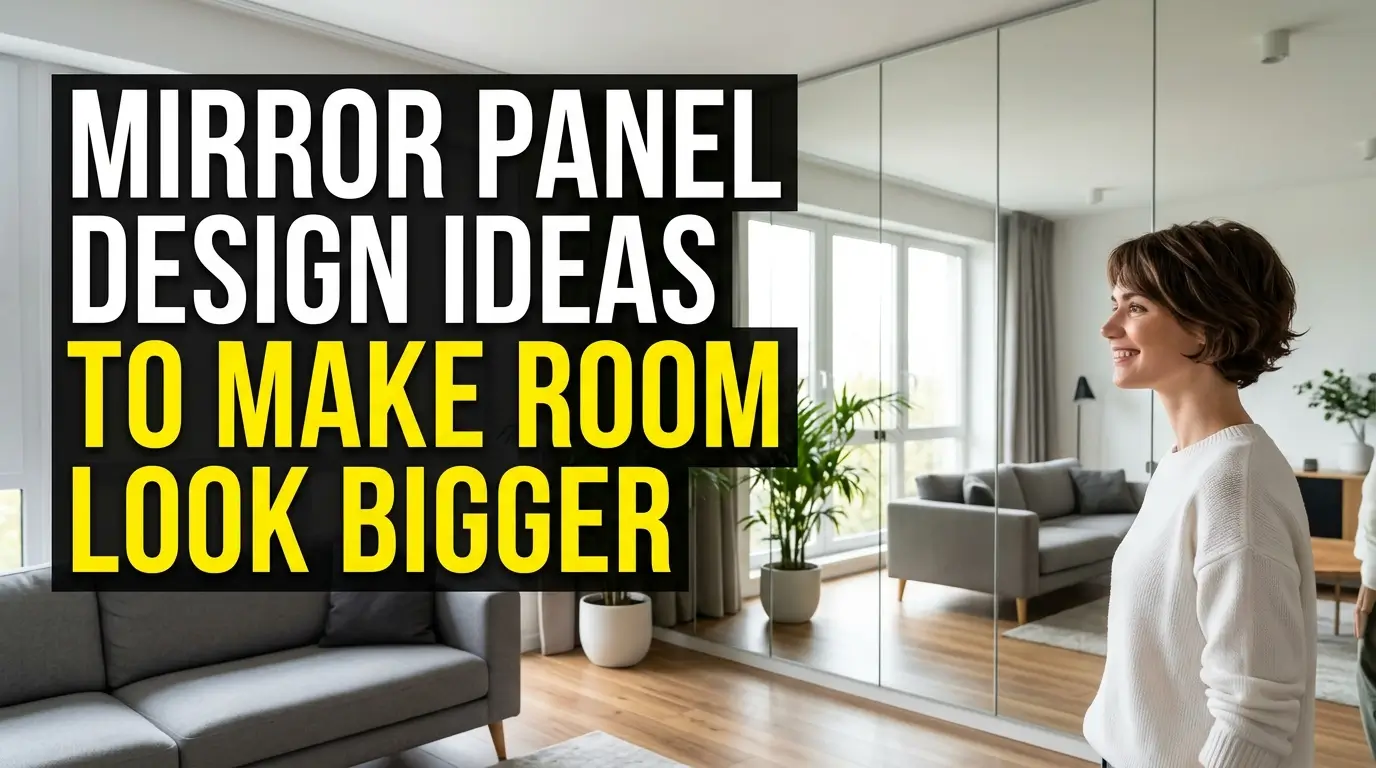
Mirror panels are different. They do not merely minimize the evidence of smallness — they actively create the visual experience of a larger space by reflecting and multiplying what is already in the room. A mirror panel on a wall does not suggest that the room is bigger. It shows the viewer a room that appears to be bigger, with a reflected environment that the brain processes as real space rather than as a representation of space. The neurological mechanism is the same one that makes a corridor with mirrors on both sides feel like it extends indefinitely — the brain interprets reflected depth as actual depth, reflected light as additional light, and reflected space as additional space. The illusion is not perfect but it is remarkably convincing, and in a small room where the goal is to create the experience of living in more space rather than less, the experience is what matters.
The specific advantage of mirror panels over individual decorative mirrors is scale. A small decorative mirror on a wall contributes to the light and the sense of depth of a room modestly and locally. A mirror panel — a large, continuous reflective surface that covers a significant portion of a wall — changes the fundamental spatial experience of the room because it is large enough to reflect the entire depth of the space rather than just a portion of it. The reflection in a large mirror panel includes floor, ceiling, and the full width of the opposite wall, which creates the impression of a room twice as wide or twice as deep as it actually is. That is a genuinely transformative spatial effect rather than a modest decorative contribution.
Mirror Panel Design Ideas to Make a Room Look Bigger
1. Full Wall Mirror Panel Behind the Sofa
The wall behind the sofa in a living room is typically the largest single unobstructed wall surface in the space, and covering it entirely with a large mirror panel or a series of floor-to-ceiling mirror panels creates the single most dramatic spatial transformation available in a small living room. The reflection shows the room extending backward through the wall — the furniture, the lighting, the opposite wall, the windows — creating a visual double of the space that the brain processes as additional room rather than as reflection.
The practical impact of this installation on the experience of the living room is significant in multiple ways simultaneously. The room appears twice as wide because the reflected width of the space is added to the actual width in the viewer’s perception. The light from windows and lamps is reflected and amplified, making the room feel brighter and more luminous. And the room appears more richly furnished and more visually complex because every object in it appears twice — the sofa, the coffee table, the plants, the art on the opposite wall — creating a layered visual environment that a room of the actual size could never contain.
The installation of a full wall mirror panel behind the sofa is best executed with frameless mirror glass panels fitted by a professional glazier who can ensure that the panels are perfectly flat and perfectly aligned — any deviation from perfect flatness or alignment in a large mirror panel creates a distorted reflection that undermines the spatial illusion rather than reinforcing it. Mirror panels of four to six millimeter thickness are appropriate for most residential wall applications and provide a clear, undistorted reflection when properly installed on a flat, prepared wall surface.
2. Mirrored Alcove and Recessed Panel Treatments
Many Indian apartments have alcoves — recessed sections of wall created by structural elements, by the positioning of doors and windows, or by the layout of adjacent rooms — that create awkward, shadowy corners that are difficult to furnish and easy to ignore. Lining the back wall of an alcove with mirror glass transforms these awkward spaces from spatial liabilities into one of the most visually interesting features of the room.
A mirrored alcove creates a sense of depth that is completely disproportionate to the actual dimensions of the recess. The reflection in the mirror at the back of the alcove shows the room beyond the alcove opening in reverse, creating the impression of a passage or doorway leading to another space rather than a dead-end recess. This visual trick is most effective when the alcove is lit from within — a small recessed spotlight or an LED strip along the top of the alcove directed at the mirrored back wall — because the combination of light and reflection creates a quality of visual depth that is genuinely convincing even at close range.
In a small bedroom, a mirrored alcove beside the bed serves the dual function of making the room feel larger and providing the practical reflective surface that a bedroom always needs. In a living room, a mirrored alcove styled with a few carefully chosen objects placed on a slim floating shelf — objects that are reflected and doubled by the mirror behind them — creates a display feature of unusual visual richness that draws attention and creates a focal point without requiring a large surface area.
3. Mirrored Wardrobe and Storage Fronts
The mirrored wardrobe is one of the most practical and most spatially effective mirror panel applications available in a bedroom, and it is significantly more common in Indian homes than most other mirror panel treatments because its practical function — a full-length mirror for appearance checks — is so obviously useful that it justifies the installation on purely functional grounds independent of any spatial benefit.
The spatial benefit is nevertheless real and significant. A full wall of mirrored wardrobe doors in a small bedroom reflects the entire room — bed, windows, opposite wall, ceiling — in a way that makes the bedroom feel dramatically wider and more generously proportioned than it actually is. The reflection doubles the visual width of the room when the mirrored wall runs across the full width of the bedroom, which is the most common wardrobe configuration in Indian apartment bedrooms.
The design of the mirrored wardrobe fronts matters significantly to the overall aesthetic of the room. Plain, frameless mirror panels create the cleanest and most spatially effective reflection but have a somewhat utilitarian quality that may not suit every interior. Mirrored panels divided by slim metal or timber frames in a grid or linear pattern create a more architectural and more designed appearance that suits contemporary interiors. Antique or bronzed mirror glass in wardrobe doors creates a warmer, more atmospheric reflection that suits maximalist or traditionally inclined rooms while retaining most of the spatial amplification benefit of clear mirror glass.
4. Mirrored Panel Wainscoting
Wainscoting — the treatment of the lower portion of a wall with a different material from the upper portion — is a classical architectural technique that adds visual interest and structural definition to a room’s wall surface. Applied to mirror panels, it becomes one of the most sophisticated and most spatially effective mirror installations available in a small room, covering the lower half or lower third of a wall in mirror glass while leaving the upper portion in a complementary paint or wall treatment.
The spatial effect of mirrored wainscoting is different from that of a full-height mirror panel and in some ways more subtle and more interesting. The mirror at the lower portion of the wall reflects the floor and the lower section of the room — the furniture legs, the rug, the lower portions of the walls — in a way that creates the impression of the floor extending outward beyond the wall. This has the effect of making the room appear wider at the level where it is most physically experienced — at floor and furniture level — while keeping the upper portion of the wall as a surface for paint, art, and decorative treatment.
Mirrored wainscoting works particularly well in corridors and narrow passageways — the spatial challenge most common in Indian apartment layouts, where corridors connecting bedrooms and bathrooms are often extremely narrow. Mirror panels on the lower portion of a corridor wall make the corridor feel significantly wider and more comfortable to move through, while leaving the upper wall available for the kind of art and decoration that would feel visually overwhelming at full height in such a constrained space.
5. Mirrored Ceiling Panels in Low Rooms
A mirrored ceiling is one of the most dramatic spatial interventions available in interior design and one of the most consistently underconsidered. In a room with a low ceiling — a genuine spatial constraint in many older Indian apartment buildings where ceiling heights of less than nine feet create a sense of compression that no amount of wall treatment can fully address — a mirror panel on the ceiling creates the impression of the ceiling being twice as high as it actually is by reflecting the floor and furniture below.
The effect is most pronounced when the mirrored ceiling panel covers the central area of the room above the primary seating or sleeping area, where the reflection is most directly visible from the normal resting position of the room’s occupants. A mirrored panel covering the ceiling above the sofa in a small living room, or above the bed in a bedroom with a low ceiling, reflects the furniture and the occupant in a way that creates a dramatically vertical sense of space — the room appears to continue upward beyond the actual ceiling height in a way that makes the ceiling feel remote rather than oppressive.
The practical installation of mirrored ceiling panels requires careful structural consideration — mirror glass is heavy and must be fixed to the ceiling with appropriate mechanical fixings rather than adhesive alone — and should be executed by a professional installer who understands the specific structural requirements of overhead mirror applications. The result, when properly executed, is one of the most spatially transformative and most visually distinctive room treatments available.
6. Mirrored Panel Room Dividers
In a studio flat or an open-plan space where the challenge is to divide zones without reducing the sense of openness, mirrored panel room dividers offer a solution that solves both problems simultaneously. A freestanding or ceiling-mounted room divider faced on both sides with mirror glass creates a visual boundary between zones while simultaneously reflecting both zones back on themselves — each side of the divider appearing larger and more spacious because of the reflected depth that the mirror creates.
The visual effect of a mirrored room divider in a studio apartment is particularly interesting because it creates a situation where both zones appear to extend through the divider into each other — the living area reflected in the mirror appears to extend into the sleeping zone, and the sleeping zone reflected from the other side appears to extend into the living area — creating a sense of spatial generosity that neither zone would possess independently.
Mirrored room dividers work best when they are positioned perpendicular to a window, so that each side of the divider reflects the natural light from the window and both zones of the divided space benefit from the amplification of that light. A mirrored divider positioned parallel to a window rather than perpendicular to it reflects a darker, less attractive section of the room and reduces the spatial and luminous benefit of the installation considerably.
7. Antique and Foxed Mirror Panel Walls
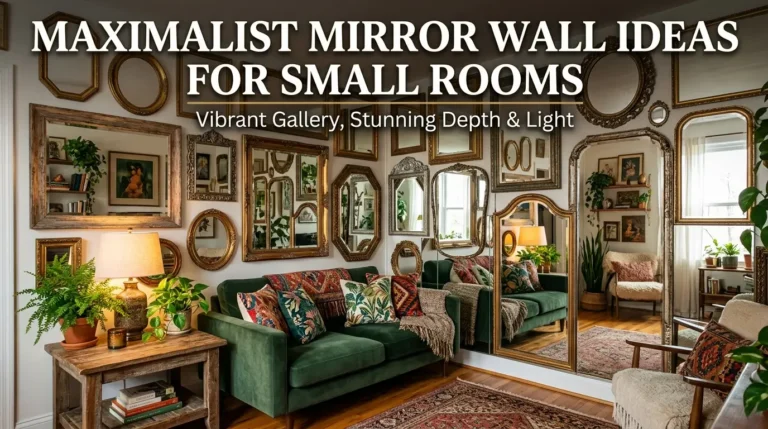
Antique mirror glass — mirror glass that has been deliberately treated to create the aged, foxed appearance of old mirror, with areas of darkened silver, subtle tarnish patterns, and the gentle blur that characterized mirror glass before the precision manufacturing of the modern era — creates a mirror panel wall of unusual atmospheric depth and character that is simultaneously spatially expansive and visually warm in a way that clear, modern mirror glass is not.
The spatial amplification of antique mirror panels is slightly less precise than that of clear mirror glass because the foxed and darkened areas of the glass reduce the clarity of the reflection. But this slight reduction in reflective precision is more than compensated by the atmospheric quality that antique glass creates — a quality of depth and warmth and historical resonance that makes a room feel not just larger but richer and more characterful than any clear mirror installation.
In an Indian interior context where warmth, richness, and cultural depth are valued qualities rather than obstacles to be minimized, antique mirror panel walls create a spatial treatment that aligns with the broader material sensibility of Indian design rather than working against it. A full antique mirror panel wall in a small Indian bedroom or living room creates a space that feels simultaneously larger and more jewel-box in its richness — two qualities that are normally in tension but that antique mirror glass manages to deliver simultaneously.
8. Mirrored Splashback and Functional Surface Panels
In a small kitchen or bathroom where the challenge of making the space feel larger is as pressing as in any living room or bedroom, mirror panels used as splashbacks — the vertical surface between the counter and the wall cabinets in a kitchen, or the wall surface around the basin and bath in a bathroom — create a spatially transformative effect that is particularly powerful in these compact, hardworking spaces.
A mirrored kitchen splashback reflects the kitchen back on itself — the counter, the appliances, the window above the sink — creating a sense of depth behind the counter that makes the kitchen feel significantly less confined. The reflection of natural light from the window in the mirrored splashback amplifies the available light in a space where good illumination is both practically important and often insufficient. And the clean, reflective surface of mirror glass is as practical as it is beautiful — easily cleaned, resistant to moisture and heat splatter, and requiring no grout or joints that accumulate grime over time.
In a small Indian bathroom where the space between the basin and the shower area is often genuinely cramped, a full mirrored panel from the basin to the ceiling — rather than just the conventional small mirror above the basin — creates a reflection of the entire bathroom that makes it feel twice as large. The practical benefit of a large bathroom mirror for grooming and dressing is considerable, and the spatial benefit of a truly large reflective surface in a small bathroom is one of the most consistently impressive spatial improvements available in any Indian home.
Getting the Most From Mirror Panels
The spatial effect of mirror panels depends critically on what they reflect, and this means that the content of the room opposite the mirror panel is as important a design consideration as the panel itself. A mirror panel that reflects a plain, bare wall simply shows a plain, bare wall in duplicate — an improvement on no mirror but not the transformation that good mirror placement creates. A mirror panel that reflects a window, a beautifully styled shelf, a warm lamp, or a richly textured wall surface reflects those qualities and amplifies them, creating a visual environment of genuine richness and depth.
The ideal mirror panel placement reflects the most visually interesting and most light-filled part of the room. Positioning a mirror panel opposite a window captures natural light and reflects it back into the space, dramatically improving the luminosity of the room. Positioning it opposite the most decorative wall of the room — the TV feature wall, the bookshelf, the art collection — doubles the visual interest of that wall and creates a room where every direction offers a compelling view.
The cleanliness of mirror panels is a practical consideration that is easy to underestimate in the planning stages and difficult to ignore in daily life. Large mirror surfaces show every fingerprint, every smear, and every speck of dust with a clarity that smaller decorative mirrors do not, and the maintenance of a genuinely clean large mirror panel surface requires consistent attention. Positioning mirror panels where they are not directly accessible to regular physical contact — behind furniture rather than in passageways, above counter height rather than at touching height — reduces the maintenance burden considerably without sacrificing the spatial benefit.
The Room That Reflects Your Intentions
Mirror panels make a room look bigger through a mechanism that is simultaneously optical and psychological — the brain is genuinely fooled, at least partially and at least initially, into perceiving more space than actually exists. But the best mirror panel installations do more than simply create a spatial illusion. They create a room that is more luminous, more visually complex, more atmospherically warm, and more genuinely pleasant to occupy than its actual dimensions would suggest is possible. The space that the mirror creates is not real in a physical sense, but the experience of being in a room transformed by mirror panels is completely real — and in interior design, as in most things, experience is what ultimately matters.