Modern Yet Traditional Indian Living Room Decor Ideas
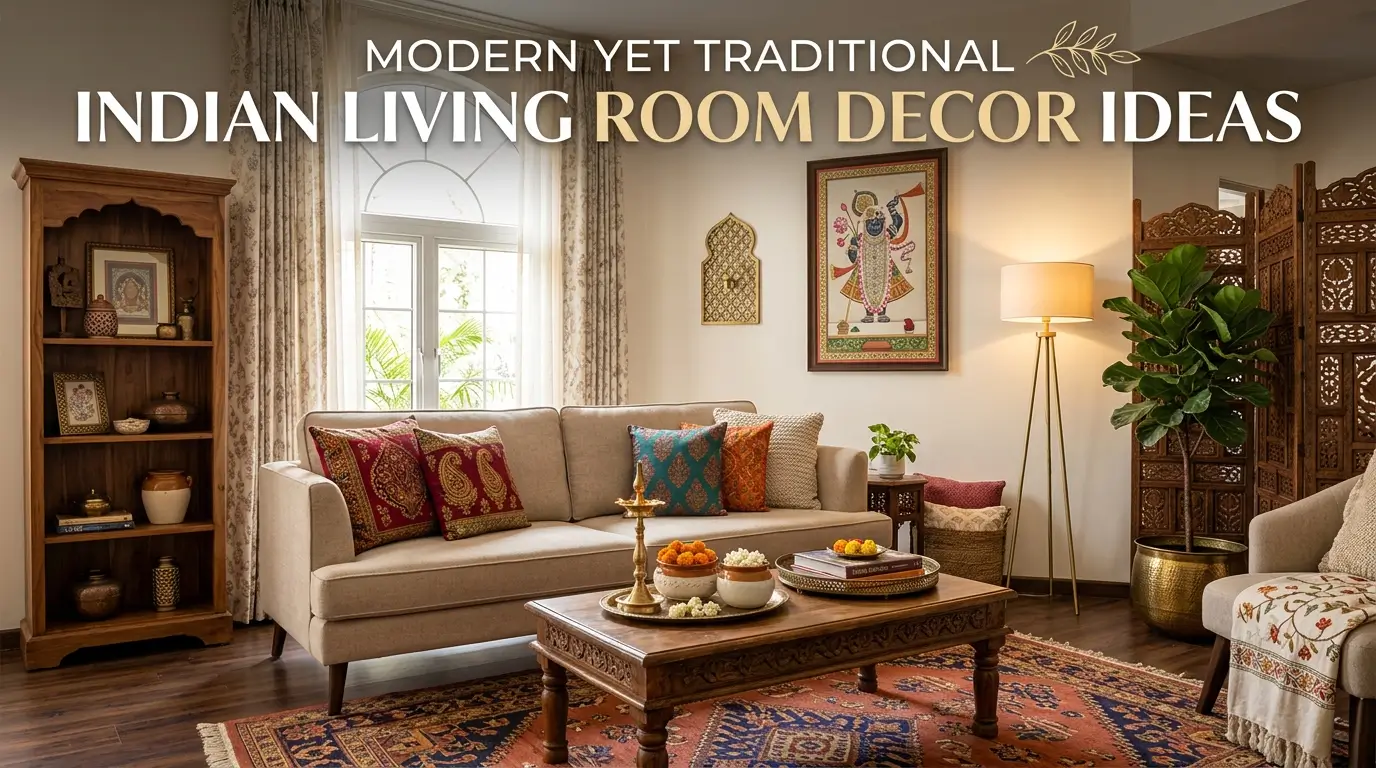
Indian living rooms are at their best when they feel lived-in, welcoming, and layered spaces where clean lines and contemporary comfort meet the warmth of handmade materials, family heirlooms, and a few well-chosen cultural details. The good news is you don’t have to choose between “sleek” and “classic.” With the right mix of color, texture, lighting, and statement pieces, you can create a living room that feels modern, but still unmistakably Indian. If you’re looking for practical ways to blend the two, the ideas below will help you get there without making the space feel like a theme.
1. Start With a Calm, Modern Base (Then Add Traditional Depth)
A modern-yet-traditional space usually works best when the shell is simple: warm white, soft beige, greige, or muted earthy tones on the walls; clean, unfussy flooring; and minimal built-ins. This gives you room to bring in Indian elements carving, brass, textiles, and art without visual overload. Think of it as a gallery-like backdrop for pieces that have history and character.
2. Use a “Statement Traditional Piece” as the Anchor
Instead of scattering lots of small ethnic accents everywhere, pick one main traditional element and let it lead the room. This could be a carved wooden swing (jhoola) if space allows, an antique teak chest as a coffee table, a large mirror with an ornately carved frame, or even a bold Tanjore-style inspired artwork (originals or contemporary interpretations). Keeping everything else streamlined makes that single piece feel intentional and premium rather than busy.
3. Choose Contemporary Seating With Indian Textiles
A modern sofa in a solid neutral fabric (linen-look, cotton blend, performance fabric) gives you comfort and simplicity. Then bring in Indian identity through textiles: block-printed cushion covers, a kantha throw, a dhurrie-inspired rug, or ikat accents. If your sofa is modern and your textiles are traditional, you instantly get the fusion without needing extra décor. Keep the palette consistent two to four main colors is usually enough.
4. Bring in a Wooden “Traditional Tone” Without Over-Carving Everything
Wood is one of the easiest bridges between modern and traditional Indian interiors. Instead of making every surface heavily carved, choose a few warm wooden pieces with subtle craftsmanship: a slatted media console, a cane-front sideboard, a simple sheesham coffee table, or side tables with rounded edges. Then, if you want carving, do it in one place like a mandir cabinet door, a mirror frame, or a single accent chair so the room still feels current.
5. Try a Modern Jali Moment (Partition, Panel, or Cabinet Front)
Jali patterns are iconic, but they can look surprisingly modern when used in clean applications. Consider a jali as: a slim partition between living and dining, a laser-cut panel behind the TV (kept in one tone), cabinet fronts for a console, or even a wall sconce backplate. The pattern brings tradition; the execution (clean lines, minimal colors) keeps it contemporary.
6. Mix Metals the Indian Way But Keep It Controlled
Brass and antique gold tones are timeless in Indian décor, but modern spaces benefit from restraint. Pick one warm metal (brass/antique gold) and pair it with one cooler or neutral metal (matte black, brushed steel) in small doses. A brass urli on the coffee table, a pair of brass candlesticks, or a brass-trim tray can be enough. Then let modern lighting or hardware lean matte black for contrast.
7. Make Lighting the “Modern Upgrade”
If you want your room to feel modern even with traditional objects, lighting is a great lever. Use contemporary forms globe pendants, slim floor lamps, linear wall lights then add Indian warmth through the glow (warm white bulbs) and materials (fabric shades, ribbed glass, or metal with a soft finish). If you love traditional lamps, choose one feature: a pair of modernized lantern-style pendants, or a single large statement chandelier with a slightly ethnic silhouette.
8. Add a Low, Layered Coffee Table Setup (Trays, Books, and One Cultural Detail)
A modern coffee table styling approach pairs beautifully with Indian objects. Use a clean tray to “frame” items, stack a couple of books, add a small plant or florals, and then include one traditional item like a brass diya, a small carved box, or a stoneware bowl. This creates a curated look: modern arrangement, traditional soul.
9. Use Art That Feels Indian But Not Necessarily Old-Fashioned
Wall art is where modern-traditional fusion can look incredibly sophisticated. Consider: contemporary prints inspired by Indian motifs, a large-scale abstract in earthy tones that matches your textiles, black-and-white photography of Indian architecture, or a gallery wall mixing one traditional piece with modern frames and spacing. If you’re using traditional art (Madhubani-inspired, Pichwai-inspired, etc.), scale it up and give it breathing room so it looks like a deliberate focal point.
10. Bring in a Rug That References India (Without Overpowering the Room)
A rug can do a lot of the “traditional heavy lifting.” Dhurries, kilim-inspired weaves, and muted Mughal-style patterns can feel fresh when the colors are toned down think indigo, rust, sand, olive, charcoal. If your furniture is modern, a rug with Indian references makes the space instantly rooted without needing too many extra accessories.
11. Create a Subtle Puja/Mandir Nook That Blends In
Many Indian homes need a spiritual corner, and it can absolutely be modern. A floating shelf with a clean-backed panel, a compact cabinet with simple doors, or a niche with soft lighting can look elegant and minimal while still being respectful and functional. Use one strong material note warm wood, white marble, or a brass accent and keep the surrounding décor calm so the nook feels integrated, not added on.
12. Style With Natural Elements: Plants, Terracotta, and Handcrafted Ceramics
Indian interiors historically used earthy materials, and those feel very aligned with modern décor right now. A couple of large plants (areca palm, rubber plant, ficus) in simple planters, terracotta pieces, or handmade ceramic vases bring texture and softness. If you want to add a traditional item like an urli, consider floating flowers seasonally but keep the vessel shape simple and the placement uncluttered.
Bringing It All Together: A Simple Formula That Works
If you want the “modern yet traditional” balance to look cohesive, use a quick rule of thumb: keep 70% of the room modern (lines, layout, lighting, base colors) and 30% traditional (textures, accents, one hero piece). That ratio tends to feel current while still honoring Indian warmth and identity. Choose a tight palette, repeat materials intentionally, and let a few meaningful pieces do the talking your living room will feel both timeless and fresh.