Low Budget Hall Interior Design for a Small Indian House: Practical Ideas That Look Expensive

Small Indian homes have a lot going for them warmth, daily use, and spaces that do double-duty for guests, TV time, kids’ homework, and festivals. The hall (living room) is usually the most “seen” space, which is why it’s also the easiest place to overspend. The good news is you don’t need a full renovation to make it feel bigger, brighter, and more put-together. With a few smart changes in layout, color, lighting, and storage, you can create a hall interior that looks intentional and stylish on a tight budget. Below are budget-friendly hall design ideas that work especially well in small Indian houses, where space is limited and functionality matters just as much as aesthetics.
1) Start With a Simple Layout That Keeps the Walkway Clear
Before buying anything, fix the flow. In a small hall, the most “premium” look is an open walkway from the entrance to the main seating area. Keep furniture pushed to the edges rather than floating in the middle, and avoid bulky center tables that block movement. If you already own large pieces, try rotating the sofa so it sits against the longest wall, then place a single accent chair or stool opposite it. The goal is to make the room feel breathable, because cluttered circulation is what makes a hall look smaller than it is.
2) Pick One Light Wall Color and Commit to It
Paint is the highest-impact low-budget upgrade you can do. For small halls, lighter shades bounce light and visually widen the room. Good budget-friendly options that suit Indian homes include warm off-whites, light beige, pale greige, soft ivory, or very light pastel tones. Instead of doing multiple accent colors across different walls, stick to one primary wall shade and add interest with textiles and decor. A consistent color palette looks cleaner and more “designed,” even when the budget is limited.
3) Use an Accent Wall, But Keep It Minimal and Easy
If you want a feature wall, skip expensive wall panels and go for one of these low-cost options: a single darker paint shade behind the TV unit, removable wallpaper on one wall only, or a simple stencil pattern. In a small Indian hall, it’s best if the accent wall is the TV wall or the wall behind the sofa this creates a focal point and reduces the temptation to decorate every wall. One strong focal wall can make the whole room feel finished.
4) Budget TV Unit Idea: Wall-Mounted Shelf + Clean Wiring
TV units are often where budgets disappear. A low-cost alternative that still looks modern is a wall-mounted shelf or floating ledge with a compact storage cabinet below (or a slim console). The key is cable management. Use white cable casing to hide wires and mount the set-top box/router neatly. Even basic furniture looks premium when the TV wall is clean, symmetrical, and uncluttered.
5) Swap Heavy Curtains for Light, Floor-Length Drapes
Curtains can instantly change how big the hall feels. Heavy, short curtains visually reduce height and make the room feel busy. Instead, choose light-colored curtains (off-white, beige, light grey) and hang them close to the ceiling, letting them fall to the floor. This creates the illusion of taller walls and a more spacious room. If privacy is a concern, pair sheer curtains with a simple thicker curtain, but keep the colors neutral to avoid visual clutter.
6) Add a Rug to “Anchor” the Seating Without Filling the Room
A rug is one of the easiest ways to make a hall look cohesive. In small halls, pick a rug that’s large enough to sit under the front legs of the sofa and chairs. Avoid tiny rugs that float in the middle they make the room look pieced together. Choose simple patterns or subtle textures that hide dust (a real concern in many Indian cities) and don’t clash with cushions, curtains, and wall colors.
7) Use Cushions Strategically for a Designer Look
If you’re working with an older sofa, cushions are your best friend. Stick to 2–3 colors total, and mix a couple of solids with one small print. Indian halls often look cluttered when every cushion is a different color and pattern, so coordination matters more than cost. A clean cushion set, plus one throw on the armrest, gives you that “styled” look without buying new furniture.
8) Create a Small Mandir Corner Without Taking Over the Hall
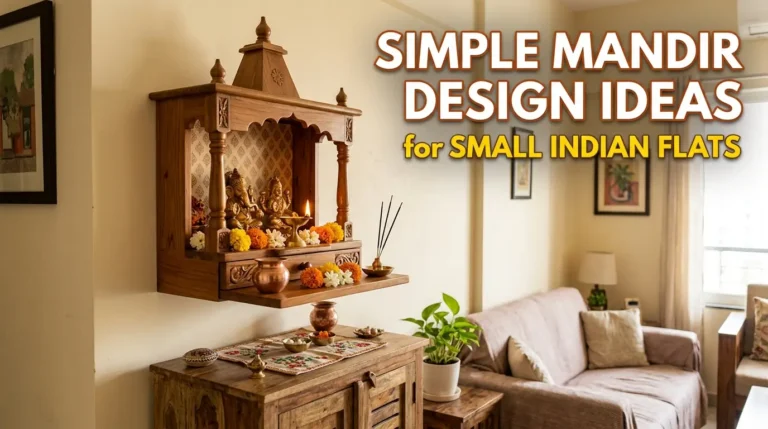
Many small Indian houses need a pooja space in or near the hall. You can create a neat mandir corner with a wall-mounted temple shelf or a compact unit in a niche. Add a warm light (a small LED or sconce), keep decor minimal, and store pooja items in a closed drawer or box so the area looks tidy daily, not just on festival days. A calm, contained mandir setup makes the hall look more organized overall.
9) Mirrors: Make the Room Look Bigger for Very Little Money
A mirror is a classic space-expander. Place it where it reflects light near a window or opposite a bright wall. In a small hall, one medium-to-large mirror can do more than multiple small decor pieces. Choose a simple frame (black, wood, or gold depending on your palette) and keep the surrounding wall clean so it becomes a strong focal element.
10) Lighting Upgrade: Warm LEDs + One Statement Piece
Lighting is where small halls either look cozy or dull. Switch to warm white LED bulbs (not harsh cool white) and add layered lighting if possible: a ceiling light for general illumination, plus one floor lamp or wall light near the sofa. If you can do only one “statement,” choose a simple pendant, a clean chandelier, or a modern semi-flush fixture. Even an affordable light looks good if the rest of the ceiling isn’t crowded with too many different fittings.
11) Low-Budget False Ceiling Alternative: Focus on the Perimeter
False ceilings can be expensive. If you want a similar “finished” effect, consider a simple perimeter LED strip (cove-style look) only in one area, or use a clean ceiling paint refresh and a better main light. Another low-cost trick is to use a slim ceiling border paint detail in a slightly different shade subtle, but it adds definition without construction work.
12) Storage That Doesn’t Look Like Storage: Closed Cabinets and Baskets
Small halls get messy fast because they host everything remote controls, toys, books, extra cushions, and sometimes shoe overflow from the entrance. Instead of open shelves that show clutter, prioritize closed storage: a storage ottoman, a slim console with shutters, or a wall-mounted cabinet. If you need open storage, use matching baskets so the look stays uniform. When the hall looks tidy, it automatically looks more expensive.
13) Add One “Indian Touch” That Feels Intentional (Not Overdone)
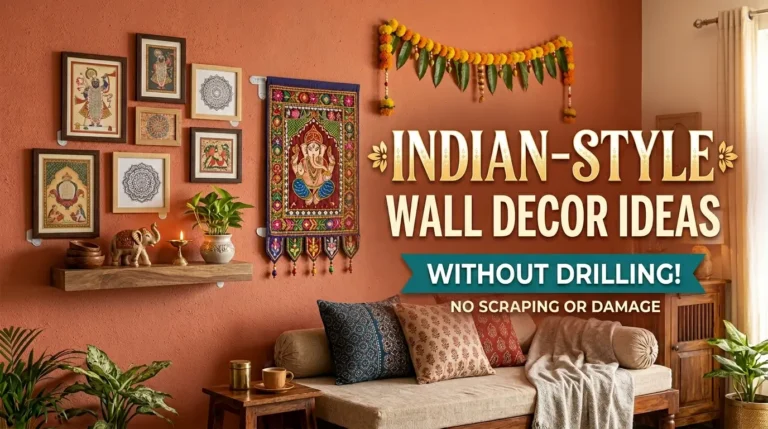
A small Indian hall doesn’t need dozens of showpieces. Choose one strong cultural element: a framed Madhubani or Warli print, a brass lamp, a cane accent chair, or a single carved wall decor piece. Keep it as a focal point and avoid scattering many small items everywhere. A curated look always beats a crowded one, especially in limited square footage.
14) Greenery That Survives: Easy Indoor Plants
Plants bring life into a hall, but only if they’re manageable. Choose low-maintenance options like money plant, snake plant, ZZ plant, or pothos. Use one or two medium plants rather than many small ones. A simple planter stand near a window can make the hall feel fresh and styled, with minimal cost and effort.
Step 1: Declutter + rearrange furniture for clear walkway
Step 2: Paint walls in one light neutral shade
Step 3: Upgrade curtains to light, floor-length panels
Step 4: Clean up the TV wall (shelf + wire management)
Step 5: Add a rug + coordinated cushions
Step 6: Improve lighting with warm LEDs and one good fixture
Tell me: your hall size (approx. in feet), whether it’s attached to dining, your budget range (₹5k/₹15k/₹30k), and whether you prefer a modern, traditional, or “simple elegant” style. I’ll suggest a specific layout and a shopping list that fits.