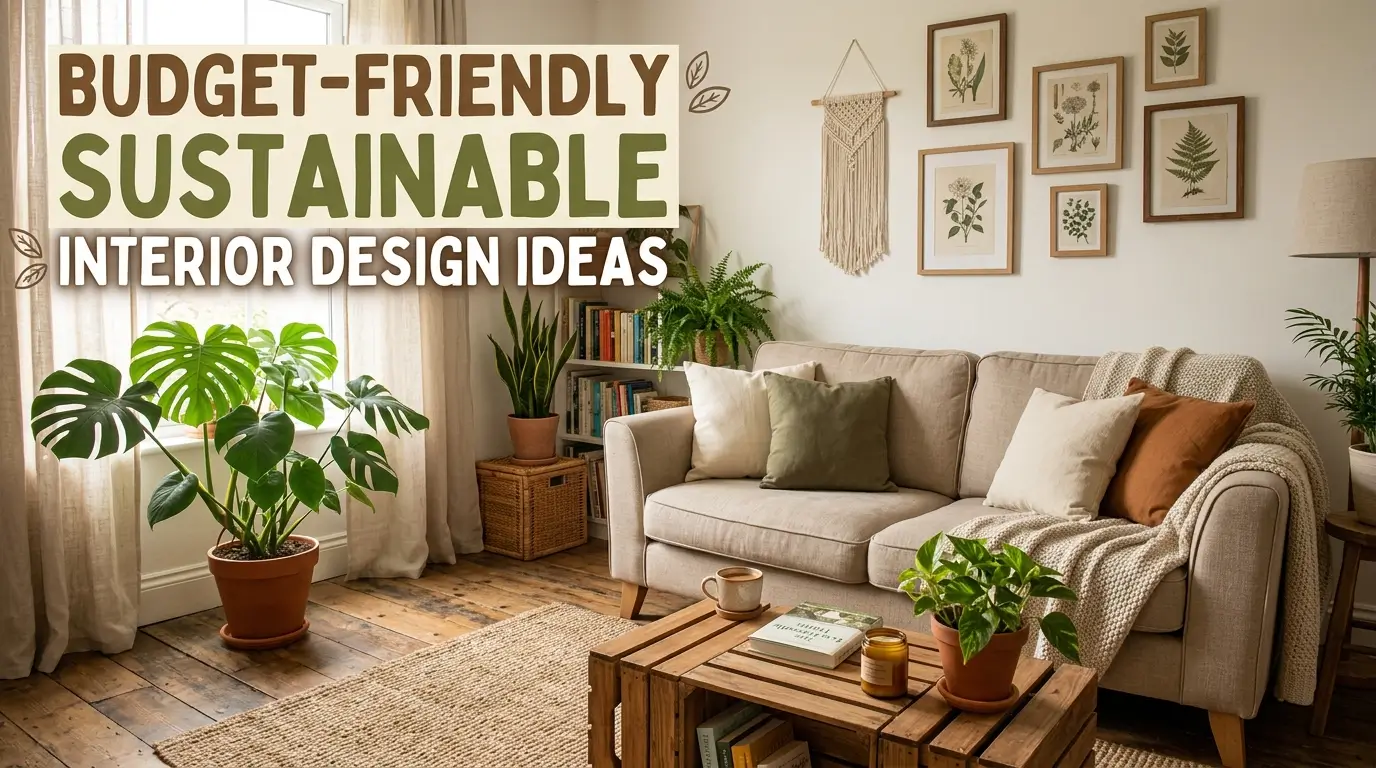
Budget Friendly Sustainable Interior Design Ideas
Sustainable interior design has a reputation problem. Somewhere in the space between genuine environmental concern and aspirational lifestyle marketing, the idea took hold that designing a home sustainably means spending more — on certified organic materials, on designer pieces made from reclaimed wood, on artisan-crafted objects that carry a price tag reflecting their ethical production credentials. This reputation is not entirely undeserved because the premium end of the sustainable design market does genuinely cost more, and the brands that have built their identity around sustainability have often positioned that identity as a justification for prices that exclude most of the people who would benefit most from adopting more sustainable practices at home.
But the reputation is also fundamentally misleading because the most sustainable interior design decisions available are almost universally the cheapest ones. Not buying something is more sustainable than buying the most ethically produced version of it. Repairing a broken chair is more sustainable than replacing it with a reclaimed wood alternative. Painting a wall with leftover paint is more sustainable than buying a low-VOC premium brand. Using what you already own in a new way is more sustainable than purchasing anything at all. The overlap between budget friendly and genuinely sustainable is not a coincidence — it reflects the fact that the most environmentally responsible approach to furnishing and decorating a home has always been to consume less, use longer, and waste nothing.
Budget Friendly Sustainable Interior Design Ideas
1. Start with What You Already Own
The single most sustainable and most budget friendly interior design decision available is a thorough reassessment of what you already own before buying anything new. Most homes contain a significant amount of furniture, textiles, and decorative objects that are perfectly functional but have been displaced by newer acquisitions, stored in corners or cupboards, or simply stopped being seen because familiarity has made them invisible.
A proper audit of what the home contains — pulling things out of storage, reassessing every piece of furniture in terms of whether it is in the right place doing the right job, and looking at familiar objects with fresh eyes — often reveals more design potential than a shopping trip. A side table that has been sitting in the bedroom might work better in the living room. A set of cushion covers at the back of the linen cupboard might be exactly what the sofa needs. A framed print that has been leaning against the wall for two years might be the thing that makes a bare wall come alive. The carbon footprint of rearranging what you own is zero. The cost is zero. And the results are often more satisfying than anything a purchase could deliver because the objects already belong to the space and to the life being lived in it.
2. Repaint Rather Than Replace
Paint is one of the most powerful and most cost-effective tools available in interior design and one of the most dramatically underused by people who assume that meaningful change requires new furniture or new fixtures. A single wall painted in a carefully chosen color can transform the entire character of a room — changing its perceived size, its warmth, its mood, and its relationship to the furniture and objects within it — for a fraction of the cost of any furniture purchase.
From a sustainability perspective, repainting an existing wall is almost infinitely preferable to buying new furniture to refresh a space. No new material is manufactured, no transportation emissions are generated, no packaging waste is produced, and no existing furniture is discarded to make room for a replacement. The paint itself, if chosen carefully, can be a low or zero-VOC formulation that doesn’t compromise indoor air quality — brands offering these options are increasingly available in India at price points that are competitive with conventional paint.
Leftover paint from previous projects, mixed together if necessary, can produce unique and interesting colors that cost nothing and ensure that no material goes to waste. Painting techniques like color blocking, a painted arch, or an accent panel behind the bed require only a small quantity of paint and produce design results that look deliberate and considered rather than budget-constrained.
3. Second Hand and Vintage Furniture
The furniture that already exists in the world represents an enormous reservoir of embodied energy, materials, and craftsmanship that becomes waste every time a piece is discarded rather than passed on. Buying second hand furniture is sustainable for the most straightforward possible reason — it prevents an existing object from becoming waste and eliminates the environmental cost of manufacturing, transporting, and packaging a new replacement.
In Indian cities, second hand furniture is available through a range of channels that cover every price point and every aesthetic preference. Kabadiwallas and local second hand dealers offer the most affordable options, often including genuinely old and well-made pieces at prices that reflect disposal value rather than design value. Online platforms like OLX, Facebook Marketplace, and increasingly Instagram-based vintage furniture accounts make second hand furniture accessible without requiring physical market visits. Government and institution auctions periodically offer old office furniture, wooden pieces, and fixtures at very low prices.
The aesthetic of second hand furniture is one of its greatest strengths from a design perspective. Old solid wood pieces have a grain, a warmth, and a sense of material quality that new furniture at equivalent price points almost never matches. Steel and iron pieces from the mid-twentieth century have a solidity and a character that feels genuinely distinctive in a contemporary interior. The imperfections and signs of use that second hand furniture carries are not flaws to be hidden — they are evidence of a history that makes each piece unique and irreplaceable.
4. Natural and Organic Textiles from Local Markets
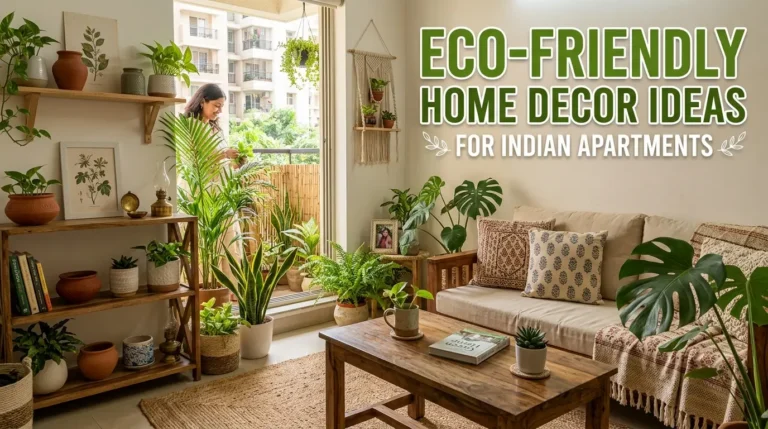
Textiles are one of the most impactful categories of home decor from both a design and a sustainability perspective, and they are also one of the categories where the gap between conventional and sustainable options is smallest in the Indian context. India’s handloom and natural fiber textile traditions produce cotton, jute, wool, and silk products of extraordinary quality at prices that reflect the efficiency of traditional production rather than the premium of sustainability marketing.
Local textile markets in virtually every Indian city — Surat, Ahmedabad, Panipat, Varanasi, Karur — sell handloom cotton fabric at prices per meter that make it possible to furnish an entire home with natural, sustainable textiles for less than the cost of a single synthetic rug from a mass market home store. Block-printed cotton from Rajasthan, handwoven cotton from Andhra Pradesh, khadi from Gujarat, and ikat from Odisha are all available through local markets, government emporiums, and online craft platforms at prices that are accessible at virtually every income level.
Replacing synthetic cushion covers with block-printed cotton, swapping polyester curtains for handloom linen, and choosing a jute rug over a polypropylene one are individually modest changes that collectively transform the material character of a home toward something more natural, more sustainable, and in almost every aesthetic dimension more beautiful.
5. DIY Natural Cleaning and Maintenance Products
This idea sits at the intersection of sustainability, budget consciousness, and indoor environmental quality in a way that makes it relevant to interior design even though it doesn’t involve furniture or decor in the conventional sense. The cleaning products used to maintain a home are part of the home’s material environment, and the conventional cleaning products widely used in Indian households introduce a significant chemical load into the indoor environment through the volatile compounds they release during and after use.
Natural cleaning alternatives — white vinegar for glass and surface cleaning, baking soda for abrasive scrubbing, lemon juice for deodorizing and stain removal, neem-based solutions for antimicrobial cleaning — cost a fraction of conventional cleaning products, produce no harmful indoor emissions, and generate minimal packaging waste compared to the plastic bottles that conventional cleaners come in. These are not new ideas in the Indian context — many of them are the cleaning practices of previous generations, temporarily displaced by the marketing of commercial alternatives.
From an interior design perspective, switching to natural cleaning products is relevant because it protects the surfaces, textiles, and finishes of the home from the degrading effects of harsh chemical cleaners, extending the life of every material in the space and reducing the frequency with which things need to be replaced.
6. Upcycling and Creative Repurposing
Upcycling — the practice of taking an existing object and giving it a new function or a new aesthetic life — is simultaneously the most sustainable and the most creatively engaging approach to home decor available at any budget level. It asks nothing more than the willingness to look at familiar objects and ask what else they could be, and it produces results that are by definition unique, personal, and impossible to replicate from a store.
In the Indian home context, the raw material for upcycling is abundant. Old brass vessels make beautiful pendant light fixtures when fitted with a bulb and a cord set available from any hardware store. Empty glass bottles with a coat of chalk paint become sculptural vase arrangements. Old wooden crates stacked and fixed together become shelving units. Worn cotton sarees cut and sewn into cushion covers bring color and textile history into the living room. Damaged ceramic tiles arranged as a mosaic make a distinctive backsplash or tabletop. Discarded wooden pallets sanded and finished become coffee tables, wall shelves, or bed frames.
The investment in upcycling is primarily time and creativity. The material costs are minimal — chalk paint, a cord set, sandpaper, wood stain, a set of hinges — and the results carry a personal quality that purchased decor rarely achieves because each piece reflects a specific decision, a specific material, and a specific maker rather than a production line.
7. Maximizing Natural Light
Natural light is the most sustainable light source available and the one that makes the greatest difference to how a home looks and feels. A room with abundant natural light looks larger, feels warmer, shows colors more accurately, and requires less artificial lighting — reducing both energy consumption and electricity cost simultaneously. Maximizing the natural light available in an apartment costs nothing and is one of the highest-impact sustainable design decisions available.
In practical terms, maximizing natural light means keeping windows unobstructed by heavy furniture, choosing light-colored or sheer window treatments that allow light to penetrate rather than blocking it, placing mirrors on walls that receive reflected light to amplify its reach deeper into the room, and keeping surfaces light enough in color to reflect rather than absorb the available light. Moving a large piece of furniture away from a window, replacing heavy curtains with light cotton ones, and positioning a mirror to catch and redirect natural light are changes that cost nothing and can transform the brightness and apparent size of a room dramatically.
Artificial lighting, when it is needed, should be chosen for energy efficiency and warm color temperature. LED bulbs in the 2700 to 3000 Kelvin range produce the most residential, flattering light at the lowest energy consumption, and their running cost over time makes them dramatically more economical than incandescent or fluorescent alternatives despite their higher upfront price.
8. Plants as the Primary Decorative Investment
Indoor plants are one of the most sustainable decorative investments available in any budget because they are living, growing, self-reproducing organisms rather than static manufactured objects. A single money plant cutting placed in a glass of water costs almost nothing and produces a cascading vine that can eventually fill a corner, trail along a shelf, or climb a simple trellis. A spider plant produces offshoots called spiderettes that root easily in water and can populate an entire apartment with new plants over the course of a year. An areca palm purchased as a small plant at a local nursery grows steadily into one of the most effective air-purifying plants available for indoor spaces.
The propagation potential of plants means that the initial investment in a small number of good plants can, over time, provide all the living decor that an apartment needs without any additional purchases. Sharing cuttings with neighbors, friends, and family creates a network of plant exchange that circulates living material through a community at zero cost. The only ongoing investment is water, occasional fertilizer, and the time to notice and respond to what each plant needs.
From a design perspective, plants do something that no manufactured decor object can achieve — they bring genuine life into a space. The movement of leaves in a gentle breeze, the slow unfurling of a new leaf, the way a trailing plant finds its way toward the light — these are qualities that a ceramic vase or a framed print cannot replicate and that make a plant-filled room feel fundamentally more alive and more inhabitable than one furnished exclusively with static objects.
9. Reducing, Reusing, and Choosing Less
The most radical and most effective sustainable interior design strategy available is also the one that most directly conflicts with the consumerist logic that the interior design industry depends on — simply choosing to have less. A home with fewer objects, fewer pieces of furniture, and fewer decorative items requires less material to produce, less energy to manufacture and transport, less packaging to dispose of, and less money to acquire than one furnished according to the prevailing logic of filling every surface and every wall with something purchased for the purpose.
The aesthetic case for restraint is as strong as the environmental one. Rooms with fewer, better-chosen objects have a clarity and a calm that cluttered rooms — regardless of how sustainably each individual object was produced — simply cannot achieve. A single well-made object on a shelf communicates confidence and intention in a way that a shelf crowded with objects never can. A room with one good rug, one well-positioned plant, and one piece of meaningful art on the wall has a design coherence that a room full of impulse purchases and decorative accumulation consistently lacks.
Choosing less means being more selective, more patient, and more deliberate about what enters the home. It means waiting for the right piece rather than filling a space with something adequate. It means living with empty space long enough to understand what that space actually needs rather than reflexively filling it with the first affordable option available. These are habits of mind as much as habits of consumption, and they produce both a more sustainable home and a more beautiful one.
Sustainable Design as a Long-Term Practice
Budget friendly sustainable interior design is not a one-time project with a completion date. It is an ongoing practice of making better decisions — about what to buy, what to keep, what to repair, what to pass on, and what to let go of — that gradually shapes the home into a reflection of genuine values rather than accumulated consumption. The decisions compound over time in the same way that unsustainable ones do, but in the opposite direction — toward a home that contains more meaning, more quality, more beauty, and less waste with every passing year.
A Beautiful Home That Costs the Earth Nothing
The most budget friendly sustainable interior design decision is almost always the most environmentally responsible one, and the most environmentally responsible one is almost always the most aesthetically satisfying one over the long term. A home furnished with natural materials, filled with light and living plants, decorated with objects that have genuine histories and genuine quality, and maintained with care and intention will always be more beautiful and more livable than one assembled quickly and cheaply from disposable alternatives — and it will always be kinder to the planet that made everything in it possible.