How to Use Bamboo Decor in Small Living Room
There is something about bamboo that feels immediately right in an Indian living room. It is not a foreign material imported from a design tradition that has no relationship to this country’s interiors — it is a material that has been part of Indian domestic life for as long as Indian domestic life has existed. Baskets, mats, furniture, screens, and architectural elements made from bamboo have been found in homes across every region of India from the northeastern states where it grows in extraordinary abundance to the coastal homes of Kerala and Karnataka where it has been used in construction and craft for centuries. When bamboo appears in a contemporary Indian living room it does not look like a trend. It looks like a homecoming.
The specific appeal of bamboo in a small living room goes beyond cultural familiarity. Bamboo is visually light in a way that heavier materials like solid wood, stone, and metal are not. It has a warmth and a texture that synthetic materials cannot replicate, but it carries that warmth without the visual heaviness that makes a small room feel smaller. A bamboo shelf, a cane chair, a woven bamboo lamp shade — each of these introduces material richness and design character into a small space without adding the kind of visual weight that crowds the room or makes it feel more compressed than it already is. In a small living room where every design decision has to balance character with restraint, bamboo occupies that balance more naturally than almost any other material available.
Ways to Use Bamboo Decor in a Small Living Room
1. Bamboo Shelving as a Feature Wall Element
A bamboo or rattan shelving unit on one wall of a small living room does several things simultaneously that make it one of the most effective single additions you can make to the space. It provides storage and display capacity without the visual heaviness of a solid wood or MDF unit. It introduces the warm, natural texture of bamboo into a room that may otherwise be dominated by painted walls and upholstered furniture. And it creates a focal point on the wall it occupies that gives the room a clear design anchor.
Open bamboo shelves styled with a mix of books, plants, small terracotta objects, and woven baskets have the kind of layered, organic quality that makes a small living room feel curated and intentional rather than sparse or overfurnished. The key to styling bamboo shelves in a small space is restraint — leaving some shelves partially empty rather than filling every available surface communicates confidence and makes the room feel more spacious than a shelf packed to capacity.
Wall-mounted bamboo shelves rather than floor-standing units keep the floor clear and amplify the sense of space in a small living room. A set of floating bamboo or rattan shelves arranged at different heights on a single wall creates a display and storage system that feels dynamic and organic rather than rigid and uniform, which is particularly well suited to the natural character of the material.
2. Woven Bamboo and Cane Furniture
The furniture choices in a small living room have a disproportionate impact on how the space feels because furniture occupies the majority of the floor area and the majority of the visual field. Heavy, upholstered, solid-frame furniture in a small room creates a sense of compression — the room feels smaller than it is because the furniture fills it so completely. Bamboo and cane furniture has the opposite effect. Its open weave construction, its slender frame profiles, and its warm natural color create a sense of lightness and airiness that makes a small room feel more generously proportioned than its dimensions actually allow.
A pair of cane armchairs flanking a small side table, or a single cane accent chair beside the sofa, introduces the texture and warmth of natural material into the living room seating arrangement without adding the visual weight of fully upholstered alternatives. The open weave of cane and rattan allows the eye to pass through the furniture rather than stopping at it, which creates a perception of depth and space that solid furniture blocks entirely.
In an Indian small living room context, a bamboo or cane sofa with thin cushions rather than deep upholstered seating is one of the most space-efficient and visually light furniture choices available. It seats the same number of people as a conventional sofa while occupying less visual space and creating a more open, airy atmosphere in the room.
3. Bamboo Room Dividers and Screens
In a small living room that needs to be divided from a dining area, an entryway, or a sleeping zone without the use of a permanent wall, a bamboo screen or room divider is one of the most elegant and space-appropriate solutions available. It creates a visual boundary between zones without blocking light, without adding the physical weight of a solid partition, and without reducing the sense of openness that a small living room depends on.
A bamboo screen with a natural finish and a geometric weave pattern introduces texture, pattern, and material warmth into the room while quietly performing the spatial function of division. It can be positioned perpendicular to a wall to separate the living area from another zone, or placed at an angle in a corner to create a more intimate seating arrangement within the larger space. Because it is freestanding and lightweight, it can be moved and repositioned as needs change — a flexibility that a built wall or a heavy bookshelf divider cannot offer.
Backlit bamboo screens deserve particular mention as a small living room decor idea. A simple LED strip light placed behind a woven bamboo screen creates a warm, diffused glow that passes through the weave pattern and casts beautiful geometric shadows on the surrounding walls. The effect is dramatically atmospheric and transforms a simple divider into one of the most striking design features in the room.
4. Bamboo Pendant Lights and Lamp Shades
Lighting is one of the most transformative and most underinvested areas of small living room design, and bamboo and rattan pendant lights are among the most effective lighting choices available for a compact space. A woven bamboo pendant shade allows light to pass through the weave in a pattern of warm, dappled pools that adds a quality of intimacy and softness to a room that a bare bulb or a closed shade cannot replicate.
In a small living room with a standard ceiling height, a single large woven bamboo pendant hung as a statement light above the seating area creates a visual focal point overhead that draws the eye upward and creates the perception of height in a low-ceilinged space. Multiple smaller bamboo pendants hung at varying heights create a more dynamic overhead composition that fills the upper portion of the room with material texture and warm light simultaneously.
Floor lamps with woven bamboo or rattan shades serve a similar purpose at a lower level, creating pools of warm, directional light in the corners of the room that soften the harshness of overhead lighting and make the small living room feel more intimate and more residential in the evening.
5. Bamboo and Woven Wall Art
Walls in a small living room need to be decorated with care because the wrong choice — something too large, too heavy, or too visually dominant — can make the room feel smaller rather than more interesting. Woven bamboo wall panels, rattan wall art, and wicker weave decorative pieces have a visual weight that is perfectly calibrated for a small space — they add texture, pattern, and warmth without the heaviness of framed canvas art or the sharpness of metal wall sculptures.
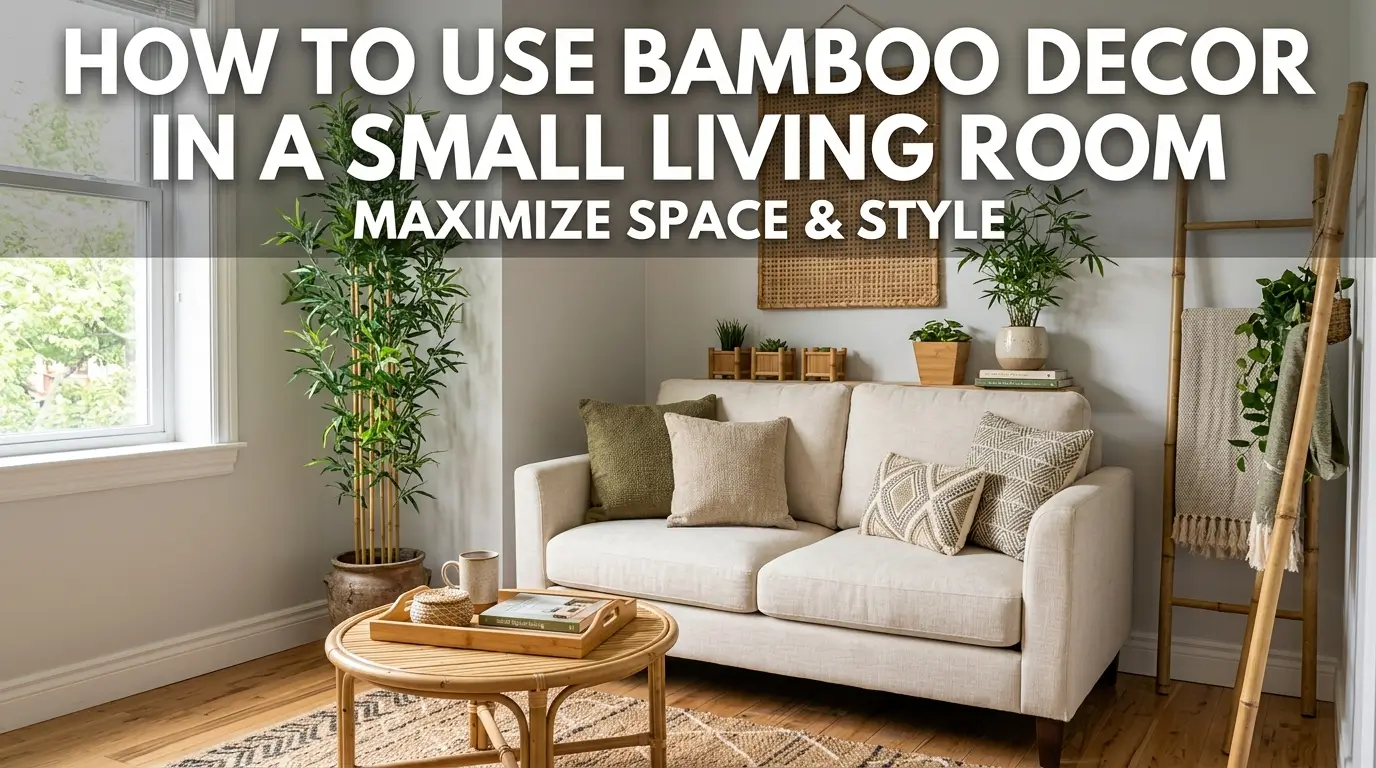
A large woven bamboo wall panel as the main decorative element on the feature wall behind the sofa creates a backdrop of natural texture that makes the entire room feel warmer and more layered without introducing any additional visual complexity. The natural color variation in bamboo and rattan — the warm golds, honeys, and browns that appear across the surface of a single woven piece — provides all the color interest the wall needs without requiring paint, wallpaper, or printed art.
Smaller woven pieces arranged as a gallery wall offer an alternative approach that works particularly well in a small living room because it distributes the decorative interest across the wall in a way that feels more dynamic and less imposing than a single large piece. Circular woven rattan mirrors mixed with flat woven panels and small bamboo frame objects create a gallery arrangement that has the organic, collected quality of a personal display rather than the uniformity of a matched set.
6. Bamboo Storage Baskets and Organizers
Clutter is the most effective way to make a small living room feel smaller than it actually is, and bamboo storage baskets are one of the most attractive solutions to the clutter problem available in any interior. They hold everything from throw blankets and cushion covers to books, remotes, children’s toys, and the various small objects that accumulate in a living room over the course of daily life, and they do it in a container that looks like a deliberate decorative choice rather than a storage solution.
A large woven bamboo basket beside the sofa holding a rolled throw and a few scatter cushions introduces texture and natural material at floor level while keeping the room tidy. A set of smaller woven baskets on the bamboo shelf holding books, chargers, and miscellaneous items creates organized storage that looks cohesive and intentional. A tall bamboo laundry basket or magazine holder beside an armchair adds vertical interest at a scale that doesn’t overwhelm the room while serving a genuine daily use function.
The tonal consistency of natural bamboo and woven rattan across storage baskets, furniture, shelving, and lighting creates a material coherence in the small living room that makes the space feel designed rather than assembled — and that coherence is achieved not through matching products from the same range but through the natural similarity of color and texture that all bamboo and cane products share.
7. Bamboo Plants as Living Decor
Lucky bamboo — the slender, jointed plant sold in clusters in glass vases across India — is one of the most widely available and most easily maintained indoor plants in the country, and in a small living room it introduces the living quality of greenery without the space demands of a large potted plant. A cluster of lucky bamboo stalks in a tall glass vase or a ceramic pot on a side table or shelf brings vertical interest and a quality of organic life to the room at a very small footprint.
True bamboo plants in large floor pots are a more dramatic option for a small living room corner that needs a significant plant presence without a wide footprint. Bamboo grows vertically rather than spreading outward, which makes it one of the most space-efficient large plants available for a small interior. A tall bamboo plant in a dark ceramic floor pot in the corner of the living room creates a striking vertical element that draws the eye upward and makes the room feel taller while filling the corner with living greenery that no manufactured decorative object can quite replicate.
8. Bamboo Flooring and Mats
The floor covering in a small living room has a significant impact on both the acoustic quality and the visual character of the space, and bamboo and woven grass mats are among the most attractive and most sustainable natural floor covering options available in India. A large woven bamboo or seagrass mat under the living room furniture defines the seating zone, adds natural texture at floor level, and introduces a warmth that hard flooring alone cannot provide.
Bamboo mats are particularly well suited to the Indian climate because they are breathable, easy to clean, and resistant to the humidity levels that can cause natural fiber rugs to deteriorate quickly. They are available from local home stores and online platforms at very accessible prices and can be rolled up and moved easily, making them a practical and sustainable floor covering choice for rental situations where permanent flooring changes are not possible.
Combining Bamboo Elements for a Cohesive Look
The most effective approach to bamboo decor in a small living room is to use it consistently across multiple categories — furniture, lighting, storage, wall decor, and plants — rather than as a single isolated accent. When bamboo appears in several different forms across the room, the material’s natural consistency of color and texture creates a cohesive visual environment that feels deliberately designed rather than casually assembled.
The color palette that works best with bamboo in a small living room is one built around warm neutrals — cream, warm white, terracotta, ochre, and olive — that complement the honey and gold tones of the bamboo itself without competing with them. Deep jewel tones like indigo, forest green, and rust work equally well as accent colors against a bamboo-dominant neutral palette and introduce the kind of color depth that prevents the room from feeling washed out or bland.
A Small Living Room That Feels Genuinely Alive
Bamboo decor in a small living room is not a decorating trend to be adopted and discarded when the next one arrives. It is a material choice rooted in the oldest traditions of Indian domestic life, validated by contemporary sustainable design thinking, and perfectly calibrated to the specific spatial and aesthetic challenges of a compact urban living room. A small living room furnished with bamboo, lit with woven rattan pendants, organized with woven baskets, and softened with natural fiber textiles is a room that feels warm, considered, and alive in a way that no amount of synthetic, mass-produced decor can achieve — and it achieves that quality at a price point and with an environmental footprint that makes it one of the most accessible and most responsible interior design choices available.