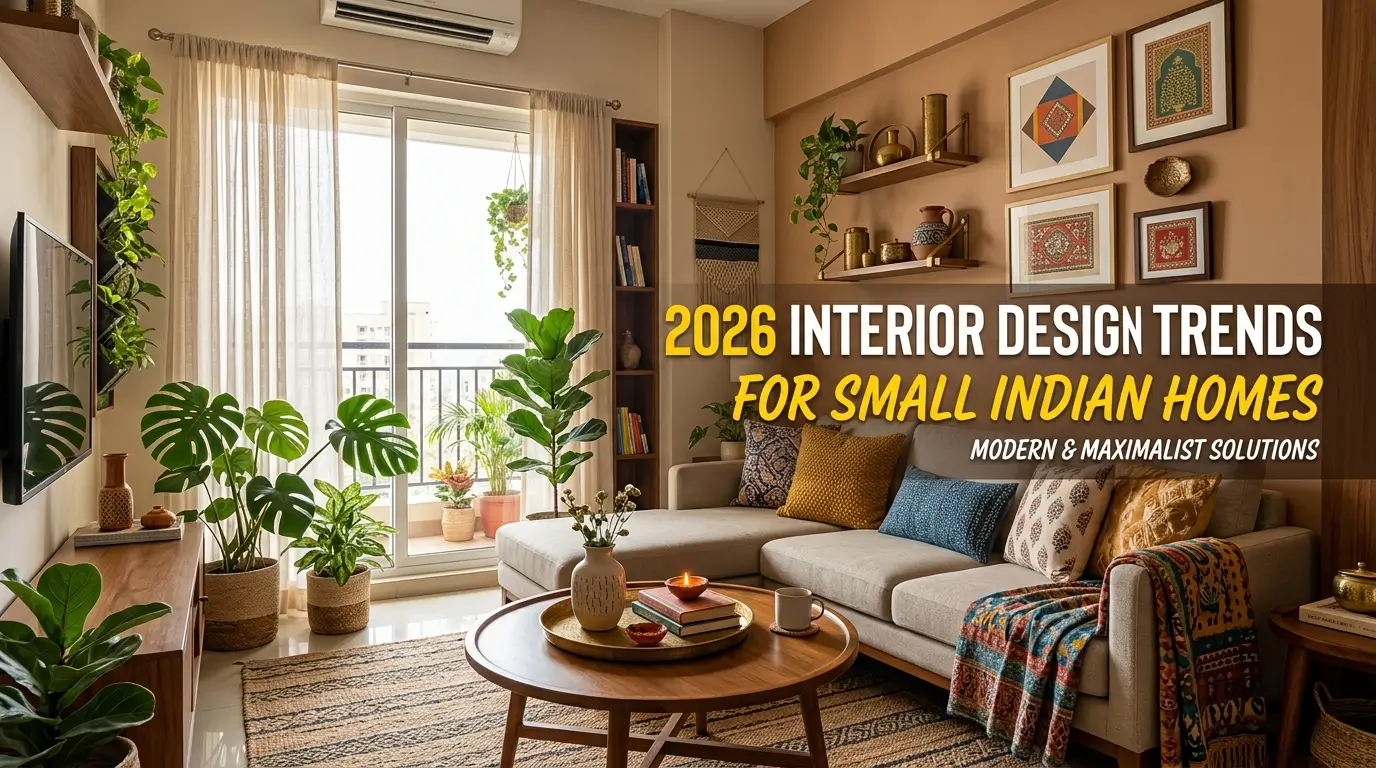
2026 Interior Design Trends for Small Indian Homes
Every year brings a new set of interior design trend predictions, most of which are written from a perspective that has very little to do with the reality of how most people in India actually live. The trends that dominate global design publications are generated from contexts — large European apartments, expansive American homes, minimalist Japanese interiors — that share almost nothing with the spatial, climatic, cultural, and economic conditions of a small Indian home in a tier one or tier two city. They arrive in India filtered through aspirational lifestyle media and get translated into a version of themselves that often feels imported and slightly ill-fitting rather than genuinely responsive to the way Indian homes work and what Indian homes need.The 2026 trends are well documented from Indian design sources. Ab poora blog likhta hoon.
Every year brings a new set of interior design trend predictions, most of which are written from a perspective that has very little to do with the reality of how most people in India actually live. The trends that dominate global design publications are generated from contexts — large European apartments, expansive American homes, minimalist Japanese interiors — that share almost nothing with the spatial, climatic, cultural, and economic conditions of a small Indian home in a tier one or tier two city. They arrive in India filtered through aspirational lifestyle media and get translated into a version of themselves that often feels imported and slightly ill-fitting rather than genuinely responsive to the way Indian homes work and what they actually need.
What makes 2026 different is that the trends emerging this year feel, for once, genuinely relevant to the small Indian home. The defining shift in 2026 is away from perfection and toward presence — homes are no longer blank canvases waiting to be styled but narratives shaped by memory, emotion, and lived experience. For the small Indian home, which has always been a deeply personal, multi-functional, culturally layered space, this is not a new idea. It is a validation of something that was always true.
2026 Interior Design Trends for Small Indian Homes
1. Warm Earthy Color Palettes Replacing Cold Neutrals
The grey and white interior that dominated Indian home design for the better part of the last decade is finally losing ground, and the shift couldn’t be better timed for small Indian homes. People are gradually stepping out of the grey and white color palette and exploring warmer tones such as sage green, terracotta, and clay brown to amplify the impact of their home interiors. These are not arbitrary color choices — they are shades that respond to Indian light conditions, Indian climate, and the warm material palette of traditional Indian craft in a way that cool northern European neutrals never quite did.
For a small Indian home, this shift is particularly meaningful. Warm earthy tones make a small room feel grounded and intimate rather than clinical and bare. A terracotta accent wall in a small bedroom, olive green cabinets in a compact kitchen, or warm beige walls in a studio living area create a sense of depth and comfort that cold grey walls consistently fail to deliver. These tones provide a premium and comforting atmosphere especially suited for Indian lighting conditions and interior styling. The Indian sun, which bathes interiors in a quality of light that is fundamentally different from the diffuse northern light that cool palettes were designed for, brings out the warmth in terracotta, ochre, and clay in a way that makes these shades feel completely at home.
2. Multifunctional and Adaptive Furniture
This is the trend that has the most direct and most practical relevance to the small Indian home, and it is the one that is being driven most directly by the reality of how urban Indians live rather than by design aesthetics imported from elsewhere. Homes today must perform many roles — a living room is also a workspace, a bedroom may also become a lounge or reading area — and because of this, furniture in 2026 is being designed to adapt.
Sofa beds, extendable dining tables, and ottomans with built-in storage are furniture that folds, stacks, or converts — no longer a compromise but a smart choice. For a family living in a 1 BHK in Mumbai or a working professional in a studio flat in Bangalore, these are not trend pieces to be admired in a showroom. They are genuinely necessary solutions to the problem of fitting a complete life into a space that was never designed to hold one. The fact that multifunctional furniture is now being designed with the quality and aesthetic consideration that it previously lacked means that choosing it no longer requires making a visual compromise.
3. Global Design with a Local Soul
No matter how modern Indian interior design gets, the country’s rich craft heritage and tradition will always remain an integral part of it — global design with a local soul is one of the most trending interior design ideas for 2026, with handcrafted elements such as brass inlays and cane weaving used in contemporary settings. This trend is perhaps the most culturally significant of the year because it represents a genuine reconciliation between two impulses that have been in tension in Indian interior design for decades — the desire for the clean, contemporary aesthetic associated with modern urban living and the pull toward the handmade, the traditional, and the culturally rooted.
For a small Indian home, this reconciliation is deeply welcome. A Madhubani painting on a feature wall behind a contemporary sofa. A set of handcrafted brass diyas on a minimalist floating shelf. A cane accent chair beside a clean-lined upholstered sofa. Block-printed cotton cushion covers on a simple linen couch. These combinations work because they reflect the actual complexity of contemporary Indian identity rather than asking people to choose between tradition and modernity as if the two were mutually exclusive.
4. Biophilic Design and Indoor Greenery
Homebuyers increasingly want homes that feel refreshing, calming, and wellness-driven, making biophilic design one of the strongest design trends in 2026. In the Indian urban context, where air quality in major cities is a genuine and serious daily concern and where most residents have very limited access to outdoor green space, bringing nature into the home has moved from an aesthetic preference to something closer to a health necessity. The small Indian home that is well populated with indoor plants is not just more beautiful — it is measurably more livable.
The practical expression of biophilic design in a small Indian home doesn’t require a full wall of planters or an elaborate indoor garden. A cluster of low-maintenance plants on a floating shelf, a trailing money plant above the kitchen cabinets, a snake plant in the bedroom corner, and an areca palm in the living room corner collectively transform the atmosphere of a compact space without consuming floor area that the space can’t afford to give up. The combination of terracotta planters, woven cane plant stands, and varied plant heights creates a layered, organic quality that no manufactured decorative element can replicate.
5. Layered Lighting Systems
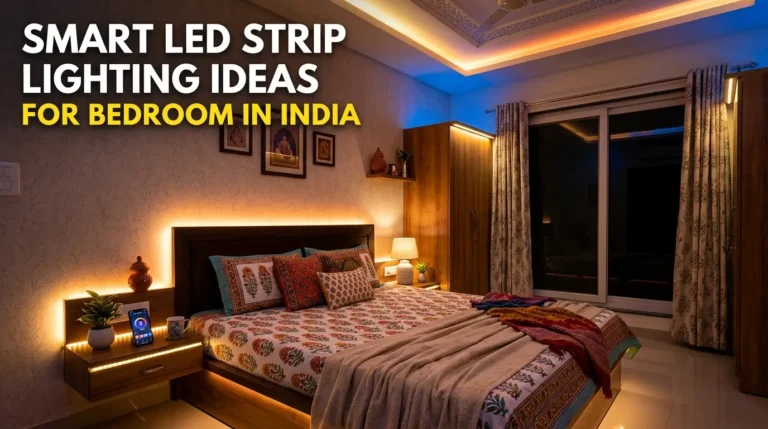
Lighting plays a central role in 2026 living room interior ideas — instead of relying on a single overhead fixture, homes are incorporating layered lighting systems with floor lamps and wall sconces used to define seating corners, improving depth and night-time comfort. This trend has transformative implications for the small Indian home because it addresses one of the most consistently neglected aspects of compact living — the quality and atmosphere of the light environment.
Most small Indian apartments are lit by a single overhead tube light or ceiling fixture that provides flat, uniform, and deeply unflattering illumination across the entire space. A layered lighting system — a warm bedside lamp in the sleeping zone, a focused desk lamp in the working area, a statement pendant above the dining table, and ambient fairy lights or wall sconces in the living area — creates multiple distinct light environments within the same space. Each environment signals a different mode and mood, which is particularly valuable in a studio flat or compact 1 BHK where the same room serves multiple purposes across the course of a single day. Good lighting now shapes how we inhabit a space throughout the day, softening edges, highlighting texture, and allowing rooms to transition seamlessly from morning clarity to evening warmth.
6. Cane, Rattan, and Natural Material Interiors
Cane and rattan are seeing a rise in urban apartments — these materials appear in accent chairs, side tables, and cabinet shutters, bringing in natural elements which do very well in the Indian climate. This is a trend that needs very little translation for the Indian context because cane and rattan are indigenous materials with a long history in Indian domestic furniture, particularly in the south and northeast. Their resurgence in contemporary Indian interiors feels less like a trend arrival and more like a recognition of something that was always there.
For a small living room or bedroom, cane and rattan furniture offers a specific spatial advantage beyond its aesthetic appeal. The open weave construction of cane chairs and rattan shelving allows the eye to pass through the furniture rather than stopping at it, which creates a perception of depth and openness that solid furniture consistently blocks. A cane accent chair in a small living room takes up the same floor area as an upholstered chair but feels less visually intrusive because you can partially see through it. Combined with the warm honey tones of natural rattan against an earthy wall color, it creates exactly the kind of warm, natural, characterful interior that 2026 is calling for.
7. Curved and Organic Furniture Shapes
Sharp-edged modern furniture is making way for softer, rounded, and organic shapes — these shapes instantly make homes look modern, soft, inviting, and high end, especially in open-plan living rooms. The angular, hard-edged furniture that characterized the minimalist aesthetic of the early 2020s is giving way to softer forms — rounded sofas, arched mirrors, oval dining tables, and curved cabinet fronts — that make a room feel more welcoming and more human in scale.
In a small Indian home this shift is particularly beneficial because sharp-edged furniture in a compact space creates a feeling of harshness and confinement. Rounded furniture edges reduce the sense of visual aggression in a tight space and make the room feel softer and more comfortable at the same scale. A rounded sofa in a small living room, an arched mirror above a console shelf in the entryway, or a curved bedside table in a compact bedroom are individually modest changes that collectively shift the emotional register of a small space from constrained to comfortable.
8. Smart Vertical Storage as a Design Statement
More vertical storage is emerging as a clear trend — floor to ceiling shelving units are being used for organizing books, decor, and everyday items, with light-coloured upholstery and furniture with raised legs helping to open up the room and give it a clean structured look. What is significant about this trend from a 2026 perspective is that vertical storage is being treated as a design feature rather than a practical solution — something to be styled and displayed rather than hidden or minimized.
Floor-to-ceiling shelving in a small Indian living room styled with books, plants, terracotta objects, woven baskets, and curated personal items is one of the strongest visual statements a compact space can make. It demonstrates the discipline of knowing exactly what you own and where it lives, and it creates a backdrop of personal meaning and material variety that makes a small room feel inhabited and considered rather than sparse and generic. The trend toward treating storage as display is particularly well suited to Indian homes where the objects worth displaying — handcrafted brass pieces, regional textiles, handmade ceramics, books — are genuinely interesting and deserve to be seen.
9. Emotional Intention Over Aesthetic Perfection
The defining trend of 2026 is emotional intention — homes are becoming more forgiving, more expressive, and more human, with interiors no longer judged by how they look but by how they hold, restore, and allow us to feel at home. This is perhaps the most liberating design philosophy to emerge from any trend cycle in recent memory, and it is one that speaks directly to the experience of living in a small Indian home where perfection was never a realistic or particularly desirable goal to begin with.
A small Indian home that holds a grandmother’s brass vessel, a hand-embroidered tablecloth brought back from a family trip, a shelf of well-read books in two languages, and a plant that was grown from a cutting shared by a neighbor is a more emotionally resonant and more genuinely designed space than any perfectly staged showroom interior. The 2026 validation of imperfection, personal history, and emotional authenticity as design values is not just a trend — it is a recognition that the homes most people actually live in have always been better designed than the ones they were told to aspire to.
10. Japandi Sensibility Adapted for Indian Spaces
Japandi — a blend of Japanese minimalism and Scandinavian design — is quietly taking over Indian interiors, featuring clean lines, natural materials, muted colours, and clutter-free spaces, resonating especially with younger urban buyers in metros who want a calmer, more intentional home aesthetic. In a small Indian home, the Japandi influence manifests most naturally as a commitment to quality over quantity — fewer, better-chosen objects, natural materials, a restrained color palette anchored in warm neutrals, and a willingness to let empty space do design work rather than filling every surface reflexively.
The adaptation of Japandi for the Indian context is where the trend becomes most interesting. Pure Japandi aesthetics, lifted directly from Japanese or Scandinavian sources, feel culturally empty in an Indian home. Japandi filtered through Indian material traditions — sheesham wood instead of pale Scandinavian pine, handloom cotton instead of linen, terracotta instead of white ceramic, brass instead of matte black metal — produces something that has the calm and clarity of the original philosophy while feeling rooted in a specific cultural and material context. This is the version of the trend worth pursuing in a small Indian home.
Applying 2026 Trends Without Losing What Already Works
The most important thing to understand about interior design trends is that they are most useful as a lens for reconsidering decisions that weren’t working rather than as a mandate for replacing everything that was. A small Indian home that already has good natural light, warm earthy colors, natural material textures, and meaningful personal objects is already aligned with where 2026 design thinking is heading. The trends described in this list are not reasons to spend money — they are reasons to look at the home with fresh eyes and appreciate the things that are already working while making deliberate adjustments to the things that are not.
A 2026 That Finally Feels Like Home
The guiding principle of 2026 is simple — choose what feels good, functions well, and reflects your everyday rituals. Trends may come and go, but a home that understands you never goes out of style. For the small Indian home, which has always been defined by the richness of what happens inside it rather than the scale of the space that contains it, this is not a new principle. It is the oldest one there is.