Minimalist Scandinavian Interior Design for Indian Homes: A Practical Guide That Still Feels Warm

Scandinavian interiors are often described as “simple,” but the best ones don’t feel empty they feel calm, bright, and intentionally lived-in. That’s exactly why Scandinavian minimalism translates so well to Indian homes, where daily life is active, storage needs are real, and rooms often do double duty. The key is to keep the visual language clean and light while designing for Indian patterns: shoes at the entry, more frequent cooking, extended family visits, pooja requirements, and the need for spaces that are easy to clean and maintain. If you want that Nordic, airy look without fighting how your home actually functions, these ideas will help you get there.
What “Scandi Minimalism” Means (and What It Doesn’t)
Scandinavian minimalism isn’t about bare rooms or removing personality. It’s about controlling visual noise so your space feels restful. That typically looks like light, neutral palettes; warm wood tones; functional furniture; soft textures; and a strong emphasis on natural light. For Indian homes, the best approach is “minimal, not sterile” keep surfaces clearer, choose fewer materials, and let a couple of meaningful elements (a textile, a lamp, a piece of art, a plant) carry the warmth.
1. Start With a Calm, Light Base Palette That Works in Indian Light
“White walls” sound straightforward until you see them under Indian daylight, warm LEDs, and reflective tile floors. Instead of a stark clinical white, choose soft whites and pale neutrals that won’t look harsh at noon or yellow at night. Think: warm off-white, soft greige, pale sand, or a whisper of clay. Pair that with light oak or ash wood tones (or convincing laminates) and matte black accents to ground the space. If you love color, keep it muted: sage, dusty blue, terracotta-beige, or charcoal used sparingly so the room still reads as minimalist.
2. Make Floors Do the Heavy Lifting (Because Indian Homes Need Easy Maintenance)
In many Indian homes, flooring is a major visual surface often glossy vitrified tile or marble that reflects light and instantly affects how “minimal” a room feels. If replacing floors isn’t practical, you can still soften the look by adding large, neutral rugs with subtle texture (flatweave, low-pile, or dhurrie-style). If you are renovating, matte finishes are more forgiving, more Scandinavian in feel, and better at hiding daily dust. Warm-toned wood-look flooring (laminate, engineered wood, or good-quality vinyl) can instantly shift a space into Scandi territory without needing more decor.
3. Design Storage First: Minimalism Is Mostly Hidden Organization
Minimalist homes don’t have fewer things they have fewer things on display. In an Indian context, storage is the difference between “Scandi calm” and “constant clutter.” Prioritize closed storage with clean fronts: handle-less shutters, push-to-open hardware, or slim linear pulls in matte black. Use full-height cabinetry where possible to reduce dust-catching ledges. In living rooms, a low media console with closed drawers keeps remotes, chargers, and extras out of sight. In bedrooms, plan wardrobes with internal drawers, vertical partitions, and a dedicated linen zone so you don’t need additional chests.
4. Create an Entry Drop Zone That Doesn’t Ruin the Aesthetic
Most Indian homes need a functional entrance: shoes, keys, bags, umbrellas, sometimes a small seat. Scandinavian design loves an organized entry too so this is an easy win. Add a slim shoe cabinet (closed shutters), a small bench, and a minimal wall hook rail. A single round mirror or a simple framed print completes the look without adding clutter. If space is tight, a floating cabinet keeps the floor visible, which makes the area feel larger and easier to clean.
5. Living Room Layout: Keep It Airy, Not Empty
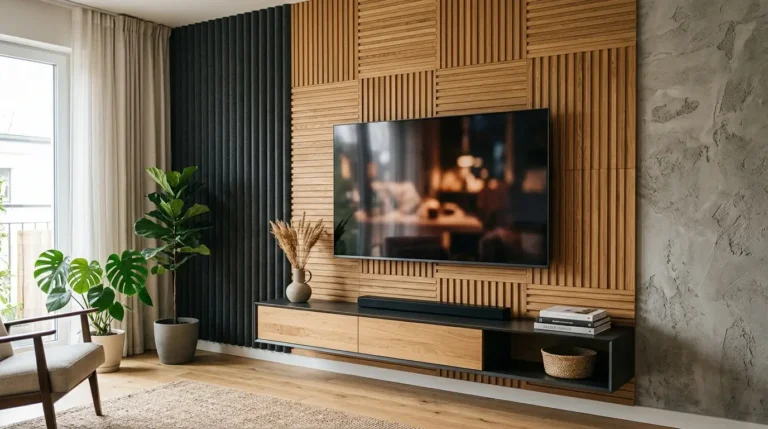
The Scandinavian living room is typically anchored by comfortable seating, a simple coffee table, and layered textiles not lots of small decor. For Indian homes, choose a compact, well-proportioned sofa (clean lines, raised legs if possible) and pair it with one or two lightweight accent chairs rather than bulky recliners. Opt for nesting tables or a single oval/round coffee table to reduce sharp visual lines. Keep the TV wall simple: a light wood panel or plain painted wall with a minimal console often looks more Scandi than an elaborate unit. If you do want a unit, keep it symmetrical, closed, and matte.
6. Lighting: Warm, Layered, and Glare-Free
Lighting is where Scandinavian interiors feel “cozy” rather than plain. Use layers: ambient (ceiling), task (floor/reading), and accent (wall/sideboard). Choose warm white bulbs (generally 2700K–3000K) to avoid the bluish office feel that kills warmth in minimal interiors. Simple pendant lights over the dining table, a floor lamp near the sofa, and discreet wall sconces can elevate the space without adding objects. Avoid too many downlights; a room full of spotlights can feel harsh and busy.
7. Kitchen: Scandinavian Calm, Indian Function
A Scandinavian-style kitchen for an Indian home needs two realities: frequent cooking and stronger aromas. Go for easy-wipe, matte surfaces with minimal grooves. Flat-panel shutters in off-white, warm grey, or pale taupe are classic. Pair them with light wood accents (open shelf for just a few items, or a wood-toned breakfast counter) rather than too many open shelves that gather dust and oil film. Invest in a strong chimney and plan for backsplash materials that are easy to clean simple, light tiles or a single slab look work beautifully. Keep countertops clear by planning appliance garages or dedicated zones inside tall units.
8. Dining: Simple Shapes, Comfortable Seating, No Visual Noise
A Scandinavian dining area is clean and social. Choose a solid, simple table round if you want better flow in compact apartments. Keep chairs cohesive (same silhouette) for a minimal look, and add comfort through a textured runner or seat cushions rather than ornate chair designs. If you have a crockery unit, keep it closed with one small open niche at most for a curated display (two to four pieces, not twenty).
9. Bedrooms: Soft Minimalism That Supports Rest
Scandi bedrooms rely on calm palettes, natural textures, and uncluttered bedside zones. Use a simple headboard (upholstered in neutral fabric or wood slats), two clean bedside tables, and warm reading lights. Limit decor to one or two pieces: a single large artwork, a mirror, or a pair of minimal frames. For Indian homes, plan wardrobe storage so the bedroom doesn’t need extra plastic drawers or open racks. Choose curtains that filter light (sheers) plus blackout if needed layering keeps the room soft and functional.
10. A Scandinavian-Style Pooja Corner That Still Feels Respectful
Minimalism doesn’t mean removing cultural elements it means designing them with intention. A Scandinavian-inspired pooja can be a clean niche or a small wall-mounted unit in light wood with simple brass accents. Keep the backdrop calm (off-white, pale stone texture, or subtle wood) and use concealed storage for diyas, incense, and supplies. One or two meaningful items displayed neatly will look more elevated than a crowded shelf.
11. Textiles: The Fastest Way to Add Warmth Without Clutter
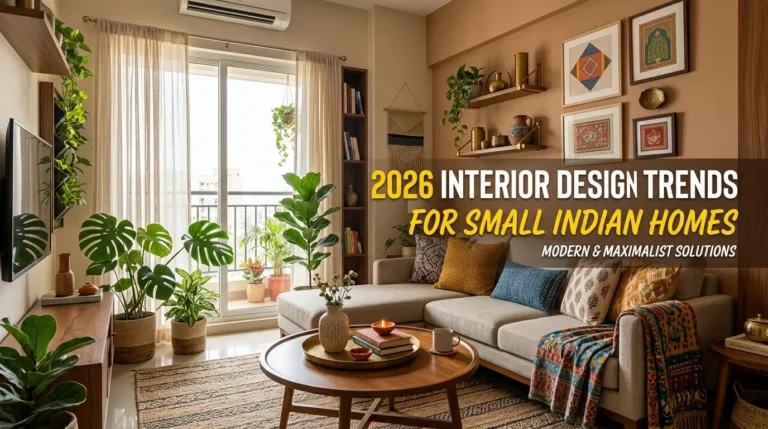
Scandinavian interiors lean on texture: cotton, linen, wool-like weaves, jute, cane, and soft knits. In Indian homes, you can achieve the same warmth with practical choices: neutral rugs, textured cushion covers, a throw on the sofa, and breathable curtains. If you love Indian textiles, choose a single statement like a muted handloom cushion or a subtle dhurrie so it feels intentional rather than busy.
12. Decor Rules That Keep the Look Minimal (But Not Boring)
Minimalist Scandinavian decor is about “fewer, better.” Choose one large plant instead of many tiny planters. Use one oversized artwork instead of a gallery wall unless you keep frames and spacing extremely consistent. Stick to a tight material palette: light wood + matte black + one metal (brass or blackened steel) + one stone (light marble or quartz). Keep countertops and sideboards mostly clear; if you style them, group objects in threes and leave breathing space around them.
Common Mistakes to Avoid in Indian Homes
Overdoing white can make rooms feel stark, especially with cool lighting. Too many open shelves look good for photos but collect dust and kitchen grime quickly. Excessive wall paneling and high-gloss finishes fight the Scandinavian matte, natural feel. And the biggest one: trying to “go minimal” without upgrading storage because if your belongings don’t have a home, they’ll always end up on the nearest surface.
Bring Scandinavian Minimalism Home Your Way
Minimalist Scandinavian interior design isn’t a fixed template; it’s a system: light, function, warmth, and restraint. In an Indian home, the most successful Scandi spaces are the ones that respect real routines cooking, hosting, festivals, family life while still keeping the visual environment calm. Start with a soft neutral palette, invest in closed storage, layer warm lighting, and add texture in just a few places. The result is a home that looks clean, feels comfortable, and stays livable long after the makeover is done.
Want It Tailored to Your Space?
Tell me your home type (1BHK/2BHK/villa), city (for light and climate), and which room you want to start with (living/bedroom/kitchen). I’ll suggest a Scandinavian-minimal palette, materials, and a simple shopping list that fits Indian availability and maintenance needs.