Textured Wall Panel Ideas for TV Unit Background
The wall behind the television is the most looked-at surface in the living room. It is the backdrop against which every evening of relaxation, every family gathering, every quiet hour of watching something unfolds. And yet in most Indian homes it receives less design attention than almost any other surface in the house. The television goes up, the wire gets hidden as best as possible, and the wall behind it stays exactly as it was — painted, plain, and completely unremarkable. The opportunity that this wall represents, to create the single strongest design statement in the most used room of the home, goes largely unclaimed.
This is a missed opportunity of significant proportion. The TV unit background wall — often called the feature wall or the accent wall — has the potential to define the entire character of the living room in a way that no other single surface can. It is large enough to make a bold statement, prominent enough to anchor the room’s visual composition, and specific enough in its function that the design choices made for it can be bold and intentional without needing to accommodate the competing demands that other walls face. A well-designed TV unit background wall transforms a living room from a collection of furniture arranged around a screen into a cohesive, considered interior with a clear design identity.
Textured wall panels are the most powerful tool available for this transformation. They add depth, shadow, material richness, and visual complexity to a surface that paint and wallpaper can only partially address, and they do it in a way that changes with the light throughout the day — creating a wall that is slightly different at every hour and that never becomes entirely familiar in the way that a flat painted surface becomes invisible through sheer repetition.
Textured Wall Panel Ideas for TV Unit Background
1. Vertical Wood Slat Panels
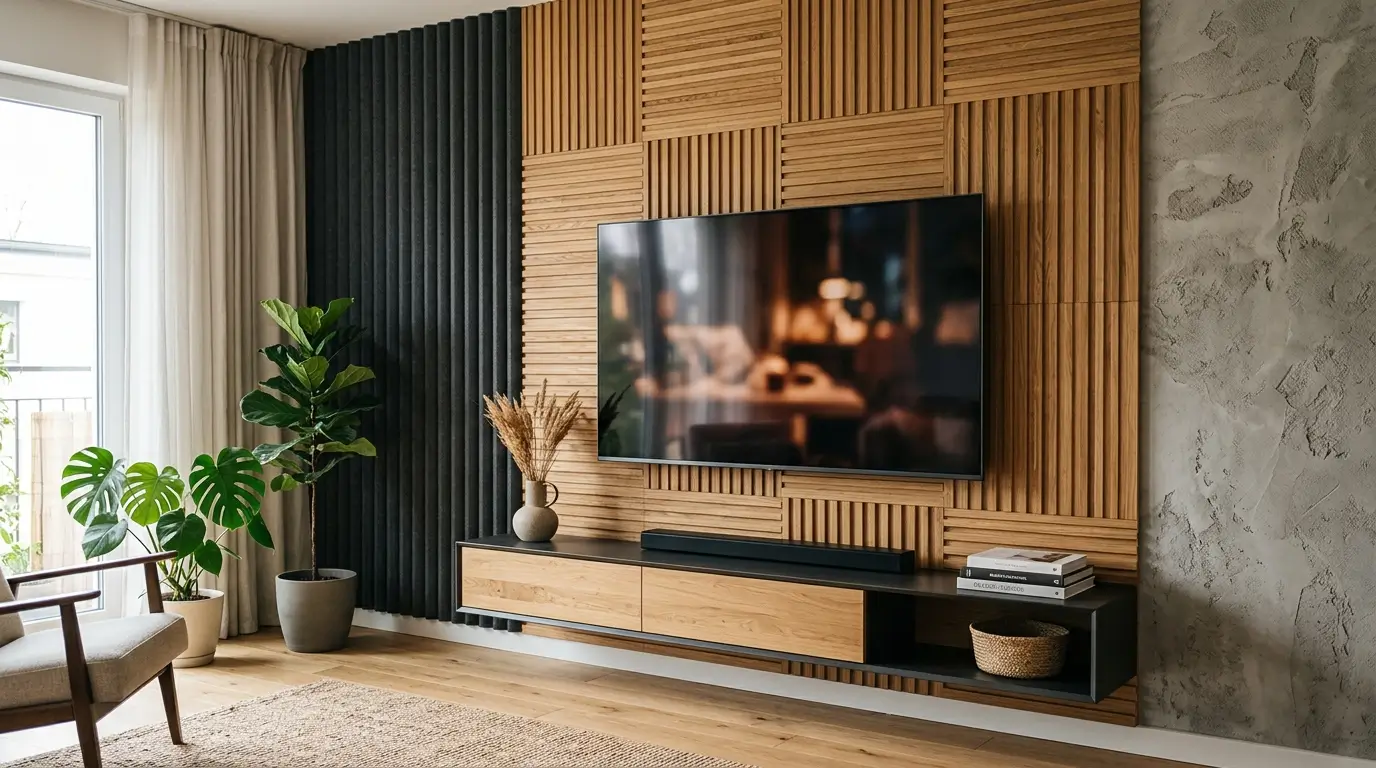
Vertical timber slat panels on a TV unit background wall are one of the most universally admired wall treatments in contemporary Indian interior design, and their popularity reflects genuine design merit rather than mere trend adoption. The rhythm of the vertical slats creates a surface of controlled visual complexity — regular enough to feel ordered and architectural, varied enough in its shadow play to feel alive and interesting — that works as a backdrop to a television without competing with the screen for visual attention.
The shadow lines between the slats are the defining quality of this treatment. As light moves across the room from morning to evening, the shadows cast by each slat shift in depth and direction, creating a wall that is in continuous subtle motion. A wall lit from below by a TV unit with integrated LED lighting or from the side by a floor lamp becomes a surface of dramatic depth and warmth in the evening, the light catching the face of each slat and leaving the gaps between them in shadow in a way that makes the wall appear three-dimensional rather than flat.
In an Indian living room context, timber slat panels work beautifully in a range of wood tones that reference the broader material palette of the space. Warm teak or walnut-toned slats against a terracotta or warm white wall create a composition of extraordinary warmth and material richness. Lighter oak or natural pine tones create a cleaner, more Scandinavian-influenced result that works well in more minimal interiors. Dark ebony or wenge-toned slats create the most dramatic and high-contrast effect, particularly powerful when backlit.
The practical installation of timber slat panels on a TV background wall in India is most economically and most effectively achieved through custom carpentry. A local carpenter can fabricate and install a slat wall to the exact dimensions of the wall and the exact specifications of the brief — slat width, gap between slats, depth of slat, surface finish — at a cost that compares very favorably with imported or branded panel systems. Ready-to-install timber slat panel systems are also increasingly available from building material suppliers in Indian cities for those who prefer a more standardized product.
2. 3D Geometric Relief Panels
Three-dimensional geometric relief panels — panels with a surface that projects from the wall plane in a regular geometric pattern of pyramids, waves, diamonds, or other three-dimensional forms — create a TV unit background wall of extraordinary visual dynamism. The three-dimensional surface catches and creates shadows that shift dramatically with the direction and intensity of light, producing a wall that is fundamentally different in the morning than in the evening and that changes character completely when lit from different angles by different light sources.
The geometric vocabulary of 3D relief panels covers an enormous range of visual registers, from the severely architectural quality of sharp pyramid or cube arrangements to the much softer, more organic quality of wave and ripple patterns that reference the surface of water or the cross-section of a sand dune. Each pattern creates a distinctly different atmosphere in the living room — angular geometric forms suggest precision and modernity, while curved wave forms suggest softness and ease.
For a TV unit background wall in an Indian living room, the most effective 3D panel designs are those that have sufficient depth to create strong shadows under normal room lighting conditions but not so much depth that they become visually overwhelming or create difficulties with mounting the television. A relief depth of 15 to 25mm is typically the optimal range — enough to produce meaningful shadow effects without projecting so far from the wall that the panel itself becomes a spatial obstacle.
POP — plaster of Paris — is the most traditional and most widely available material for 3D relief panels in India, with plasterers skilled in geometric POP work available in most cities. Lightweight polyurethane 3D panels imported and distributed through building material suppliers offer an alternative that is easier to install and more consistent in execution. MDF panels with CNC-routed geometric patterns represent a middle ground — custom, precise, and available from furniture and interior fit-out workshops in most urban centers.
3. Natural Stone Cladding Panels
A TV unit background wall clad in natural stone is the most materially grounded and most permanently satisfying of all the textured panel options available. Stone carries a visual and physical weight that no other material replicates — a sense of solidity, permanence, and geological time that makes a room feel more anchored and more substantial than it does with any lighter wall treatment. Against this backdrop, a television and its associated equipment appear almost incidental — present and functional but not visually dominant in a way that a plain painted wall makes them.
In India, the range of natural stone available for interior wall cladding is extraordinary in its variety and its geographic specificity. Jodhpur sandstone in its warm pink-beige tones brings the color of Rajasthan’s ancient fortresses into a contemporary living room. Kota stone in its cool blue-grey creates a backdrop of refined urbanity that works particularly well in contemporary interiors. Slate in its deep charcoal grey tones creates the most dramatic and cinematic TV background wall available in natural material. Jaisalmer yellow limestone introduces a warmth and luminosity that is unlike any other stone available.
The practical consideration most relevant to natural stone cladding on a TV unit background wall is weight. Full-thickness natural stone is heavy enough to require structural assessment of the wall it is applied to, particularly in older Indian apartment buildings where the wall construction may not have been designed to carry additional loading. Thin stone veneer — slices of natural stone just a few millimeters thick backed with a lightweight support material — delivers the authentic surface appearance of the stone with a fraction of the weight, making it suitable for application to standard apartment walls without structural concerns.
4. Fluted Panel Systems
Fluted panels — panels with a surface of parallel rounded ridges running vertically across their face — are the single fastest-growing wall treatment trend in Indian interior design and one that has demonstrated unusual staying power precisely because its visual appeal goes beyond trend to something more fundamental about the way the human eye and brain respond to repeated curved forms.
The fluted surface creates a play of light and shadow that is softer and more organic than the sharp shadows of geometric 3D panels. Each curved ridge catches light along its face and falls into gentle shadow at its edges, creating a surface that appears to breathe and move in a way that flat surfaces cannot. The repetition of the ridge pattern across the width of the wall creates a visual rhythm that is both orderly and sensuous — architectural in its regularity but organic in its curves.
For a TV unit background wall, fluted panels in a warm natural tone — timber veneer, MDF with a wood-grain finish, or painted in a deep warm neutral — create a backdrop of considerable sophistication. The panels frame the television and the unit below it in a visual composition that looks designed rather than assembled, and the consistent vertical rhythm of the flutes connects the wall treatment visually to the vertical lines of the room’s architecture. Backlit fluted panels — with an LED strip light positioned at the top of the panel installation to wash warm light down the fluted surface — create one of the most atmospheric and most visually striking TV background treatments available at any price point.
Fluted panels are available from interior fit-out suppliers across Indian cities in a range of materials including MDF, PVC, WPC, and timber veneer. The installation is straightforward and can be handled by any competent carpenter without specialist skills. The cost per square foot is accessible enough to make a full TV background wall installation achievable at a moderate budget.
5. Grasscloth and Natural Fiber Panels
A TV unit background wall covered in grasscloth or natural fiber paneling creates one of the warmest and most texturally rich wall treatments available — a surface that references the woven traditions of Indian craft while delivering the acoustic absorption and visual depth that natural fiber materials uniquely provide. The woven surface of grasscloth catches light in a way that creates a subtle, constantly shifting texture across the wall, each fiber casting a tiny shadow that collectively produces a surface alive with micro-detail.
In the specific context of a TV background wall, the acoustic properties of natural fiber paneling are a genuine practical benefit beyond the purely visual. The area behind and around a television is one of the most acoustically active zones in a living room — sound from the speakers bounces off the wall behind the screen and contributes to the reverberant, sometimes harsh quality that untreated living rooms produce. A grasscloth or natural fiber panel on this wall absorbs a meaningful portion of that reflected sound, improving the clarity and warmth of the room’s audio environment in a way that is perceptible even to ears that are not specifically trained to notice acoustic differences.
Jute grasscloth in its natural warm brown tone works beautifully against warm wood furniture and terracotta accessories. Seagrass panels in their cooler, greener natural tone create a fresher, more contemporary result that suits more modern interiors. Sisal panels in their pale, almost straw-like color create the most neutral and light-reflective natural fiber surface, working well in rooms where the wall treatment needs to recede rather than assert itself.
6. Brick Effect and Industrial Texture Panels
A TV unit background wall finished in exposed brick effect creates a result that is simultaneously raw and warm — a surface that feels urban and contemporary while carrying the material warmth that only textures referencing natural building materials can provide. The irregular surface of brick, its tonal variation from brick to brick, and the recessed mortar joint that creates a consistent grid of shadow across the wall produce a backdrop of robust visual character that sits particularly well with the leather, metal, and glass materials common in contemporary living room furniture.
In Indian apartment buildings where the actual brick structure of the walls is hidden beneath plaster, brick effect panels and textured paints provide the visual result of exposed brick without the structural intervention of stripping back the plaster. Brick effect textured tiles — thin ceramic or porcelain pieces shaped and colored to replicate the appearance of individual bricks — are widely available from tile suppliers across India and can be installed on a TV background wall with standard tile adhesive and grout. The result is visually convincing and extremely durable.
Roughcast and pebbledash effect plaster finishes applied to the TV background wall create a more organic and less geometrically regular version of the industrial texture aesthetic. These finishes have a roughness and irregularity that references the exterior walls of traditional Indian buildings — haveli facades, old temple walls, rural plastered structures — and bring that heritage of outdoor material texture into the domestic interior in a way that feels culturally coherent and visually distinctive.
7. Metallic and Oxidized Finish Panels
Metallic texture panels on a TV unit background wall create a result of high visual drama and sophisticated material quality that works particularly effectively in living rooms where the design intent is toward the contemporary and the urban rather than the natural and organic. Oxidized copper, brushed brass, aged steel, and raw iron effect panels each create a distinctly different metallic surface quality — some warm and glowing, some cool and matte, some dramatically patterned by the oxidization process.
In the Indian interior context, brass and copper have deep cultural resonance as materials associated with craft, ritual, and domestic tradition. A TV background wall paneled in a pressed or embossed brass effect material — panels with a surface pattern of repeated geometric or floral motifs pressed into a thin brass or brass-effect sheet — creates a result that references traditional Indian decorative metalwork while functioning as a thoroughly contemporary wall treatment. The reflective quality of the metal surface bounces the ambient light of the room across the wall in a way that makes the space feel more dynamic and more luminous in the evening.
Oxidized copper effect panels, available from specialty surface finish suppliers in larger Indian cities, create one of the most dramatically beautiful TV background walls available. The green and brown patination of oxidized copper, rendered across a large wall surface in the form of applied panels, creates a backdrop of extraordinary richness and depth — a surface that appears to have been developing its character over years of exposure to the elements rather than installed last month.
8. Wainscoting and Raised Panel Moldings
Wainscoting — the traditional practice of paneling the lower portion of a wall with raised timber moldings divided into rectangular fields — applied to a TV unit background wall creates a result of classical architectural refinement that works beautifully in both traditional and contemporary Indian living rooms. The raised panel molding creates a surface of controlled three-dimensional geometry — the frames of each panel projecting slightly from the flat fields they surround, creating a play of light and shadow that is subtle, orderly, and deeply satisfying to the eye.
Full-height raised panel wainscoting on the TV background wall creates a surface that references the architectural traditions of Indian havelis and colonial-era bungalows — interiors where carved and molded timber surfaces were used extensively to create interior environments of richness and refinement. In a contemporary Indian living room, this reference works as a design choice that grounds the space in a specific cultural and architectural heritage while remaining visually current and sophisticated.
The television in this context sits within rather than against the paneled wall — recessed into a central field of the paneling or mounted flush with the panel surface — making the screen appear as an element of the wall’s composition rather than an object placed in front of it. This integration of the television into the architectural design of the wall is the most complete solution to the aesthetic tension between the technology-forward reality of a screen-centered living room and the design aspiration toward a space of material warmth and craft quality.
9. Limewash and Clay Plaster Texture
A TV unit background wall finished in limewash or clay plaster creates one of the most organically beautiful textured surfaces available — a wall that looks like it belongs to a centuries-old Italian palazzo or a Rajasthani haveli while functioning perfectly in a contemporary Indian living room. The color depth and surface variation of limewash and clay plaster are unlike those of any other wall finish because they are built from multiple translucent layers that allow light to penetrate to different depths before being reflected back, creating an inner luminosity that flat paint cannot replicate.
The specific visual quality of limewash on a large surface like a TV background wall changes dramatically with the viewing distance and the light conditions. From across the room it reads as a richly colored, slightly variegated surface of considerable depth and warmth. At closer inspection it reveals the individual brush marks, trowel traces, and layer variations that make every limewash wall entirely unique — a surface that was made by a specific person on a specific day and that carries the evidence of that making in every square foot of its surface.
For a TV unit background wall the color choice in a limewash or clay plaster finish is the most critical decision. Deep terracotta limewash creates a warm, enveloping backdrop that makes the television appear to float in a pool of warmth. Warm charcoal clay plaster creates the most cinematic and sophisticated backdrop for a screen — dark enough to reduce the contrast between the lit screen and the wall behind it, warm enough to avoid the coldness of a painted grey wall.
Lighting the TV Unit Background Wall
The textured panel treatment of a TV unit background wall reaches its full visual potential only when the lighting of that wall is given the same consideration as the panel treatment itself. The most common and most effective approach is bias lighting — a warm LED strip positioned behind the television that washes light onto the wall immediately around the screen. This light simultaneously reduces eye strain during viewing by reducing the contrast between the lit screen and the surrounding wall, and it illuminates the texture of the wall panel in a way that creates the most atmospheric version of whatever texture has been chosen.
Uplighting from LED strips positioned at the base of the wall, washing light upward across the textured surface, creates the most dramatically revealing illumination for any relief or three-dimensional panel treatment — the light catches the projecting elements and leaves the recessed elements in shadow in a way that maximizes the visual depth of the texture. Downlighting from a cove or slot at the top of the wall creates the opposite shadow pattern, which can be equally beautiful depending on the specific geometry of the panel design.
The color temperature of the lighting used on a textured TV background wall is critically important to the warmth and quality of the result. Warm white light in the range of 2700 to 3000 Kelvin brings out the warmth of natural materials like timber, stone, and cork, and creates an atmospheric, residential quality in the evening that cooler white light consistently fails to deliver.
A Wall Worth Looking At
The TV unit background wall is the most-viewed surface in the living room, and it deserves to be designed with the same level of intention and care that is given to the furniture in front of it and the lighting above it. A well-chosen textured panel treatment — one that responds to the dimensions of the wall, the light conditions of the room, the material palette of the existing furniture, and the aesthetic identity of the household — transforms the most looked-at surface in the home from a plain backdrop into a genuine work of interior design. And unlike the television in front of it, which will be replaced in a few years, a beautifully textured wall will only become more familiar and more loved with every year that passes.