How to Divide a Small Living Room and Bedroom Without a Wall
One of the most common challenges in a studio flat or a compact one-bedroom apartment is the blurring of boundaries between living and sleeping spaces. When your sofa and your bed occupy the same visual field, it becomes genuinely difficult to switch off at the end of the day. Your brain doesn’t get the signal that it’s time to rest because nothing in the environment is telling it that the context has changed. And from a purely practical standpoint, a space that serves every purpose simultaneously tends to serve none of them particularly well.
The instinct is to build a wall. But walls are permanent, expensive, and in most rental situations, completely off the table. The good news is that dividing a small living room and bedroom without a wall is not only possible but can result in some of the most interesting and well-designed interiors you’ll find in compact urban homes. The key is understanding that division doesn’t have to be physical to be effective. It just has to be clear.
Ways to Divide a Small Living Room and Bedroom Without a Wall
If you’re trying to create two distinct zones in a single open space, here are the most effective approaches available.
1. Bookshelf Room Dividers
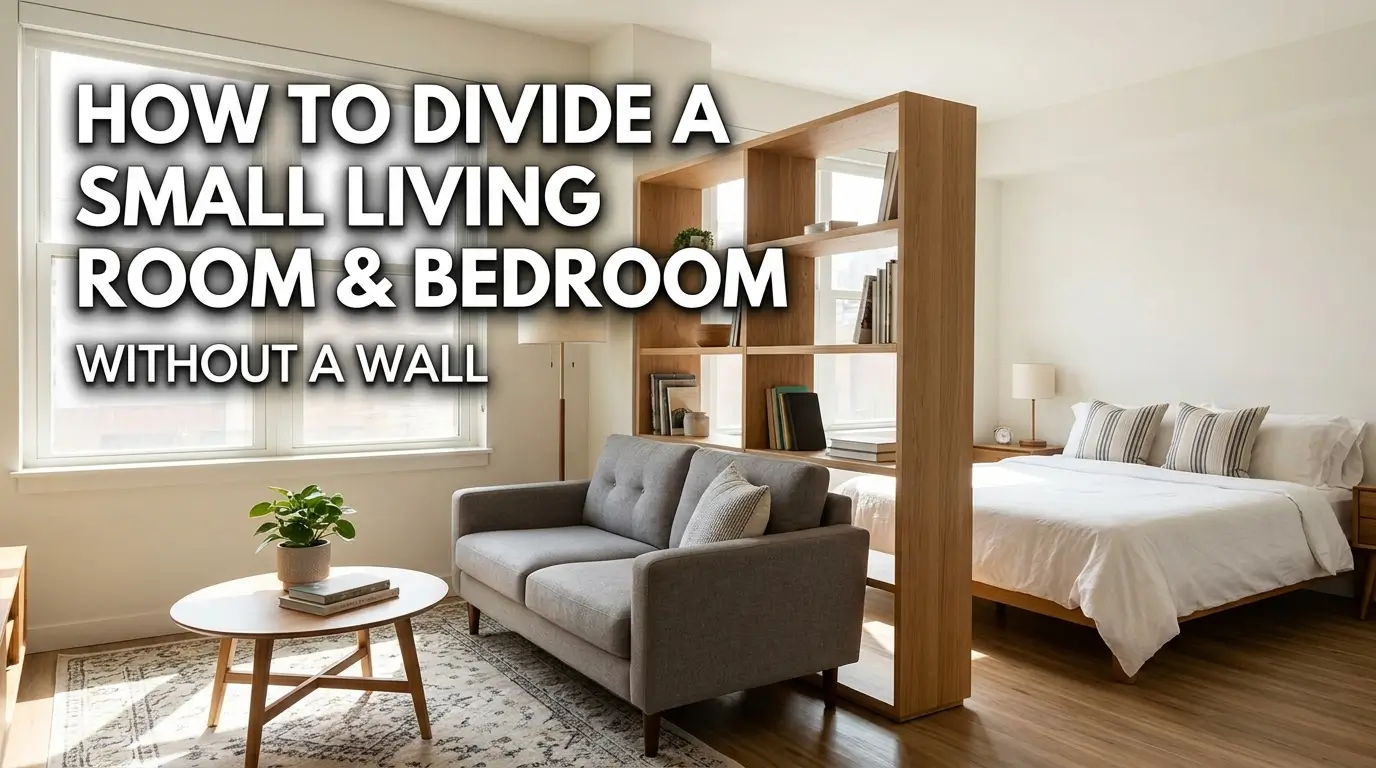
A tall, open bookshelf is one of the most practical and widely used room dividers available for small spaces. It creates a visual boundary between two zones without blocking light, without closing off the space, and without requiring any permanent installation. Books, plants, decorative objects, and storage baskets fill the shelves and make the divider feel like a deliberate design choice rather than a partition.
The open structure of a bookshelf is particularly important in a small space because it maintains the flow of air and light across both zones while still creating a clear psychological separation between them. Place it perpendicular to a wall so that it runs across the room and you immediately have a living side and a sleeping side that feel genuinely distinct from one another. IKEA’s Kallax and Billy series, as well as custom carpenter-built options, work exceptionally well for this purpose in Indian apartments.
2. Curtain Dividers
A ceiling-mounted curtain track that runs across the width of the room is one of the most flexible and renter-friendly division solutions available. During the day the curtains can be pulled back completely, allowing the full space to feel open and unified. At night they can be drawn across to create a fully enclosed sleeping area that is visually and partially acoustically separate from the living zone.
Heavy velvet curtains or thick linen panels work best because they add a sense of substance and permanence to what is essentially a temporary division. In a small Indian apartment where the bedroom area often needs to be hidden from view when guests are present, a curtain divider is one of the most practical solutions you can implement without spending a great deal of money or making any permanent changes to the space.
3. Sofa as a Zone Boundary
The positioning of your sofa is one of the simplest and most underrated ways to divide a living room from a sleeping area. Most people instinctively push their sofa against a wall, but in a studio flat or open-plan space, floating the sofa in the middle of the room with its back facing the sleeping area creates an immediate and intuitive boundary between the two zones.
The back of the sofa acts as a low visual barrier that separates the living area from the bed without blocking light or making the space feel smaller. It also creates a clear directional logic to the room — the sofa faces the living area, and everything behind it belongs to the sleeping zone. This is one of those solutions that costs nothing to implement and makes an immediate difference to how the space feels and functions.
4. Area Rugs for Zone Definition
Different rugs in different zones are one of the most powerful tools available for dividing an open space without any physical structure at all. A large area rug under the sofa and coffee table defines the living area clearly and completely. A separate, smaller rug under the bed anchors the sleeping zone and gives it its own visual identity.
The gap between the two rugs acts as a kind of neutral corridor that reinforces the separation between the zones. Choose rugs that are coordinated but distinct — perhaps the same color family but different patterns, or the same pattern in different scales — and the two zones will feel connected but clearly differentiated. In an Indian context where rugs are widely available at accessible price points from markets like Sarojini Nagar in Delhi or local home stores across cities, this is one of the most cost-effective division strategies available.
5. Sliding Panels and Shoji Screens
Sliding panels inspired by Japanese Shoji screens offer a more structured form of division that can be opened or closed depending on the time of day and the need for separation. When open, they fold flat against the wall and take up almost no space. When closed, they create a solid visual barrier between the living and sleeping zones that feels far more intentional and permanent than a curtain.
Frosted or translucent panels allow light to pass through while still creating visual separation, which is particularly valuable in a small apartment where blocking natural light would make the space feel even more cramped. Wooden frame panels with fabric or acrylic inserts are available from specialty furniture stores in most Indian cities and can be custom-made by local carpenters at a reasonable cost.
6. Half Walls and Console Tables
A low half wall or a narrow console table placed perpendicular to a wall creates a subtle but effective boundary between two zones without doing anything as dramatic as a full partition. A console table about waist height running across part of the room creates a visual line that the eye reads as a division even though it doesn’t physically block the space at all.
This approach works particularly well when the console table does double duty as a storage piece or a display surface. Style it with plants, lamps, books, and decorative objects and it becomes one of the most attractive features of the room while quietly doing the work of keeping the living and sleeping zones visually separated.
7. Ceiling Treatments and Pendant Lighting
Division doesn’t always have to happen at floor or eye level. Treating the ceiling differently above each zone is a surprisingly effective way to define separate spaces within a single room. A wooden slat ceiling panel, a stretch of wallpaper, or even a boldly painted rectangle above the bed immediately signals that this part of the room has a different purpose and identity from the rest.
Pendant lighting works in a similar way. A statement pendant light hung low above the bed creates a pool of warm, intimate light that defines the sleeping zone clearly and distinctly from the brighter, more functional lighting of the living area. The two different lighting environments create two different moods within the same space, and that difference in mood is often more effective at creating a sense of separation than any physical divider.
8. Plant Walls and Greenery Screens
A row of tall indoor plants placed in a line across the room creates one of the most organic and visually appealing room dividers available. Tall plants like snake plants, fiddle leaf figs, bamboo palms, or areca palms can reach a height that creates a genuine visual screen between zones while bringing a quality of life into the space that no bookshelf or curtain can replicate.
In Indian cities where indoor plants are widely available and relatively inexpensive, a greenery screen is a particularly attractive option. It doesn’t block light, it improves air quality, it adds color and texture, and it creates a division that feels natural and intentional rather than imposed. Group the plants in large planters of varying heights for the most effective screen, and place them on a narrow shelf or a long planter tray to keep them aligned and organized.
Choosing the Right Division Strategy for Your Space
The best approach to dividing a small living room and bedroom without a wall depends on a few key factors. How much privacy do you actually need between the two zones? How important is it that the division can be removed or adjusted? And how much are you willing to invest in the solution?
For maximum flexibility, curtain dividers and floating sofas offer the most adaptable solutions. For a more permanent and design-forward result, bookshelves, sliding panels, and ceiling treatments create divisions that feel considered and intentional. For the lowest possible cost and effort, area rugs and strategic lighting can achieve a surprisingly strong sense of separation without any installation at all.
Creating Two Spaces Within One Room
Dividing a small living room and bedroom without a wall is fundamentally about creating clarity. When each zone has its own visual identity, its own lighting, its own rug, and its own defined boundary, the brain understands how to behave in each of them. You relax in the living area and you rest in the sleeping area, and the transition between the two feels natural rather than arbitrary.
The right division strategy doesn’t just make a small space more functional. It makes it feel larger, more intentional, and more like a home that was designed with care rather than simply furnished out of necessity.