Low Maintenance Indoor Plants for Dark Indian Flats (That Actually Cope With Low Light)
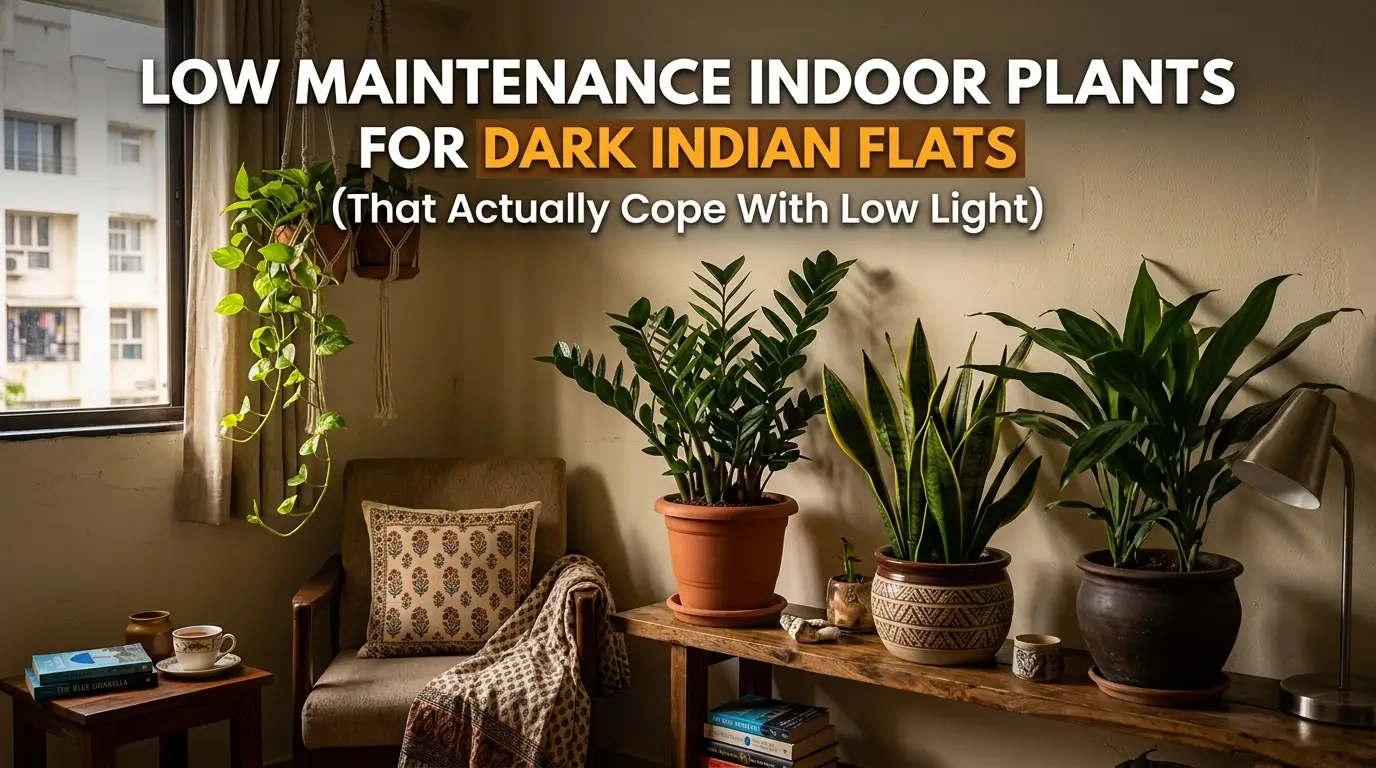
Living in an Indian flat often means working with what you’ve got: a north-facing balcony, buildings close by that block direct sun, grills and tinted windows that cut light, and rooms where the “bright spot” is basically wherever the tube light is strongest. The good news is that you don’t need a sun-drenched bay window to keep plants alive. You just need the right plants—ones that tolerate low light, forgive irregular watering, and don’t punish you for having a busy routine. Low light doesn’t mean “no light,” though. If you can comfortably read a book in the room during the day without switching on lights, you can grow several tough indoor plants. If you can’t, your best move is to either keep plants right next to the brightest window available or add a simple LED grow bulb for a few hours a day. With that in mind, here are low maintenance indoor plants that suit darker Indian flats, plus where to place them and how to keep them looking good with minimal effort. ## 1. Snake Plant (Sansevieria / Dracaena trifasciata) Snake plant is the classic “set it and forget it” option for low light homes. It tolerates dim corners better than most plants, handles missed waterings, and stays upright and tidy without much pruning. If your flat gets patchy daylight and you want something that won’t sulk, this is the first plant to buy. Where it works: Bedrooms, corridors, corners away from windows, offices with indirect light. Low-maintenance care: Water only when the potting mix is fully dry (in many Indian homes, this can mean every 2–4 weeks depending on season). Avoid overwatering—snake plants die from “too much love,” not neglect. ## 2. ZZ Plant (Zamioculcas zamiifolia) ZZ plant looks glossy and expensive, but it’s basically a survival machine. It stores water in thick rhizomes, so it can handle low light and long gaps between watering. It’s one of the best plants for truly dim rooms where other plants become leggy or pale. Where it works: Living rooms with filtered light, rooms with only one small window, office desks near a window. Low-maintenance care: Water when dry; if in doubt, wait a few more days. Rotate the pot once a month so it grows evenly. ## 3. Pothos / Money Plant (Epipremnum aureum) Money plant is popular in Indian homes for a reason: it grows even when conditions aren’t perfect. In low light it may grow slower and produce smaller leaves, but it will still survive and trail nicely. You can keep it in a hanging pot, let it climb a moss pole, or trail it on a shelf. Where it works: Near windows with indirect light, on top of cupboards, in kitchens with daylight. Low-maintenance care: Water when the top 2–3 cm of soil dries out. If it gets too long or messy, trim and propagate the cuttings in water. ## 4. Heartleaf Philodendron (Philodendron hederaceum) If you want a trailing plant that looks a bit richer than pothos and stays attractive in lower light, heartleaf philodendron is a strong pick. It’s forgiving, doesn’t demand constant feeding, and adapts well to indoor life. Where it works: Shelves, hanging planters, near a bright window with no direct sun. Low-maintenance care: Let the top layer of soil dry between waterings. Pinch tips occasionally for a fuller look. ## 5. Peace Lily (Spathiphyllum) Peace lily is one of the few flowering-ish indoor plants that tolerates low light reasonably well. It’s also dramatic in a helpful way—it droops when thirsty, then perks up after watering, which makes it easier for beginners to read. In darker rooms it may flower less, but the foliage still looks lush. Where it works: Bedrooms and living rooms with filtered daylight. Low-maintenance care: Water when the plant starts to slightly droop or when the top soil feels dry. It prefers evenly moist soil but not soggy roots. ## 6. Aglaonema (Chinese Evergreen) Aglaonema is practically designed for Indian apartments: it tolerates low light, handles indoor humidity fluctuations, and comes in green as well as pink/red varieties (note: the greener types usually do better in lower light than the brightly colored ones). It stays bushy and neat without much effort. Where it works: Living rooms, bedrooms, entryways with decent ambient light. Low-maintenance care: Water when the top few centimeters dry. Wipe leaves occasionally to remove dust—this helps it use what little light it gets. ## 7. Cast Iron Plant (Aspidistra elatior) The name says it all. If your flat is genuinely dim and you want something that looks calm, structured, and almost unkillable, cast iron plant is a quiet winner. It’s slower-growing, which is a plus if you don’t want constant repotting. Where it works: Deeper inside rooms, shaded corners that still get some ambient daylight. Low-maintenance care: Water sparingly; it prefers to dry slightly between waterings. Don’t fuss with it. ## 8. Spider Plant (Chlorophytum comosum) Spider plant is easy, affordable, and great for people who want quick “green rewards.” It prefers bright indirect light, but it can manage in moderate to lower light and still grow. In darker spots it will be slower and less likely to produce many “babies,” but it remains hardy. Where it works: Near windows, on shelves, in bright bathrooms if there’s a window. Low-maintenance care: Water when the top soil dries. Trim brown tips if your water is hard; using filtered water can reduce tip browning. ## 9. Lucky Bamboo (Dracaena sanderiana) Lucky bamboo is common in Indian flats because it looks clean, fits small spaces, and can be grown in water. It tolerates low light, though it will do best near a window with indirect light. Where it works: Coffee tables, side tables, office desks with daylight nearby. Low-maintenance care: If grown in water, change water every 7–10 days and keep roots submerged. If grown in soil, water lightly when the soil starts drying. ## 10. Parlor Palm (Chamaedorea elegans) If you want a “soft” plant with a more airy, decorative look, parlor palm is one of the better low-light palms. It won’t love a pitch-dark room, but it handles indoor indirect light better than many palm varieties sold in nurseries. Where it works: Corners near windows, living rooms with daylight but no direct sun. Low-maintenance care: Water when the top soil dries; avoid waterlogged pots. It appreciates occasional misting, but it’s not mandatory. ## 11. Syngonium (Arrowhead Plant) Syngonium is easygoing, grows fast, and adapts well to indoor light. In lower light it stays more green and grows a bit slower, but it still looks full and attractive. It can trail or be trained upward. Where it works: Shelves, tabletops near windows, bedrooms with indirect light. Low-maintenance care: Water when the top layer dries; prune to keep it bushy. ## 12. Low-Light “Bonus”: Faux Plant + One Real Plant Strategy If your flat is truly dark (no readable daylight), trying to force several plants to survive can get frustrating. A practical approach is to keep one real “tough” plant (snake plant or ZZ) at the brightest available spot and use high-quality faux plants in the deepest corners for decor. It’s still a win: you get greenery where it matters without constant replacements. ## Placement Tips for Dark Flats (So These Plants Stay Low Maintenance) Low maintenance isn’t just the plant—it’s the placement. A hardy plant in the wrong spot becomes high effort. Keep plants as close to windows as possible: Even 1–2 meters away from a window can drastically reduce usable light inside many flats. Use indirect light, not harsh direct sun: Most of the plants above prefer bright shade; direct afternoon sun through glass can scorch leaves. Rotate pots every few weeks: This prevents one-sided growth, especially in low light. Clean dusty leaves: Indian city dust can block light absorption. A quick wipe every 2–3 weeks makes a noticeable difference. ## Simple Care Rules (Minimal Effort, Maximum Survival) Rule 1: Don’t overwater. Low light means slower growth, which means less water use. Most indoor plant deaths in flats come from soggy roots. Rule 2: Always use pots with drainage holes. Decorative planters are fine, but keep the plant in a nursery pot inside the outer pot, and empty standing water. Rule 3: Use a light, airy potting mix. A mix that drains well reduces root rot risk—especially during monsoon season or in cooler months. Rule 4: Fertilize lightly. In low light, plants don’t need heavy feeding. A mild indoor plant fertilizer once a month during active growth is plenty; skip or reduce in winter. ## A Quick “Best Picks” Shortlist If You Want to Buy Only 3 If you want the simplest, most reliable starter set for darker Indian flats: Snake Plant for corners and low light resilience ZZ Plant for deep shade tolerance and minimal watering Pothos (Money Plant) for fast, forgiving trailing greenery If you tell me how much daylight you get (for example: “north-facing, 1 small window, sunlight never enters” vs “bright but no direct sun”), and which room you want to place plants in, I can narrow this down to 5 exact picks and a placement plan that fits your layout.