Simple Space Saving Ideas for 1 BHK Flat in India
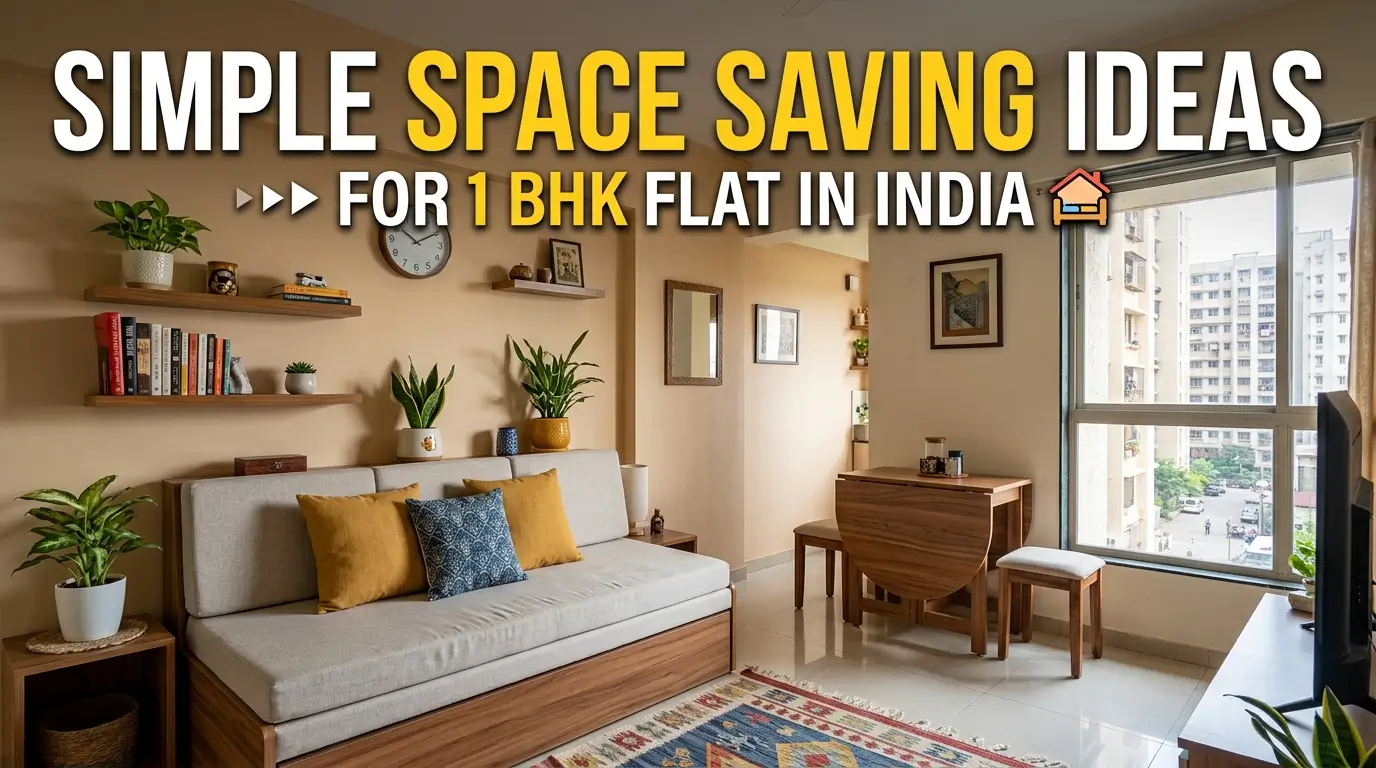
A 1 BHK flat in an Indian city is one of the most common living situations for young professionals, newly married couples, and small families who are navigating the gap between what they can afford and what they actually need. The flat is functional, it covers the basics, and it is usually in a location that makes practical sense for work and daily life. But it is also almost always smaller than it feels like it should be, and the challenge of making a single bedroom, a living room, a kitchen, and a bathroom serve the full complexity of a modern life is something that most people living in a 1 BHK deal with every single day.
The frustration usually isn’t about the flat itself. It’s about the way it’s been set up. Most 1 BHK flats in India are furnished and organized in ways that make no particular effort to maximize the available space, which means that the limitations people feel are often the result of poor space planning rather than genuine spatial inadequacy. The same flat that feels cramped and cluttered when arranged conventionally can feel open, comfortable, and genuinely livable when approached with a clear set of space saving principles and the willingness to make deliberate decisions about every piece of furniture and every object it contains.
Simple Space Saving Ideas for Every Room in Your 1 BHK
1. Replace the Dining Table with a Foldable or Wall-Mounted Alternative
The dining table is one of the largest pieces of furniture in a 1 BHK flat and one of the least efficiently used. A standard four-seater dining table occupies a significant portion of the living or kitchen area at all times, even though it is actively used for perhaps an hour or two each day. The rest of the time it sits there collecting mail, bags, and miscellaneous objects while blocking the natural flow of the space.
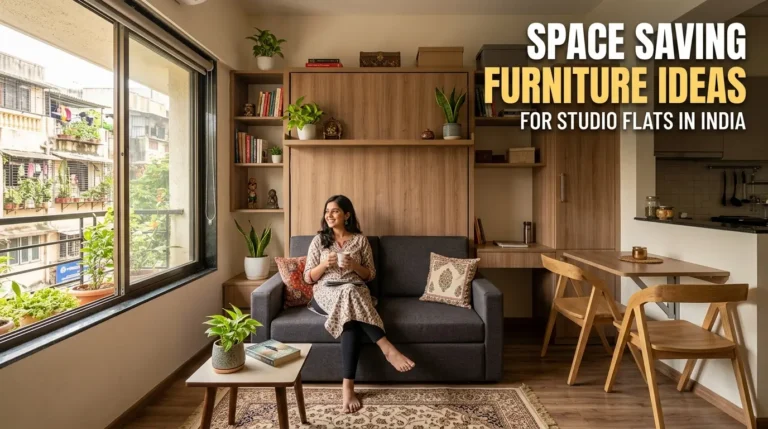
A wall-mounted fold-down dining table solves this problem with elegant simplicity. When not in use it folds completely flat against the wall, taking up no floor space whatsoever. When mealtime arrives it folds out to provide a full dining surface that seats two to four people comfortably. Combined with folding chairs that hang on wall hooks when not in use, this setup reduces the footprint of the dining function to almost nothing on an ordinary day while still providing everything you need when you actually sit down to eat.
Carpenter-built wall-mounted fold-down tables are widely available across Indian cities at very reasonable rates, and the installation is straightforward enough that most local carpenters can complete it in a single day. The transformation in how the kitchen or living area feels after this change is immediate and significant.
2. Use the Space Above Kitchen Cabinets
The space between the top of the kitchen cabinets and the ceiling in a standard Indian 1 BHK is almost always completely wasted. It is too high up to be convenient for daily use but perfectly suited for storing things that are needed occasionally rather than every day — large vessels, festival supplies, extra crockery, appliances that come out only for special occasions, and the various other items that have no logical home in a compact kitchen.
Sturdy baskets, sealed containers, and flat storage boxes placed on top of the cabinets keep this area organized and prevent it from becoming a disorganized jumble that looks worse than leaving it empty. If the space is tall enough, a simple wooden shelf installed above the existing cabinets and below the ceiling can effectively add an entire extra row of storage to the kitchen without expanding its footprint by a single square foot.
3. Invest in a Bed with Hydraulic Storage
The area under the bed is the single largest untapped storage resource in most 1 BHK flats. A standard bed frame leaves this space either completely empty or awkwardly difficult to access, which means that it ends up being used for nothing at all or for storing things that are never retrieved because getting to them requires lying on the floor and reaching under a low frame.
A hydraulic storage bed eliminates this problem entirely. The entire mattress platform lifts on gas-assisted hinges to reveal a large, clean, easily accessible storage cavity underneath. In a 1 BHK flat where wardrobe space is perpetually insufficient, this cavity becomes one of the most valuable storage areas in the entire home. Extra bedding, seasonal clothing, luggage, festival items, and the dozens of other things that need to be stored but not accessed daily all find a proper home here without taking up a single square foot of additional floor space.
Hydraulic storage beds are widely available from furniture brands across India at a range of price points. The investment pays for itself immediately in the form of storage space that would otherwise require an additional piece of furniture to accommodate.
4. Mount the Television on the Wall
A television sitting on a TV unit is taking up floor space in two ways simultaneously — once for the TV unit itself and once for the clearance area around it. Mounting the television directly on the wall eliminates the need for a TV unit entirely, freeing the floor space it occupied for furniture that serves a more active purpose or simply leaving it clear to make the room feel more open.
A wall-mounted television also allows you to position it at the ideal viewing height regardless of what other furniture is in the room, which is a comfort and ergonomic benefit on top of the space saving one. The cables can be run inside the wall or concealed in a slim cable management channel that sits flat against the wall surface. In a 1 BHK living room where every square foot of floor space matters, eliminating the TV unit is one of the simplest and most impactful changes you can make.
5. Vertical Storage in Every Room
The single most consistently underused dimension in a 1 BHK flat is height. Most storage solutions in standard Indian apartments operate from floor level to approximately eye level, leaving everything above that point completely unused. Going vertical — installing shelves, cabinets, and storage systems that extend from floor to ceiling — effectively adds significant storage capacity to every room without increasing the floor area occupied by storage furniture at all.
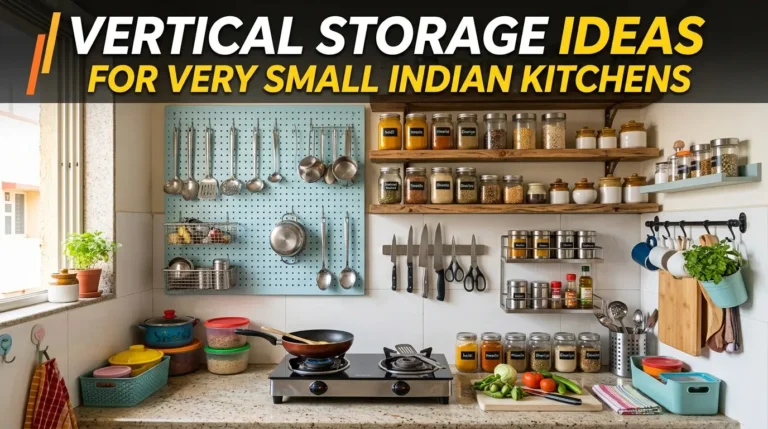
In the living room, floor-to-ceiling shelving on one wall creates storage and display space for books, decorative objects, and everyday items while making the wall itself a design feature. In the bedroom, a wardrobe that extends all the way to the ceiling rather than stopping two feet short of it adds a full additional row of storage for seasonal items and less frequently used clothing. In the kitchen, wall-mounted racks, magnetic knife strips, hanging pot rails, and ceiling-mounted storage systems move the clutter off the countertops and onto the walls and ceiling, freeing the work surfaces for actual cooking.
6. Use Ottomans and Poufs Instead of a Second Sofa
A standard 1 BHK living room rarely has the space to accommodate a full sofa set — a three-seater sofa plus a two-seater or a set of individual chairs — without the room feeling completely overwhelmed by seating furniture. The conventional solution of buying a full sofa set regardless of the room’s dimensions is one of the most common space planning mistakes made in small Indian apartments.
A single good quality three-seater sofa paired with two large ottomans or poufs is a far more space-efficient and flexible arrangement. The ottomans serve as seating when guests are present, as footrests during everyday use, and as coffee tables with a tray placed on top. When extra seating isn’t needed they can be pushed against the wall or tucked under the sofa itself, freeing the center of the room in a way that a fixed chair arrangement never could. In the Indian context, large floor cushions and low wooden stools serve a similar purpose and are widely available at accessible price points from local markets and home decor stores.
7. Sliding Doors Instead of Swing Doors
A standard swing door requires a clear arc of floor space to open fully — space that has to be kept clear at all times and can never be used for furniture or storage. In a 1 BHK flat where floor space is critical, the clearance requirement of swing doors on wardrobes, bathrooms, and room entrances represents a genuine and ongoing waste of usable area.
Replacing swing doors with sliding doors eliminates this clearance requirement entirely. A sliding wardrobe door runs parallel to the wall and requires no floor clearance at all. A sliding bathroom door or bedroom door does the same. The installation cost of converting existing swing doors to sliding systems is modest, particularly for wardrobe doors, and the reclaimed floor space can be used for furniture, for movement, or simply left open to make the room feel larger and less constrained.
8. Create a Dedicated Storage Wall in the Living Room
Rather than distributing storage furniture across multiple walls and multiple pieces — a TV unit here, a side table there, a bookshelf in the corner — consolidating all living room storage onto a single dedicated storage wall creates a more organized, more space-efficient, and more visually coherent result.
A floor-to-ceiling built-in storage wall along one side of the living room can incorporate closed cabinets for items that need to be hidden, open shelves for books and display objects, a space for the television, and even a fold-out desk if a home working function is needed. Everything that would otherwise be scattered across multiple pieces of furniture lives in one place, the rest of the floor is free for furniture that serves living and seating functions, and the room has a single strong design feature rather than a collection of mismatched storage pieces competing for attention and floor space.
9. Mirror Strategically to Amplify Space
Mirrors don’t create space but they create the perception of space, which in a small 1 BHK flat amounts to nearly the same thing. A large mirror on one wall of the living room or bedroom reflects the room back on itself and makes the space feel significantly larger, brighter, and more open than it actually is. This effect is strongest when the mirror reflects a window or a well-lit area of the room, amplifying the natural light along with the perceived dimensions of the space.
In a narrow living room, a full-length mirror on the short end wall visually extends the length of the room. In a small bedroom, a large mirror on the wall beside the wardrobe makes the room feel wider. In a dark entrance area, a mirror opposite the door brings light and a sense of openness to a space that would otherwise feel cramped and dim. Mirrors are one of the most affordable and widely available design tools in India, available from local markets and home stores at every price point, and their impact on the perceived size of a small space is consistently disproportionate to their cost.
10. Declutter as a Space Saving Strategy
No amount of clever furniture or smart storage design can compensate for a volume of possessions that genuinely exceeds the capacity of the space. In a 1 BHK flat, the discipline of regular decluttering is as important a space saving strategy as any piece of furniture or any layout decision. A flat that contains only what is genuinely used and genuinely valued will always feel more spacious and more comfortable than one of the same dimensions stuffed with things that have accumulated through inertia rather than intention.
The Indian cultural relationship with keeping things — the instinct to hold onto items because they might be useful someday, the reluctance to discard things that were expensive, the sentimental attachment to objects that no longer serve any practical purpose — works directly against the goal of making a small flat feel spacious and livable. A conscious, periodic review of what the flat contains and a willingness to donate, sell, or discard things that don’t earn their place is one of the most powerful space saving tools available, and it costs absolutely nothing to implement.
Thinking About Your 1 BHK as a System
The most important shift in thinking that makes space saving ideas actually work in a 1 BHK flat is moving from thinking about individual pieces of furniture to thinking about the flat as a whole system. Every decision about what goes into the flat, where it sits, and how it functions affects every other decision. A fold-down dining table creates space that allows a larger sofa. A hydraulic storage bed reduces the need for a separate wardrobe. A wall-mounted television eliminates a TV unit that was blocking the flow of the living room.
These decisions compound. Each one creates the conditions for the next one to be more effective. And the cumulative result of a series of well-considered space saving decisions is a 1 BHK flat that doesn’t feel like a compromise — it feels like a home that was designed with intelligence and care for the life that is actually being lived inside it.
Making Your 1 BHK Work for Your Life
A 1 BHK flat in an Indian city is not a temporary inconvenience to be endured until something better comes along. For many people it is home for years at a time, and it deserves to be treated with the same seriousness and intentionality that would be applied to a much larger space. The ideas in this list don’t require a large budget or a professional interior designer. They require only the willingness to look at the flat clearly, make deliberate decisions about how it is organized and furnished, and commit to the discipline of keeping it that way. A 1 BHK flat approached with that kind of intention can be one of the most comfortable, functional, and genuinely enjoyable places to live in any Indian city.