Soundproof Curtain Ideas for Rental Bedrooms
Renting a bedroom comes with a very specific kind of frustration. You can’t knock down walls, you can’t install permanent fixtures, and you certainly can’t make any structural changes that your landlord hasn’t approved. But none of that changes the fact that noise is still a very real problem. Street traffic, hallway conversations, a loud upstairs neighbor, or even just the general hum of a busy building can turn your bedroom into one of the least restful places in your home.
This is exactly where soundproof curtains become one of the smartest investments a renter can make. They require no drilling beyond a simple curtain rod, they’re completely removable, and when chosen and installed correctly, they can make a significant difference in how much outside noise actually reaches you while you sleep, work, or simply try to unwind.
Soundproof Curtain Ideas for Rental Bedrooms
If you’re trying to figure out how to use soundproof curtains effectively in your rental bedroom, here are some of the best ideas to help you get started.
1. Floor-to-Ceiling Window Coverage
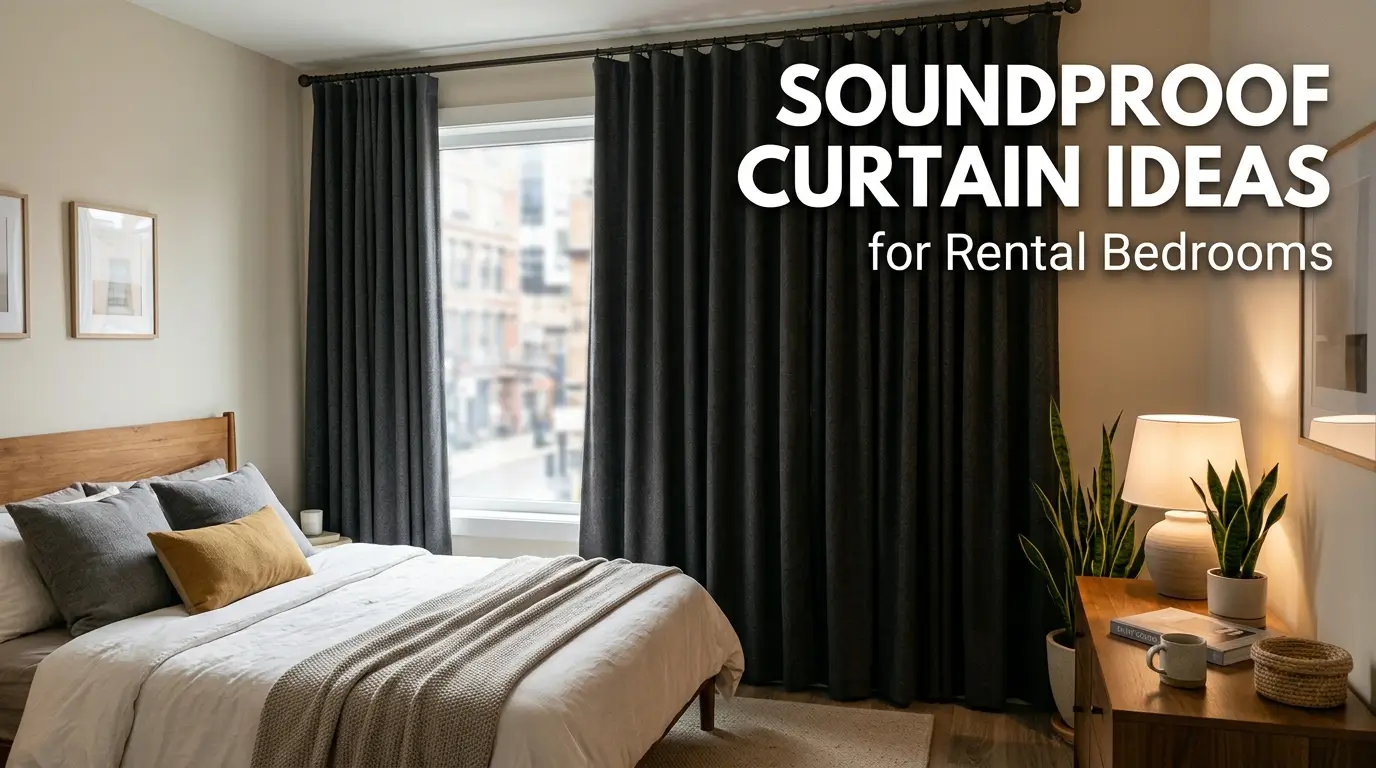
The most common mistake people make with soundproof curtains is buying panels that are just barely long enough to cover the window. For maximum sound absorption, curtains should run from the ceiling all the way down to the floor, and ideally a few inches beyond.
The more fabric surface area you have, the more sound gets absorbed before it can bounce around the room. Ceiling-to-floor curtains also make a rental bedroom look dramatically more polished and intentional, which is a bonus that goes well beyond acoustics. Choose heavyweight blackout curtains with a dense, multilayered construction for the best combination of light blocking and sound dampening.
2. Layered Curtain Systems
A single curtain panel does a decent job, but a layered curtain system does a significantly better one. The idea is simple: hang a sheer or lightweight inner curtain closest to the window, and then layer a heavy, thick soundproof curtain on the outside of it.
This creates an air gap between the two layers, and that gap acts as an additional buffer that slows down sound transmission. The inner layer also catches light and gives the window treatment a softer, more finished look, while the outer layer handles the heavy acoustic work. This approach is particularly effective for bedrooms that face a busy street or a noisy courtyard.
3. Curtains Beyond the Window Frame
Most people hang curtains to cover the window and nothing more. But if your goal is sound control, you want to extend the curtain rod well beyond the window frame on both sides, and hang panels wide enough to cover the surrounding wall as well.
Sound doesn’t just travel through the glass. It travels through the wall around the window, through gaps at the edges, and through any space where the curtain doesn’t make full contact with the wall. By extending your curtain coverage beyond the window itself, you close off many of those pathways and create a much more effective sound barrier overall.
4. Doorway Curtain Dividers
In a rental bedroom, the door is often just as much of a problem as the window. Hollow-core doors, which are standard in most rental apartments, offer almost no sound insulation. Noise from hallways, living rooms, and kitchens passes straight through them without much resistance.
Hanging a heavy soundproof curtain on the inside of your bedroom door creates an additional barrier that the sound has to pass through before it reaches you. This works especially well in shared apartments where common areas tend to stay active late into the night. A floor-length curtain in a neutral color blends into the room naturally and doesn’t feel like a temporary fix at all.
5. Closet and Alcove Coverage
Rental bedrooms often have open closets, recessed shelving, or alcoves that create hard, reflective surfaces inside the room. These surfaces bounce sound around and make the room feel louder and less controlled than it actually needs to be.
Hanging curtains across open closets or alcoves does two things at once. It hides the visual clutter of an open storage space and adds a layer of soft, sound-absorbing fabric to an area that would otherwise be contributing to the echo problem. Velvet curtains work particularly well here because of their dense pile, which catches and absorbs sound rather than reflecting it back into the room.
6. Corner Curtain Panels for Sound Trapping
Corners are notorious trouble spots in any room when it comes to acoustics. Sound waves tend to build up in corners and create a kind of resonance that makes the entire space feel louder. In a small rental bedroom, this effect is even more pronounced.
Installing curtain panels diagonally across corners, or simply draping heavy curtains in the corners of the room, helps break up that resonance and trap sound before it has a chance to build. This is a technique borrowed directly from professional acoustic treatment, adapted for a rental-friendly, no-damage installation.
7. Velvet and Thermal Curtains for Maximum Density
Not all curtains are created equal when it comes to sound dampening. Thin polyester panels do very little to stop noise. What you need is density, mass, and thickness. Velvet curtains, thermal blackout curtains, and triple-weave fabric panels are among the best options available for rental bedrooms.
Velvet has an exceptionally dense pile that absorbs sound very effectively. Thermal curtains are designed with multiple layers of fabric that trap both heat and sound. Triple-weave curtains combine a tight outer weave with an inner foam or batting layer that adds mass and improves acoustic performance considerably. Any of these options will outperform a standard curtain by a wide margin.
8. Curtain Walls for Studio-Style Bedrooms
If your rental bedroom is part of a larger open-plan space, or if you’re trying to create a sleeping zone within a studio apartment, a full curtain wall is one of the most effective and renter-friendly solutions available. A ceiling-mounted curtain track allows you to hang floor-to-ceiling panels across an entire section of the room, creating a soft, defined sleeping area that offers both visual privacy and a meaningful degree of sound separation.
This approach works particularly well with blackout velvet curtains in a deep, rich color that signals clearly that the space behind them is a place of rest. It’s a design choice that feels intentional and sophisticated rather than makeshift, which matters a great deal when you’re trying to make a rental feel like a real home.
Choosing the Right Soundproof Curtains for Your Rental
When shopping for soundproof curtains, the most important thing to look for is weight and fabric density. A curtain that feels heavy in your hands is almost always going to perform better acoustically than one that feels light and flimsy. Look for curtains that are specifically marketed as blackout, thermal, or acoustic, as these are designed with the kind of dense construction that actually makes a difference.
Length matters just as much as weight. Always buy curtains that are longer than you think you need and wider than your window. The goal is to cover as much surface area as possible and eliminate as many gaps as you can, because gaps are where sound finds its way in.
Making Your Rental Bedroom a Quieter Place
Soundproof curtains are one of the most practical, affordable, and renter-friendly tools available for managing noise in a bedroom. They don’t require permission, they don’t leave marks, and they can be taken with you when you move. But beyond their functional value, they also add warmth, texture, and a sense of completeness to a space that might otherwise feel bare and temporary.
The right curtains, hung the right way, can transform a noisy rental bedroom into a genuinely restful environment. And in a world where good sleep is increasingly hard to come by, that is an upgrade worth making.