Eco Friendly Home Decor Ideas for Indian Apartments
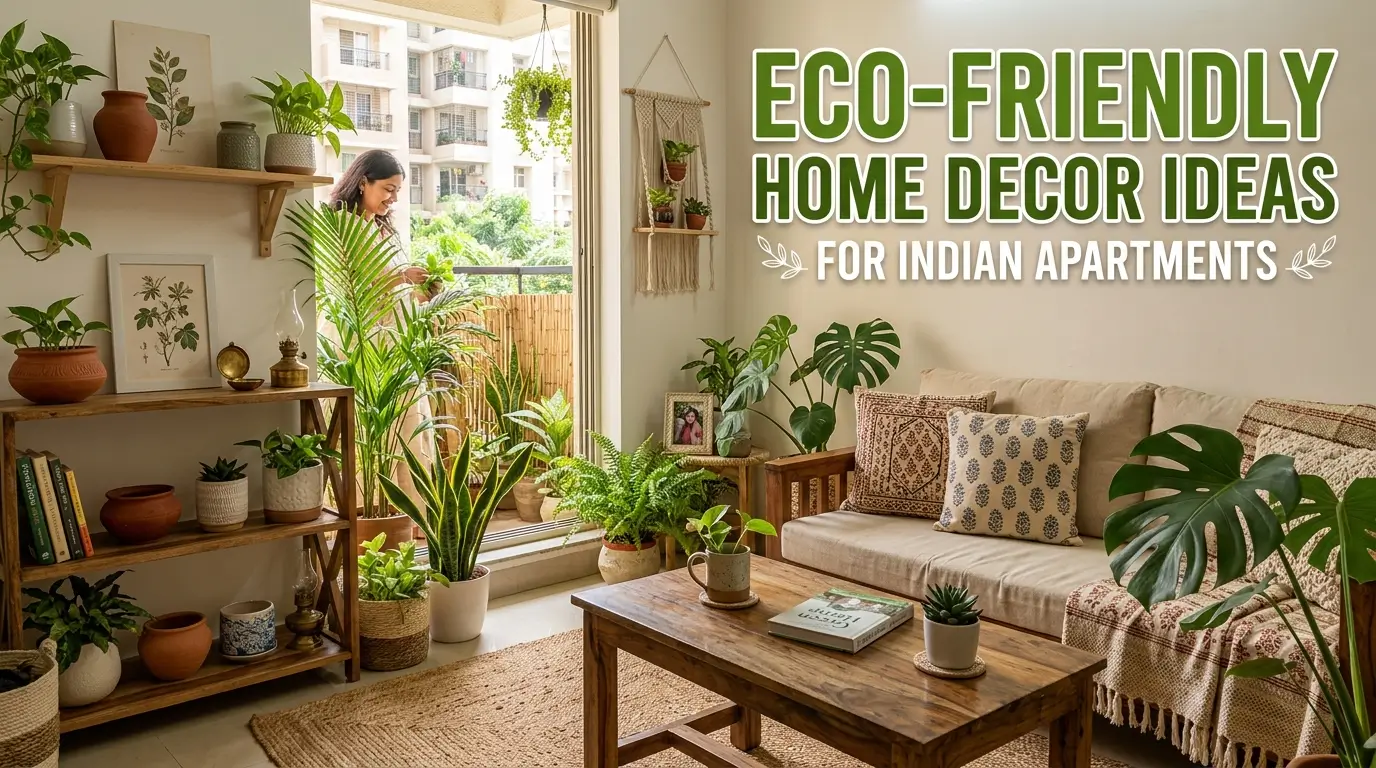
There is a particular irony in the way that sustainability has been marketed in India over the last decade. Products described as eco friendly have often been positioned as premium, aspirational, and expensive — the kind of thing available to a specific segment of the population that can afford to pay more for the privilege of consuming responsibly. This framing has done genuine damage to the broader adoption of sustainable home decor because it has made the entire category feel like a lifestyle choice available only to those with a certain kind of disposable income rather than what it actually is — a return to the way Indian homes were furnished and decorated for generations before the arrival of cheap, disposable, mass-produced alternatives made wastefulness economically convenient.
The truth is that eco friendly home decor is not a new concept in the Indian context. It is a very old one. Jute, cane, bamboo, terracotta, cotton, wood, and brass have been the materials of Indian domestic life for centuries. Handmade textiles, locally sourced furniture, naturally dyed fabrics, and objects crafted by artisans using traditional techniques are not trends imported from Scandinavian sustainability movements — they are the indigenous material culture of this country, temporarily displaced by the convenience and low cost of synthetic, machine-made alternatives. Choosing eco friendly home decor in an Indian apartment is in many ways simply a choice to reconnect with a material tradition that was never far away to begin with.
Eco Friendly Home Decor Ideas for Indian Apartments
1. Bamboo Furniture and Accessories
Bamboo is one of the most sustainably produced materials available anywhere in the world. It grows faster than any other plant used for construction or furniture, requires no pesticides, regenerates from its own root system after harvesting, and sequesters carbon at a rate that most timber species cannot match. In the Indian context it has the additional advantage of being locally produced in significant quantities across the northeastern states, Kerala, Karnataka, and other regions, which means that bamboo furniture and accessories carry a very low transportation footprint compared to imported materials.
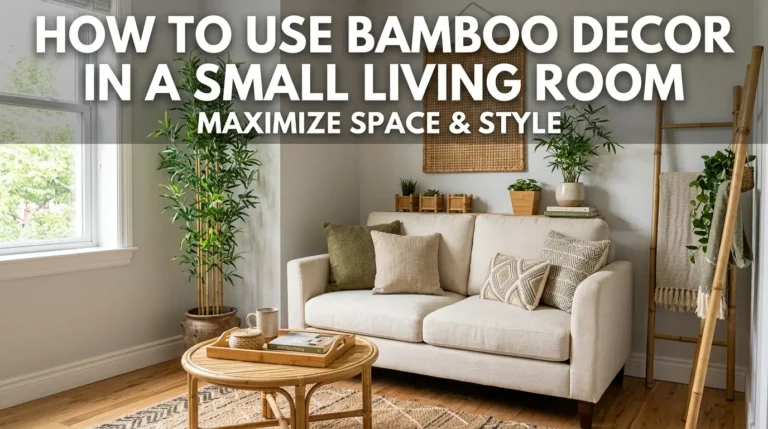
In an Indian apartment, bamboo works beautifully as a material for shelving units, side tables, storage baskets, bathroom accessories, kitchen organizers, and decorative screens. Bamboo furniture has a warm, natural aesthetic that complements the earthy, textile-rich character of traditional Indian interiors while sitting equally well in more contemporary, minimal spaces. It is lightweight, durable, and available at price points that are genuinely accessible across income levels, making it one of the most democratic eco friendly material choices available.
Brands like Bamboo India and several northeastern craft cooperatives supply bamboo furniture and home accessories through online platforms and physical stores across the country. Local artisan markets in most Indian cities also stock bamboo baskets, trays, and accessories at very reasonable prices, and buying from these sources supports traditional craft communities as well as the environment.
2. Terracotta and Clay Decor
Terracotta is perhaps the most authentically Indian of all eco friendly decor materials. Fired clay vessels, pots, lamps, and decorative objects have been part of Indian domestic life for thousands of years and continue to be produced by potters across virtually every state in the country using techniques that have changed very little over generations. Terracotta is made from natural clay, fired without chemical additives, and returns harmlessly to the earth at the end of its functional life — a genuinely cradle-to-cradle material in the most literal possible sense.
In a contemporary Indian apartment, terracotta works beautifully as planters for indoor plants, as decorative vases, as diyas and candle holders, as serving bowls and kitchen storage jars, and as wall art in the form of hand-painted tiles and relief panels. The warm, earthy redness of terracotta introduces a color and texture to an interior that no synthetic material can replicate, and it ages gracefully — developing a patina over time that makes each piece more characterful rather than less.
The practical advantages of terracotta extend beyond its aesthetic qualities. Terracotta water pots cool water naturally through the evaporation of moisture through the clay walls, making them a genuinely functional eco friendly alternative to plastic water storage in Indian homes. Terracotta cookware retains heat exceptionally well and imparts a subtle mineral quality to food that enthusiasts of traditional Indian cooking value highly.
3. Handwoven Textiles and Natural Fabric
India’s handloom tradition is one of the most extraordinary craft inheritances in human history. Khadi, handloom cotton, silk, wool, jute, and dozens of regional weaving traditions produce textiles of remarkable quality and beauty using natural fibers, traditional looms, and in many cases natural dyes — all of which are dramatically more sustainable than the synthetic, machine-made fabric alternatives that dominate the mass market.
In an Indian apartment, replacing synthetic textiles with handwoven natural alternatives is one of the most impactful eco friendly decor decisions available. Handloom cotton bedsheets and pillow covers from Andhra Pradesh, Gujarat, or West Bengal are softer, more breathable, and more durable than their synthetic counterparts while being produced through processes that consume a fraction of the water and energy of industrial textile manufacturing. Block-printed cotton cushion covers from Rajasthan, Ikat curtains from Odisha or Telangana, Kashmiri wool throws, and Kutchi embroidered table runners each bring regional craft identity and natural material quality into the home in a way that mass-produced home textiles simply cannot replicate.
Platforms like Fabindia, Good Earth, The Loom, and dozens of smaller craft-focused online retailers make India’s handloom textiles accessible without requiring a visit to the source region. Government-run emporiums in major cities stock textiles from across the country at prices that reflect fair craft value rather than retail markup. And local weavers’ cooperatives, increasingly accessible through social media and online marketplaces, offer the most direct connection between the maker and the buyer.
4. Upcycled and Repurposed Furniture
The most sustainable piece of furniture is almost always the one that already exists. Upcycling — taking an existing piece of furniture that has been discarded, damaged, or simply fallen out of fashion and restoring, repainting, or repurposing it into something useful and beautiful — is one of the most genuinely eco friendly home decor practices available and one that is particularly well suited to the Indian context where a culture of repair and reuse has deep roots.
Old wooden doors repurposed as dining tables, vintage steel almirahs sanded and repainted to serve as wardrobes or display cabinets, brass vessels converted into pendant lights, and antique wooden boxes used as side tables are all examples of upcycled furniture that carry a unique history and aesthetic character that new furniture simply cannot match. In Indian cities where old furniture is sold at kabadiwallas, antique markets, and increasingly through online platforms like OLX and Facebook Marketplace, the raw material for upcycled furniture is widely available at very accessible prices.
The investment in upcycling is primarily one of time and creativity rather than money. A can of chalk paint, a set of new hardware handles, and a few hours of sanding and finishing can transform a discarded piece of furniture into something that looks like a deliberate, characterful design choice — because it is.
5. Indoor Plants as Living Decor
Plants are the most fundamentally eco friendly decorative element available in any home. They are living organisms that improve air quality, regulate humidity, reduce stress, and support biodiversity, all while providing the kind of visual warmth, texture, and color that no manufactured decorative object can replicate. In an Indian apartment context, where air quality in urban environments is a genuine and serious concern, indoor plants serve a practical environmental function that goes well beyond aesthetics.
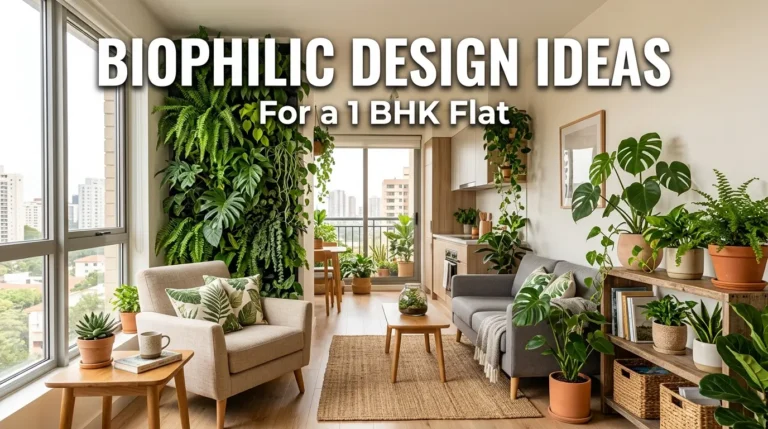
The most effective air-purifying plants for Indian apartments include areca palms, snake plants, peace lilies, spider plants, rubber plants, and money plants — all of which are widely available at nurseries and plant markets across Indian cities at very low cost. Grouping plants together in different sizes and at different heights creates a layered, lush effect that transforms the corner or shelf they occupy into one of the most visually compelling areas in the room. Terracotta planters, woven cane baskets, and recycled metal containers as plant vessels reinforce the eco friendly material theme while adding to the overall aesthetic coherence of the space.
The ongoing nature of plants as decor is one of their greatest sustainable advantages. Unlike a decorative object that remains static, a plant grows, changes, and evolves over time. It can be propagated to create new plants for other areas of the home, shared with friends and neighbors, and composted at the end of its life without leaving any environmental residue.
6. Natural Fiber Rugs and Floor Coverings
Synthetic rugs made from nylon, polyester, and polypropylene shed microplastic fibers with every footstep, release volatile organic compounds into the indoor air, and at the end of their functional life contribute to the plastic waste problem in ways that are genuinely difficult to mitigate. Natural fiber rugs made from jute, coir, cotton, wool, or sisal are biodegradable, produced from renewable resources, and in the Indian context often the product of craft traditions that support rural artisan communities.
Jute rugs are perhaps the most broadly accessible natural fiber option in India, available at low prices from almost every home store and online platform in the country. They have a warm, textured aesthetic that works particularly well in living rooms and dining areas and improves with age rather than deteriorating in the way synthetic rugs tend to. Cotton dhurries, produced in weaving traditions across Rajasthan, Uttar Pradesh, and Gujarat, are flat-woven, washable, and available in an extraordinary range of patterns and colors that reflect regional design traditions while functioning beautifully in contemporary interiors.
Coir mats made from coconut fiber are ideal for entryways where their rough, durable texture serves a practical scraping function while their natural brown color and organic texture set an immediate eco friendly tone for the home. Wool rugs from Kashmir and Himachal Pradesh represent the premium end of the natural fiber rug spectrum and are among the most beautiful and most durable floor coverings available anywhere in the world.
7. Natural and Beeswax Candles
Paraffin candles, which constitute the majority of candles sold in India, are made from petroleum byproducts and release a cocktail of chemicals including benzene and toluene when burned. In a small apartment where ventilation may be limited, burning paraffin candles regularly introduces a meaningful amount of indoor air pollution from a source that most people don’t think of as a pollution source at all.
Natural wax candles made from soy, beeswax, or coconut wax burn cleanly, produce significantly less soot, and in the case of beeswax actually release negative ions that can help neutralize airborne pollutants. Beeswax candles in particular have a warm, golden color and a natural honey scent that adds a sensory dimension to the home environment that no synthetic fragrance can replicate. They are available from artisan candle makers increasingly active across Indian cities and through online platforms at price points that reflect their superior raw materials and production methods.
Diyas — the traditional Indian clay oil lamp — are perhaps the most perfectly eco friendly lighting accessory available in any culture. Made from terracotta, filled with mustard or sesame oil, and producing a warm, flickering flame that has been part of Indian domestic and ritual life for millennia, the diya is a genuinely zero-waste, zero-synthetic-material light source that connects the contemporary Indian home to one of its oldest and most beautiful material traditions.
8. Reclaimed Wood and Salvaged Materials
Reclaimed wood — timber recovered from demolished buildings, old furniture, railway sleepers, and other sources — carries a lower environmental cost than newly harvested timber because it requires no additional deforestation and uses material that would otherwise become waste. In an Indian context where old buildings are demolished constantly as cities redevelop, reclaimed wood is available in significant quantities from salvage dealers, timber markets, and renovation contractors in most major cities.
Reclaimed wood used as shelving, as a dining table top, as wall cladding in a feature area, or as a headboard behind the bed brings a warmth, texture, and sense of history to an apartment interior that new timber cannot replicate. Each piece carries the marks of its previous life — nail holes, paint traces, weathering patterns — that give it a character and uniqueness that mass-produced furniture is specifically designed to eliminate. A reclaimed wood dining table, for instance, is not just an eco friendly choice — it is a piece that will be the most distinctive and conversation-worthy item in the room.
Salvaged metal, stone, and brick from demolition sites serve similar purposes. Old Mangalore clay roof tiles used as wall accents, salvaged iron grilles repurposed as room dividers or wall art, and reclaimed stone used as a bathroom counter or kitchen backsplash all bring the sustainable logic of reclaimed material into the home while creating design features that are genuinely one of a kind.
9. Brass, Copper, and Traditional Metal Decor
Brass and copper have been the metals of Indian domestic life for as long as documented history extends. They are durable to the point of being effectively indestructible under normal use conditions, they are infinitely recyclable without degradation of material quality, they are naturally antimicrobial, and they are produced in India by metalworking traditions that have been refining their techniques for centuries. A brass vessel bought today will outlast the apartment it lives in and the person who bought it, and at the end of any conceivable useful life it can be melted down and reformed without waste.
In contemporary Indian apartments, brass and copper decor have experienced a significant design resurgence that reflects both a renewed appreciation for traditional craft and a broader shift toward warm, natural materials in interior design. Brass diyas, copper water bottles, bronze serving bowls, handcrafted metal wall panels, and traditional brassware used as vases and planters all bring the warmth of traditional Indian metalwork into a contemporary domestic context in a way that feels both rooted and current.
Buying from craft markets, government emporiums, and artisan cooperatives rather than from mass-market retailers ensures that the purchase supports traditional metalworking communities and that the object is genuinely handcrafted rather than industrially produced from a material that merely resembles brass or copper.
Thinking About Eco Friendly Decor as a Practice Rather Than a Purchase
The most important shift in thinking about eco friendly home decor in an Indian apartment is moving away from the idea that sustainability is achieved through a specific set of purchases and toward the understanding that it is a practice — a way of making decisions about what enters the home, how long it stays, and what happens to it when it leaves. Buying less but better, choosing natural materials over synthetic ones, supporting craft traditions over industrial production, repairing rather than replacing, and passing objects on rather than discarding them are the habits that collectively constitute a genuinely sustainable approach to furnishing and decorating a home.
A Home That Reflects Both Beauty and Responsibility
An eco friendly Indian apartment is not an austere, self-denying space stripped of comfort and beauty in the name of environmental virtue. It is a home furnished with materials that have genuine quality, authentic character, and deep cultural roots — materials that look better, last longer, and feel more meaningful than their synthetic alternatives precisely because they come from the natural world and from the hands of skilled makers rather than from a factory assembly line. The choice to decorate with bamboo, terracotta, handloom textiles, reclaimed wood, and traditional metalwork is simultaneously a choice for sustainability and a choice for beauty, and in the Indian context those two things have always been the same choice.