Balcony Herb Garden Ideas for Rented Apartments
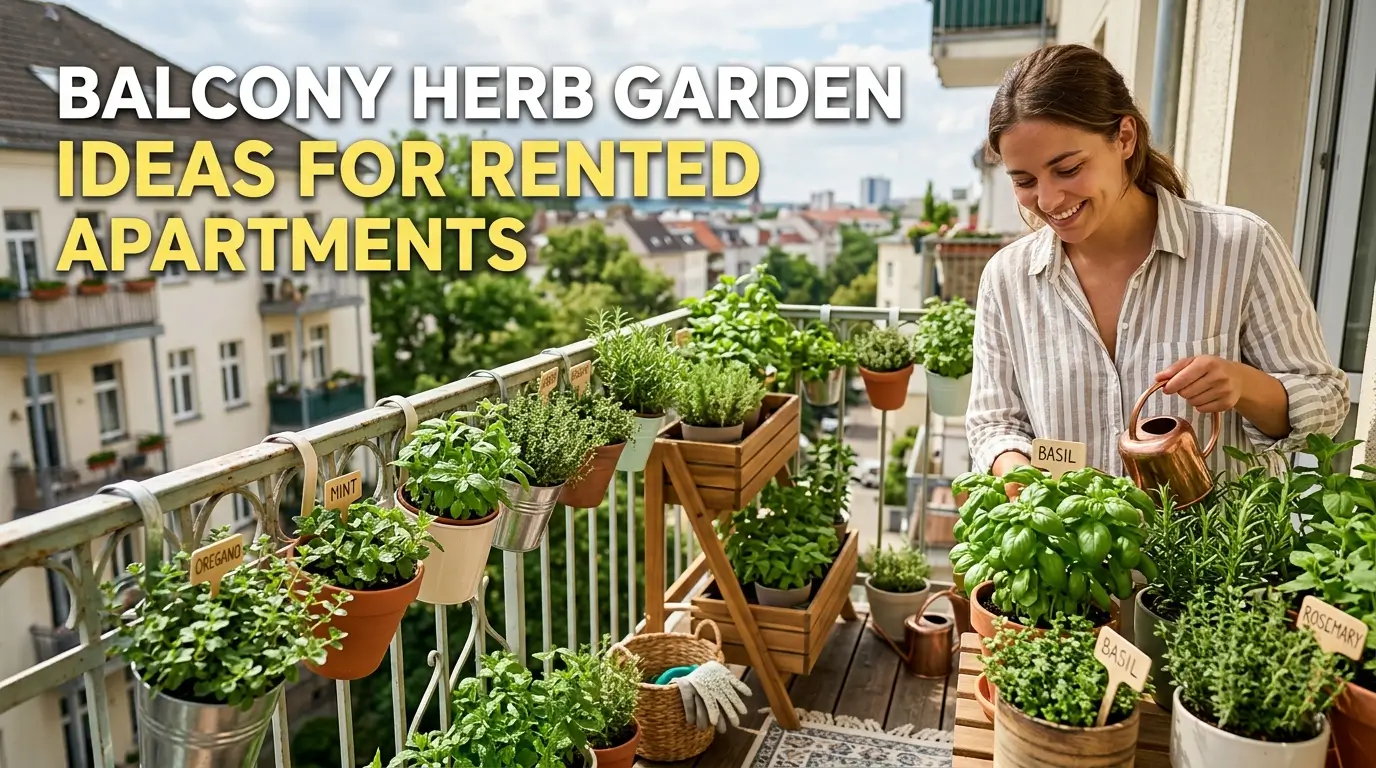
Rented apartments can be tricky when you want to garden. You want fresh herbs close to the kitchen, but you also need to avoid drilling into walls, damaging railings, or making changes you can’t undo at move-out. The good news is that a balcony is one of the easiest places to build a small herb setup that’s attractive, productive, and completely renter-friendly. With the right containers, a little planning for sun and wind, and a few smart ways to organize your pots, you can get a steady supply of basil, mint, parsley, thyme, and more—without turning your balcony into a cluttered obstacle course. Below are practical balcony herb garden ideas tailored for rented apartments, with an emphasis on portable solutions, low-mess watering, and layouts that make the most of limited space.
1. Start With a “No-Drill” Container Plan
Before you buy anything, decide on a setup that can move with you. The easiest renter-safe strategy is to build your herb garden from containers that sit on the floor, hook over a railing without fasteners, or stand on their own (like ladders and tiered plant stands). You’ll protect your security deposit, and you’ll also make seasonal rearranging easier when heat, shade, or wind patterns change. Think in terms of modules: a few pots here, a narrow shelf there, a small rolling cart you can pull into a sheltered corner during storms.
2. Use Railing Planters to Save Floor Space
If your balcony has a railing that allows it, railing planters are one of the most space-efficient ways to grow herbs in an apartment. They keep the floor clear, bring herbs closer to sunlight, and create a neat, intentional look. Choose adjustable railing planters that hook on securely, and prioritize styles with good drainage and a drip tray system (or add saucers) so you’re not watering onto neighbors below. Great herbs for railing planters include thyme, oregano, chives, trailing rosemary, and compact basil varieties. If your balcony gets strong wind, tuck the railing planters toward the most protected section or use heavier containers to reduce tipping risk.
3. Create a Vertical Herb Wall—Without Mounting Anything
Vertical gardening is perfect for small balconies, but renters often assume it requires screws and brackets. It doesn’t. You can build a vertical herb “wall” using freestanding pieces like a ladder shelf, a tiered plant stand, or a slim shelving unit rated for outdoor use. Stack herbs by light needs: sun lovers up top (basil, thyme, rosemary), and partial-sun herbs on lower tiers (mint, parsley, cilantro). This layout gives every plant better airflow and reduces the “shadowing” that happens when everything sits in one row on the floor.
4. Try a Window-Box Look With a Long Trough Planter
For a clean, cohesive design, use one or two long trough planters instead of a dozen mismatched pots. Trough planters give you a “mini garden bed” effect, make watering simpler, and can look more polished on a modern balcony. To keep herbs happy, group plants with similar watering needs: put rosemary, sage, and thyme together (they prefer drier soil), and keep basil and parsley together (they like more consistent moisture). If you only want one trough, choose a flexible mix and commit to careful watering, or use separate inner pots set inside the trough to keep moisture levels more controlled.
5. Build a Rolling Herb Cart for Maximum Flexibility
A rolling utility cart can function as a compact, mobile herb station. This is especially useful if your balcony sunlight shifts during the day, or if you want to roll herbs closer to the door when you’re cooking. Use the top tier for the herbs you snip most often (basil, chives, parsley), and the lower tier for supplies like pruning scissors, plant ties, slow-release fertilizer, and a small watering can. If your balcony is exposed to heavy rain, you can also roll the cart into a protected corner to prevent waterlogged soil.
6. Use Fabric Grow Bags for Lightweight, Renter-Friendly Gardening
Fabric grow bags are an underrated option for balconies because they’re lightweight, breathable, and easy to move. They also reduce the risk of overwatering, which is a common issue for beginner herb gardeners. Use smaller fabric bags for individual herbs or one medium bag for a mixed planting if you’re confident about pairing similar needs. Since fabric bags can leak water faster than plastic or ceramic, place them on waterproof trays or a boot mat to protect balcony surfaces. They’re especially good for vigorous growers like mint (when kept contained) and for herbs that dislike soggy roots.
7. Make a “Kitchen Door Herb Zone” for Daily Use
The best herb garden is the one you actually use. Place your most-used herbs closest to your balcony door so snipping becomes part of your routine. Even a small cluster of three pots—basil, chives, and parsley—can change the way you cook. Keep this zone tidy and intentional: matching pots, a single tray underneath, and enough space around the plants so you can harvest without knocking leaves off. If you have room, add a small stool or narrow side table to hold a bowl for cut herbs and a pair of shears.
8. Choose Herbs That Thrive in Containers (and Skip the Fussy Ones)
Most herbs do well in pots, but a few are far easier for balcony life. Basil, thyme, oregano, sage, rosemary, chives, mint, parsley, and dill are strong container candidates. If you only have partial sun, focus on parsley, mint, chives, and cilantro. If you get strong, hot sun, rosemary and thyme will handle it well, while basil may need consistent watering. The key is matching plants to your balcony conditions so you’re not fighting nature every week.
9. Pair the Right Pot Size With Each Herb
Container size matters more than people expect. Small pots dry out fast in sun and wind, which can lead to bitter leaves and stressed plants. As a general approach, use 6–8 inch pots for compact herbs (thyme, oregano, chives), 8–10 inch pots for basil and parsley, and 10–12 inch pots for rosemary if you want it to last more than a season. Mint should get its own container—always—because it spreads aggressively and will take over mixed planters. Bigger pots also mean less frequent watering, which is ideal for busy schedules and summer heat.
10. Keep Watering Renter-Safe With Saucers, Trays, and a Mat
One of the biggest balcony garden problems in apartments is water runoff. To keep things neighbor-friendly and building-compliant, place every pot on a saucer or in a tray. For grouped pots, use a large boot tray, a plastic plant tray, or an outdoor rug designed to handle moisture. This also protects balcony finishes from mineral stains and algae. If you want to make watering even easier, consider self-watering planters for basil and parsley—especially if you travel or forget to water during hot spells.
11. Use a Simple “Two-Zone” Soil Strategy
Herbs generally like well-draining soil, but not all of them want the same moisture level. A renter-friendly approach is to create two soil zones rather than trying to perfect each plant individually. Zone one is for Mediterranean herbs (rosemary, thyme, oregano, sage) with a fast-draining potting mix and careful watering. Zone two is for leafy herbs (basil, parsley, cilantro) with a standard potting mix that stays a bit more evenly moist. This reduces guesswork and helps your plants grow more predictably throughout the season.
12. Add a Mini Trellis or Support for Tall Herbs and Better Airflow
Balconies can be windy, and herbs like basil and dill can get top-heavy. A small trellis, tomato cage, or discreet stake helps keep plants upright and prevents stems from snapping. It also improves airflow, which reduces mildew and pest issues. Choose supports that simply push into the pot—no fastening required—and keep them proportional so your balcony doesn’t feel crowded. Even a single support in a basil pot can make the whole arrangement look more intentional and “designed.”
Get More Harvest From a Small Balcony
A balcony herb garden in a rented apartment doesn’t need to be complicated. Start with portable containers, prioritize vertical space or railing planters, and set up a watering system that keeps everything clean and contained. Once you’ve harvested fresh herbs a few times—snipping basil for pasta, thyme for roasted vegetables, mint for tea—you’ll find it’s one of the simplest upgrades you can make to daily life in a small space. If you tell me how many hours of sun your balcony gets and whether you have a railing you can use, I can suggest a specific herb list and layout that fits your exact setup.

Similar Posts
Sustainable Kitchen Decor Ideas for Rented Apartments
Rented apartments come with a familiar set of limits: you can’t drill wherever you want, you may be stuck with dated finishes, and permanent upgrades usually aren’t an option. But a rental kitchen can still look intentional, elevated, and personal without buying disposable “fast decor” that ends up in a landfill after your next move….
Natural Material Home Decor Ideas for Indian Homes
Indian homes are naturally suited to warm, tactile décor—spaces where you sit on the floor, entertain often, and move between busy, noisy streets and calmer interiors. Natural materials help you create that sense of grounding instantly. They also age beautifully, handle our love of layered textures, and pair well with everything from contemporary apartments to…
Nature-Inspired Wall Art Ideas for Living Rooms in India
Indian living rooms tend to do a lot of work at once: they’re a place to host guests, unwind with family, celebrate festivals, and (often) show a bit of personal style without overwhelming the space. Nature-inspired wall art fits beautifully into that mix because it can be calming, familiar, and visually rich—whether your home leans…
Budget Friendly Sustainable Interior Design Ideas
Sustainable interior design has a reputation problem. Somewhere in the space between genuine environmental concern and aspirational lifestyle marketing, the idea took hold that designing a home sustainably means spending more — on certified organic materials, on designer pieces made from reclaimed wood, on artisan-crafted objects that carry a price tag reflecting their ethical production…
Biophilic Design Ideas for a 1 BHK Flat
A 1 BHK flat has to do a lot with a little: it’s your living room, dining space, work zone, and retreat—often all within the same sightline. That’s exactly why biophilic design works so well in smaller homes. It brings in the calming patterns, textures, light, and living elements we naturally respond to, without needing…
How to Use Bamboo Decor in Small Living Room
There is something about bamboo that feels immediately right in an Indian living room. It is not a foreign material imported from a design tradition that has no relationship to this country’s interiors — it is a material that has been part of Indian domestic life for as long as Indian domestic life has existed….